Corrosion does not wait for a permit, but in many hazardous-area facilities, inspectors are forced to. Across refineries, offshore platforms, chemical plants, and fuel-storage terminals, some of the most corrosion-prone assets are located inside ATEX-classified zones (areas where explosive atmospheres may be present).
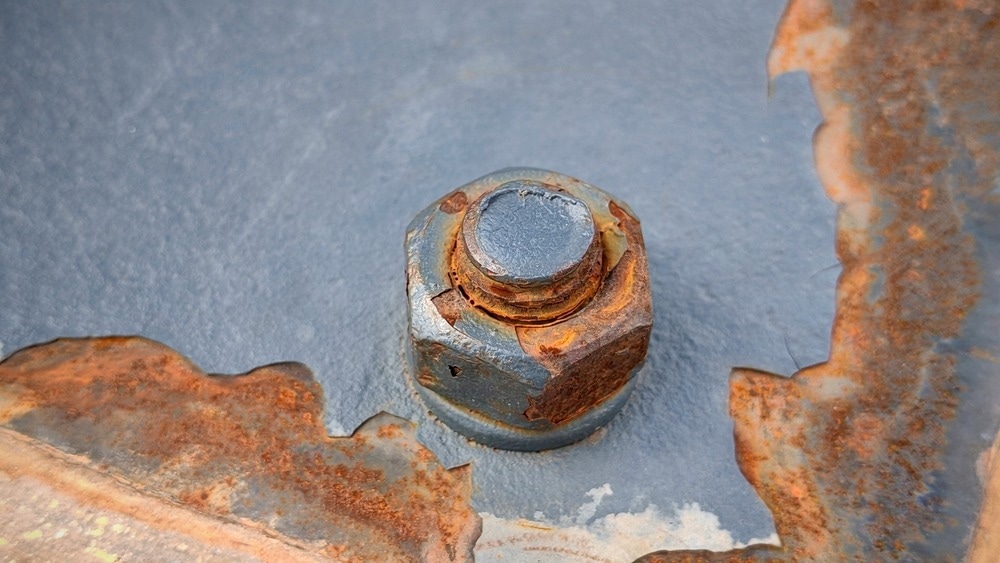
Image Credit: Faizal Ramli/Shutterstock.com
Having a technician take a single reading with a traditional thickness gauge in these zones frequently requires navigating hot work permits, gas-freeing processes, and lengthy isolation procedures.
As a result, critical corrosion monitoring is frequently postponed, inspection backlogs increase, and asset integrity teams may have to make decisions using weeks- or months-old data.
Why ATEX Zones Complicate Routine Inspection
ATEX zones (0, 1, and 2 for gases and vapors; 20, 21, and 22 for combustible dusts) classify areas based on the likelihood and duration of explosive atmospheres. Conventional, non-certified test instrumentation, including many traditional ultrasonic thickness gauges, is simply not permitted inside these zones.
Non-intrinsically safe devices introduce unacceptable spark risks where flammable gases or dusts may be present.
This results in a genuine operational bottleneck for inspection teams. Before conducting a routine wall thickness check in a Zone 0 or Zone 1 area, sites generally must:
- Raise and approve a hot work permit
- Arrange gas assessment and continuous atmosphere monitoring
- Coordinate a fire watch or standby team
- Schedule around shutdowns, turnarounds, or process downtime
Each step adds hours, or even days, to what should be a routine measurement. On live assets such as tanks, pipework, and pressure vessels, these delays give corrosion a head start.
The Hidden Cost of Deferred Inspection
Corrosion under insulation, internal pitting, and general wall loss do not stop during paperwork processing. When permitting bottlenecks delay thickness surveys, integrity teams are prevented from identifying emerging defects early, exactly when repairs are most cost-effective and safest to plan.
Furthermore, deferring inspections compresses workloads into shutdown periods, increasing expenses and straining already tight turnaround schedules.
For asset owners operating under risk-based inspection (RBI) programs, thickness data gaps compromise the accuracy of corrosion-rate computations, thereby impacting re-inspection intervals and remaining life assessments.
Ultimately, permitting delays not only impede inspection, but they also reduce the quality of the entire integrity management approach.
Removing the Bottleneck with Intrinsically Safe Ultrasonic Thickness Gauging
This delay is most efficiently eliminated by removing the reason for the hot work permit altogether. Intrinsically safe (IS) instruments are engineered and certified to operate without releasing sufficient electrical or thermal energy to ignite surrounding explosive atmospheres, even under fault conditions.
Gauges with valid ATEX, IECEx, and UKEX Zone 0 certification can generally be deployed directly into hazardous environments without requiring hot work procedures.
Designed specifically to close this gap, the Cygnus 1 EX is a rugged, handheld ultrasonic thickness gauge. Certified intrinsically safe for ATEX, IECEx, and UKEX for Zone 0, 1, 2, 21, and 22 environments, it is well-suited for use in fuel depots, storage tanks, refineries, road and vessel tankers, chemical plants, pipelines, and offshore installations, without requiring a hot work permit.
In addition to the certification, the Cygnus 1 EX is engineered for the real-world conditions of hazardous-area corrosion surveys. Using Cygnus's Multiple-Echo method, it measures true remaining metal thickness through coatings, eliminating the need for stripping paint or lining before taking a reading. This prevents additional downtime as well as unnecessary substrate exposure to further corrosion.
Depending on the variant, the device also features live A-Scans, Echo-Echo mode, and Single-Echo mode for significantly corroded or pitted surfaces. This is all offered in a durable IP67 housing capable of withstanding challenging site conditions.
Readings can be logged, exported, and evaluated using Cyglink software, simplifying the process of feeding data directly into RBI and integrity management systems.
Faster, Safer, and More Frequent Inspection
By eliminating the need for hot work permits during routine ultrasonic thickness gauging, tools such as the Cygnus 1 EX enable inspection teams to:
- Survey hazardous-area assets on a truly risk-based schedule, rather than on one governed by permit availability
- Reduce fire watch and standby expenses associated with hot work
- Bridge the data gap that undermines corrosion-rate trending and RBI precision
- Respond rapidly to suspected corrosion without waiting on process shutdowns
While ATEX zoning exists for good reason, it should not force a trade-off between safety compliance and timely corrosion monitoring. Equipping inspection teams with a certified intrinsically safe gauge makes acquiring precise, through-coat thickness data from Zone 0 environments as straightforward as anywhere else on site.
This information has been sourced, reviewed and adapted from materials provided by Cygnus Instruments Ltd.
For more information on this source, please visit Cygnus Instruments Ltd.