In this interview, industry expert Mark Deacon discusses how covert, mobile radiation detection helps teams identify threats faster, coordinate field response, and strengthen public safety.
To begin, can you explain what the PackEye XS radiation detection backpack is and where it is typically used?
The Thermo Scientific PackEye XS Radiation Detection Backpack is designed for finding radiological threats in dynamic, real-world environments. It is used in places such as parking lots, trains, crowds, large events, and other public spaces where teams need to monitor broad areas while remaining mobile.
The main users are law enforcement and security teams, particularly those involved in counter-terrorism and border security missions. Fire and hazmat teams, as well as bomb squads, may also use it for mobile, wide-area monitoring in support of law enforcement operations.
The goal is to detect radiological threats early, ideally before an incident occurs or before a hazard reaches the public domain. In that way, the PackEye XS can form part of a wider radiation detection strategy, working alongside other tools to create a broader circle of protection around an event, site, or incident.
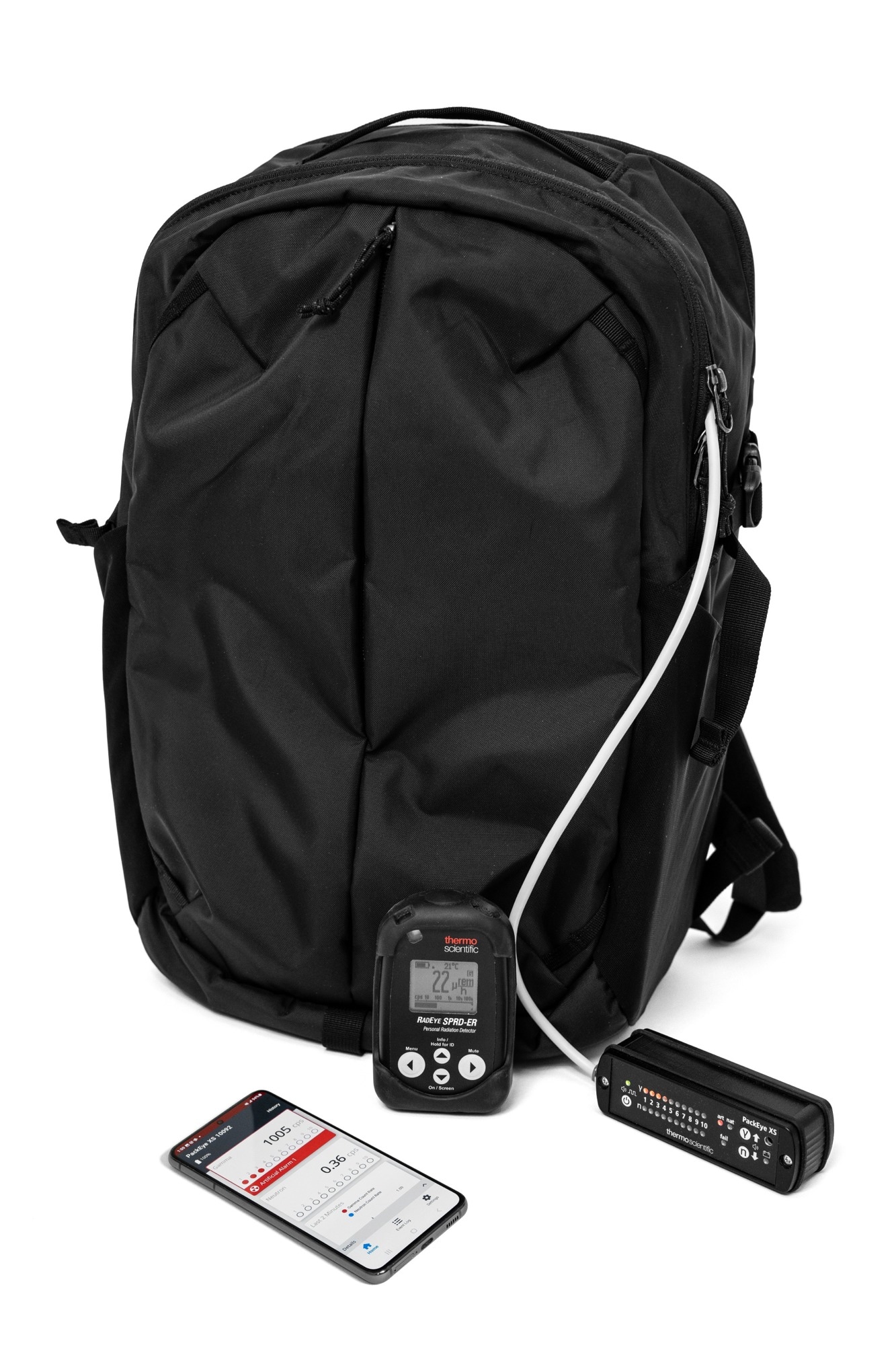
Image Credit: Thermo Fisher Scientific – Handheld Elemental & Radiation Detection
When is covert radiation detection most useful?
Covert radiation detection is best suited to searches where teams need to look for unknown threats without drawing attention to the operation. In some cases, a visible security presence is useful as a deterrent. However, radiation detection often requires operators to get close to a potential source, and a discreet system makes that easier.
Typical examples include sports events, races, political events, transit environments, and other public venues where operators need to blend into the crowd. A low-profile detector also reduces the chance of causing unnecessary concern among the public or confusion among partner agencies.
This supports the “moving curtain” concept, where detectors are spread across an area rather than placed in one obvious fixed location that could be avoided.
What does a typical PackEye XS mission workflow look like?
A typical mission starts with equipment being issued to operators, who may have little or no prior experience with the unit. They check the battery status, confirm the settings, and then begin deployment.
Before the main operation starts, teams usually carry out an initial site sweep or survey to learn the background radiation levels and identify any natural hot spots. When the unit is switched on, it learns both the background level and spectrum, providing operators with a reliable baseline and enabling very low alarm levels to be set.
During the mission, operators watch for two basic alarm types: natural and artificial. A natural alarm prompts a common-sense check of the surroundings, while an artificial alarm typically leads to escalation and further investigation. A smaller unit, such as the Thermo Scientific RadEye SPRD, can then be used to help identify the isotope and better understand the type of threat being presented.
Click here to watch Analyze That episode 14 - PackEye XS - Covert Detection for Real-World Public Safety
How does natural background rejection support field decision-making?
Natural background rejection, or NBR, separates natural background radiation from potential artificial sources in the field. This reduces the effect of changing background conditions and allows very low artificial alarm thresholds to be used without generating excessive false alarms.
This is especially useful when operators move between environments with different natural background radiation levels, such as in and out of buildings. The system gives users an artificial-versus-natural indication within seconds, creating a clear “red light, green light”- style decision point.
If the alarm is natural, the response can be less intense. If the alarm is artificial, teams can respond quickly and escalate with greater confidence. This helps agencies detect radiation earlier without sacrificing confidence due to too many false alarms.
How does the PackEye XS complement handheld and vehicle-mounted radiation detection systems?
The PackEye XS fits into a wider suite of radiation detection tools. Compared with a small handheld instrument, the backpack has a larger detector, making it more sensitive and better suited to standoff detection. This allows teams to search wider areas, such as parking lots or trains, before moving closer to a potential source.
Vehicle-mounted systems can cover large areas and may use very large detectors, but they cannot always get close enough to localize a threat. A practical workflow might involve a vehicle system detecting something in a broad area, the PackEye XS narrowing down the location, and a handheld instrument being used for final localization and identification.
How can the PackEye XS be used as a checkpoint or temporary portal?
Because the PackEye XS is sensitive, compact, and quick to deploy, it can be used as a simple checkpoint or temporary portal. One unit can act as a single detector, or two units can be placed apart to create a portal-like arrangement. Operators can monitor one or two units through the app to see the overall detection picture.
A single operator can monitor the checkpoint from a phone, and the strong Bluetooth connection allows flexible positioning. The backpacks can be placed discreetly, left in a case, or mounted on a stand, tripod, or table.
Raising the unit off the floor can also improve sensitivity by reducing background effects and improving survey geometry. This gives agencies portal-style capabilities within minutes, without the lengthy setup associated with fixed portals.
How does the RadBridge mobile app improve on-scene response?
The RadBridge mobile app allows operators to view the PackEye XS and RadEye SPRD simultaneously on a single screen. This means teams do not have to switch between apps or manage separate devices for different parts of the response.
The app supports a faster identification workflow. If the backpack detects a hit, operators can trigger the RadEye SPRD to perform an ID directly from the app, without needing to remove the detector from the device pocket.
This helps teams work from a more central or remote position while still making informed decisions about whether a secondary response is needed. It can also help users distinguish medical sources from findings that may require a more serious response.
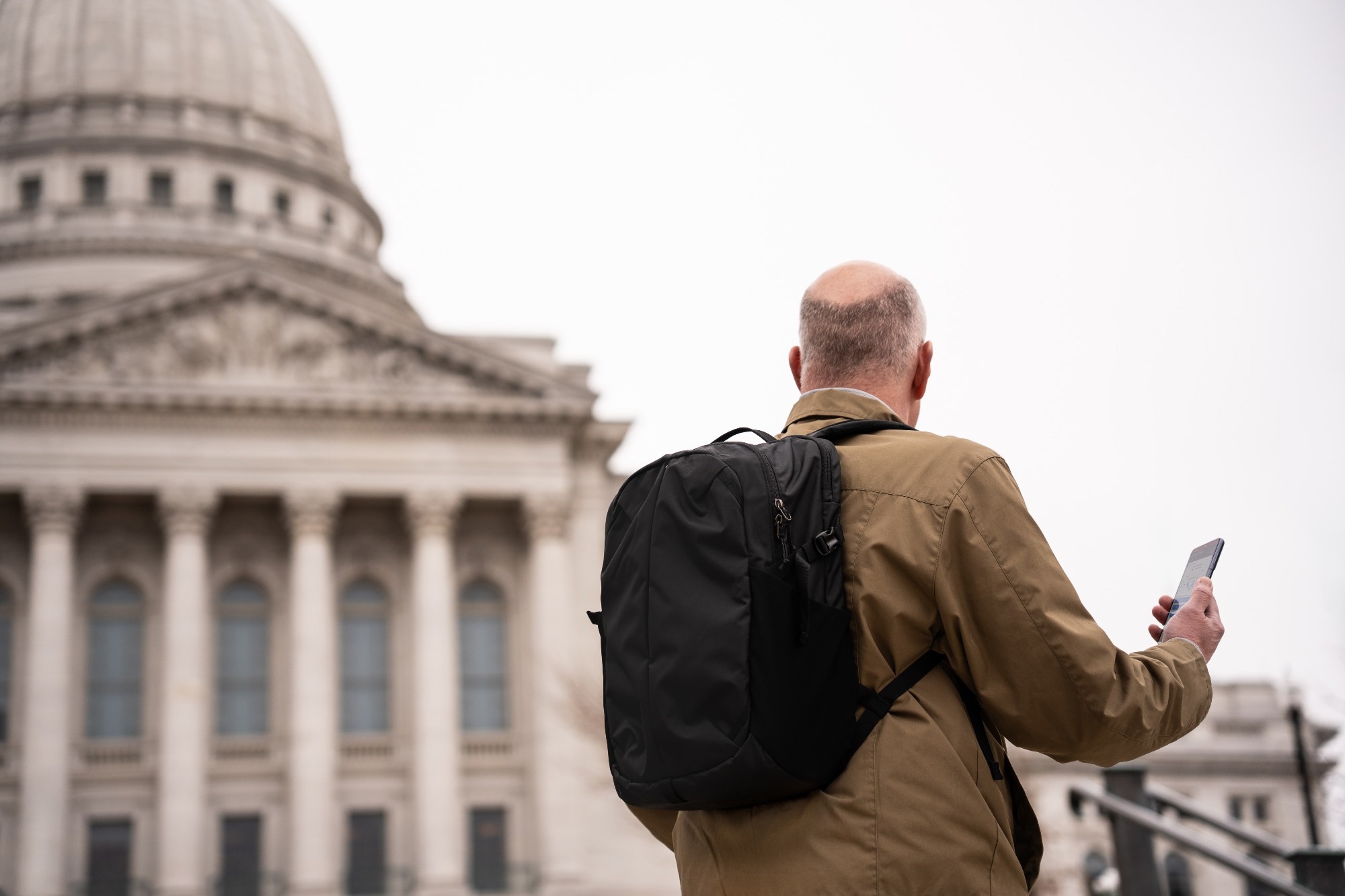
Image Credit: Thermo Fisher Scientific – Handheld Elemental & Radiation Detection
Click here to watch Analyze That episode 14 - PackEye XS - Covert Detection for Real-World Public Safety
How does RadBridge support teamwork between field operators and command centers?
Compared with earlier, simpler data-viewing tools, RadBridge gives teams a clearer view of what multiple instruments are seeing at the same time. This might involve one backpack and one SPRD, or two backpacks operating together.
Alarm events can be captured and reviewed, allowing operators to share information with supervisors. This information can be communicated via radio or sent back through the app for rapid reach-back.
Remote personnel can then interpret the event, review the snapshot, and guide operators in the field. This improves secondary analysis and strengthens coordination between field users and command or support teams.
How quickly can new users become confident with the PackEye XS?
New users can become operational very quickly, often with less than 10 minutes of instruction. This is important because, in real-world events, equipment may be handed out quickly to teams with mixed levels of experience.
Basic training usually involves powering on the unit, watching how it learns the background, recognizing the different alarm types, and understanding what operational decisions to make depending on the alarm. The display uses a familiar format, with two bar graphs: orange for gamma and blue for neutron.
This makes the information easy to understand during live operations. Both the unit and the app are designed to keep cognitive load low, allowing operators to focus on the mission rather than having to process too much information or manage complicated technology.
Looking ahead, how could technologies like the PackEye XS shape the future of field radiation detection?
The PackEye XS points toward a new generation of field radiation detection tools that are more versatile, more connected, and easier to deploy. The system can support multiple use cases, including on-body search, vehicle support, temporary portal screening, and mobile wide-area monitoring.
Its covert, lightweight form factor also makes distributed moving-curtain deployments more practical for real events. At the same time, simple training and intuitive operation help agencies scale that capability across teams with different levels of experience.
Overall, the PackEye XS brings together flexibility, portability, connectivity, and operational simplicity, which are all becoming increasingly important for effective field radiation detection and emergency response.
Analyze That episode 14 - PackEye XS - Covert Detection for Real-World Public Safety
PackEye XS - Covert Detection for Real-World Public Safety
About Mark Deacon 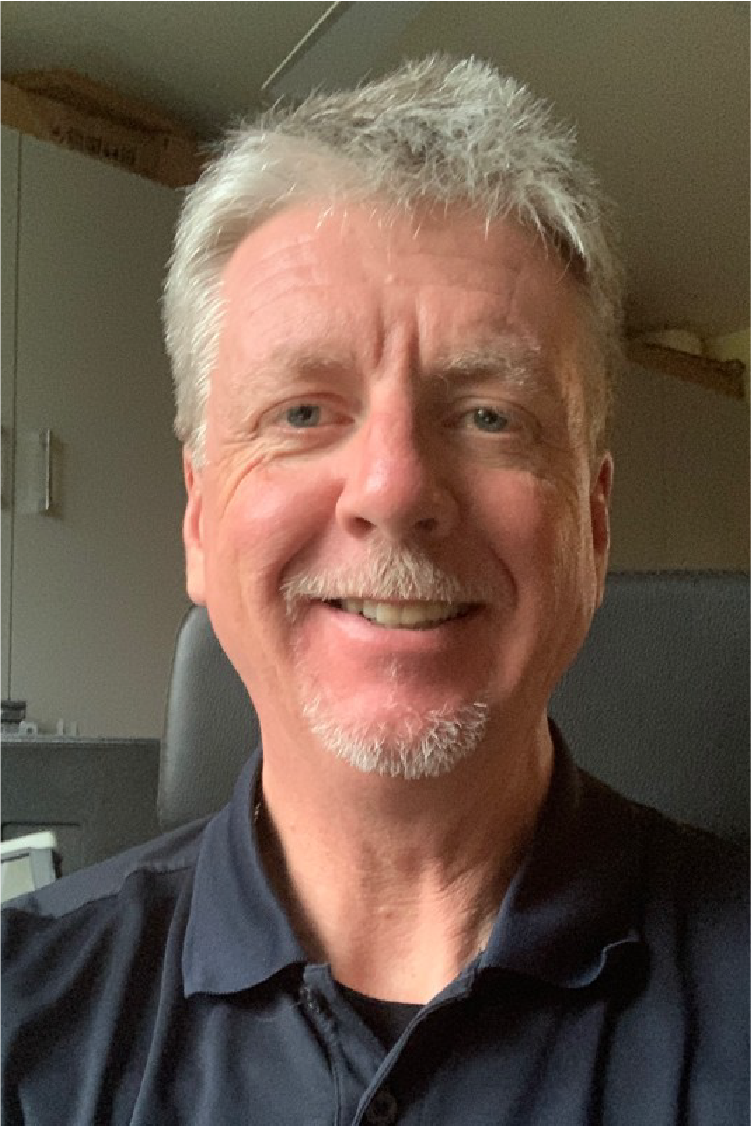
Mark Deacon is a Technical Manager at Thermo Fisher Scientific, where he has worked since 1978. He studied Electrical and Electronics Engineering at Newbury College, England, which provided him a strong technical foundation for his current role.

This information has been sourced, reviewed, and adapted from materials provided by Thermo Fisher Scientific – Handheld Elemental & Radiation Detection.
For more information on this source, please visit Thermo Fisher Scientific – Handheld Elemental & Radiation Detection.
Disclaimer: The views expressed here are those of the interviewee and do not necessarily represent the views of AZoM.com Limited (T/A) AZoNetwork, the owner and operator of this website. This disclaimer forms part of the Terms and Conditions of use of this website.