In this interview, industry expert Mike Bates explains how handheld chemical analyzers support safer field decisions, faster threat identification, and confident response across law enforcement, hazmat, and customs.
To begin, can you give us an overview of the types of situations that first responders, officers, hazmat teams, and customs personnel typically face in the field?
We support a wide range of customers, so a typical day can look very different depending on the team and the mission. Field users may encounter suspicious powders, pills, vials, packages, drums, spills, residues, or commercial products that may not be what they appear to be.
Law enforcement customers are often focused on narcotics and contraband, while hazmat and fire teams are more concerned with unknown chemicals and scene safety. Customs teams may see both in the same shift, because they need to identify dangerous materials while also keeping legitimate trade moving.
Across all of these applications, the need is the same: confidence at the point of decision. Users need to know what the material is, how risky it is, and what they should do next. The value of field analyzers is that they provide confident answers on scene, instead of requiring samples to be sent to a laboratory and waiting days or weeks for results.
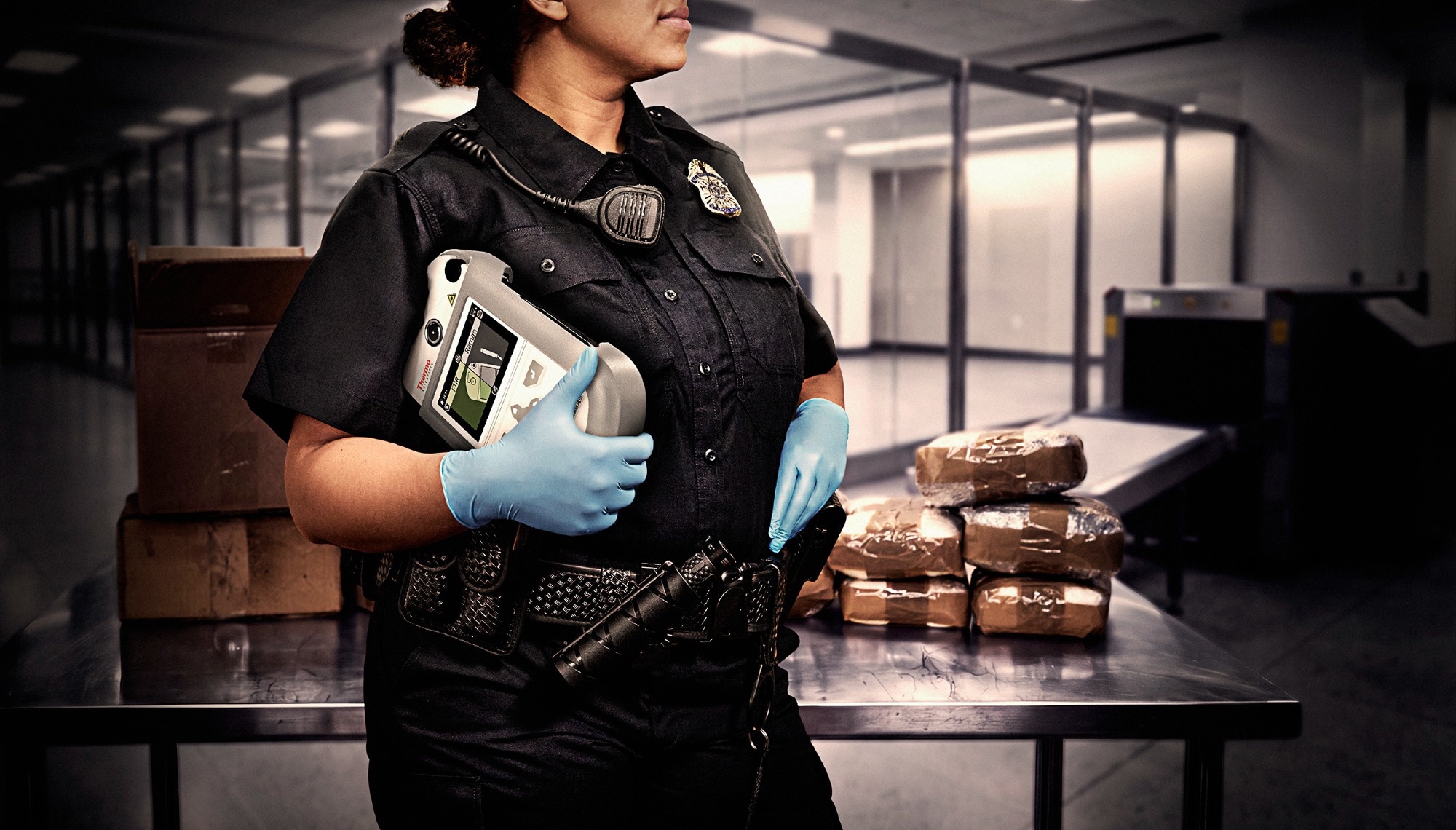
Image Credit: Thermo Fisher Scientific – Handheld Elemental & Radiation Detection
How do handheld chemical analyzers support safer decision-making in the field?
The clearest impact is safety. These tools help ensure safer decision-making in the field by identifying threats sooner, helping teams choose the right response faster, and reducing guesswork when dealing with unknown materials.
They also help protect operators because many of these instruments can reduce sample handling and potential exposure. In several cases, users can perform point-and-shoot analysis through packaging, which means they do not have to open or directly handle a potentially dangerous substance.
There is also a wider community safety benefit. These tools help officers and responders intercept illicit substances and manage chemical threats before they spread or escalate. When responders understand what they are dealing with on the spot, incidents can be contained, documented, and resolved more efficiently. Ultimately, these instruments help customers turn uncertainty into informed action.
How do these instruments help customers keep up with evolving threats?
Managing evolving threats is a constant challenge. New narcotics, synthetics, analogs, mixtures, and other emerging materials continue to appear, so staying up to date is a never-ending process.
Our team regularly reviews forensic and law-enforcement trends, bulletins, and updates to ensure we can detect emerging threats. We also work closely with customers to get direct feedback from the field. That feedback is important because customers are often seeing changes in real time, and their experience helps guide updates and improvements.
In addition, we offer reach-back support for challenging samples. If a customer encounters a sample that may be an emerging threat or is not yet in the library, they can send us the scan. Our expert scientists can then review it through offline analysis and provide a deeper dive to support faster decision-making.
Click here to watch Analyze That episode 18 - Turning Unknown Threats into Informed Action: Chemical and Narcotics Identification Analyzers
What is the TruNarc handheld Narcotics Analyzer, and what problem was it created to solve?
TruNarc is a purpose-built handheld narcotics analyzer that uses lab-proven Raman spectroscopy for presumptive field identification. It was created for law enforcement and customs teams that need fast answers when dealing with suspected narcotics, precursors, and cutting agents.
One of its biggest value points is contactless testing. Because the Raman laser can transmit through most clear or semi-transparent packaging, officers can often analyze suspected contraband without removing it from the packaging. This helps reduce exposure, protect the officer, and preserve evidence for chain of custody.
Overall, TruNarc reduces guesswork and enables officers to focus on the situation in front of them by giving clear, actionable results in the field.
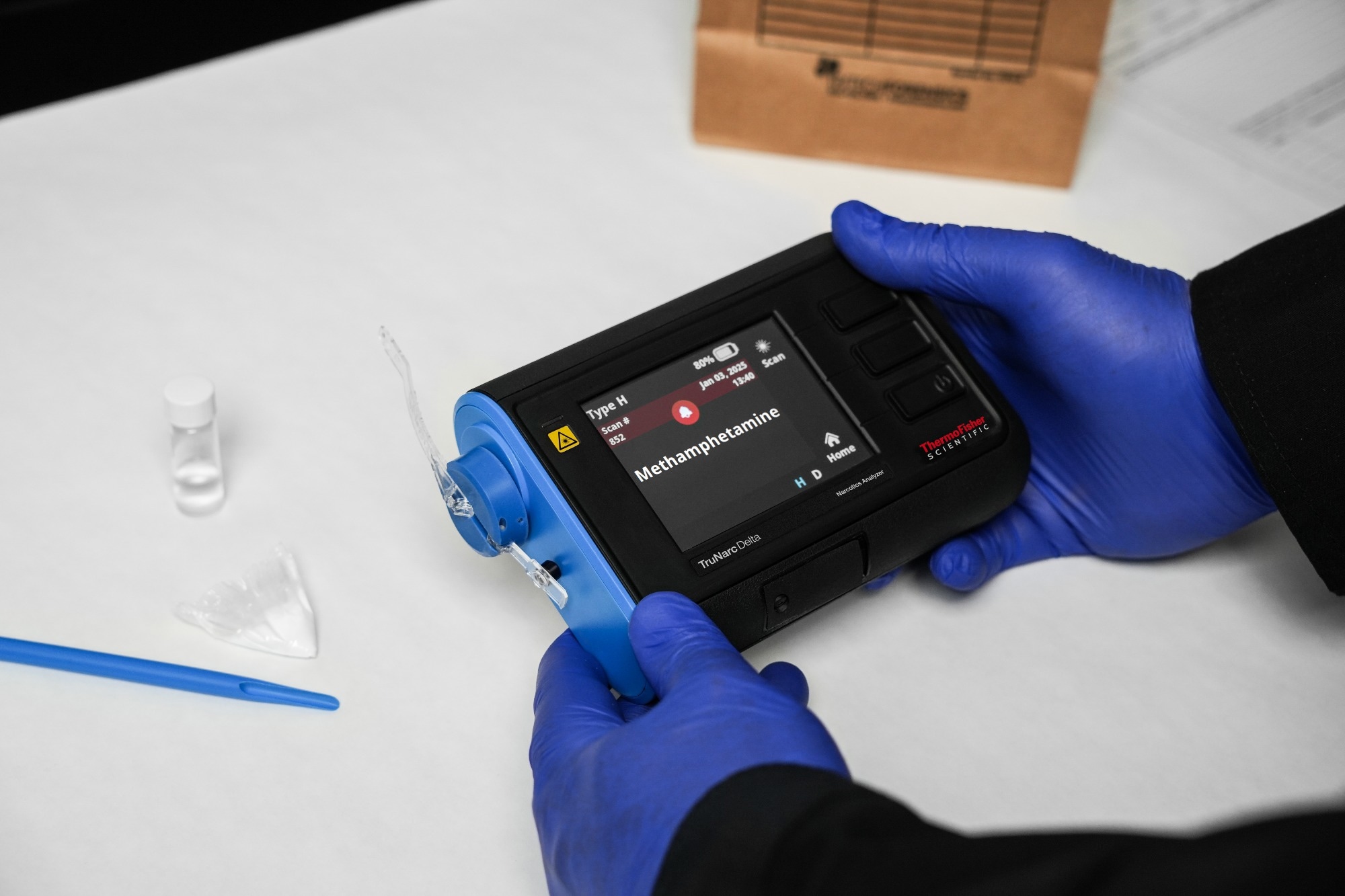
Image Credit: Thermo Fisher Scientific – Handheld Elemental & Radiation Detection
What does a typical TruNarc field workflow look like during a suspected narcotics encounter?
In a routine stop or search, an officer might find suspected contraband, such as a bag of white powder. If the sample is in a clear plastic bag or a clear glass container, the officer can analyze it directly through the packaging. That means there is no need to open the package and no unnecessary exposure risk for the officer.
The workflow is very direct: the officer powers up the device, points it at the sample, scans it, and receives results in seconds. A complex mixture with cutting agents may take up to a minute, but most analyses are very fast.
The results are also designed to be clear. A green screen indicates a non-hazardous substance, orange indicates hazardous materials, known precursors, or known cutting agents, and red indicates narcotics.
If the device returns an inconclusive result, that can still be the correct outcome because the algorithms are designed to minimize false positives rather than guess from a weak library match. If more help is needed, the user can send the data to reach back support for further analysis by staff scientists.
How does TruNarc support chain-of-custody and reach-back analysis?
The value of TruNarc is not only the answer it provides, but also the digital record that comes with that answer. TruNarc captures scan results with a date and time stamp, records system self-checks, and allows data to be exported for reporting and evidence workflows. This creates a stronger paper or digital trail than older field methods and helps support chain-of-custody documentation.
Because TruNarc can scan through sealed packaging, evidence can remain more intact and handling can be minimized. That is useful for later evidence audits and for maintaining the sample's integrity.
Reach-back support adds another layer of confidence. The TruNarc library is targeted and streamlined for narcotics, cutting agents, precursors, and fast results. However, when a customer submits a reach-back request, the scan can be evaluated against the broader database, with expert scientists providing a more thorough review and a more confident result.
Click here to watch Analyze That episode 18 - Turning Unknown Threats into Informed Action: Chemical and Narcotics Identification Analyzers
What innovations do TruNarc Delta and Tau bring to the field?
TruNarc has been trusted by law enforcement and government agencies for more than a decade, so the goal with TruNarc Delta and Tau was not to reinvent the workflow. Instead, we kept the same proven approach and improved the overall experience.
The new devices are faster, have a more modern user experience, and include an expanded library for emerging threats. Delta and Tau have effectively doubled the library size, with more than 1200 substances. We also provide regular library updates as new threats appear and are added to the library for users.
We also improved the Type H2 capability. For low-dose samples that may be below the detection limit for a direct scan, an operator can dissolve a small amount of the substance in rubbing alcohol or ethanol and use the Type H2 kit to amplify the signal. This improves results for lower detection limits and is especially important for threats such as fentanyl, which may appear at much lower doses than previous narcotics.
These updates were shaped by customer feedback, with a focus on keeping what works while improving speed, capability, and usability.
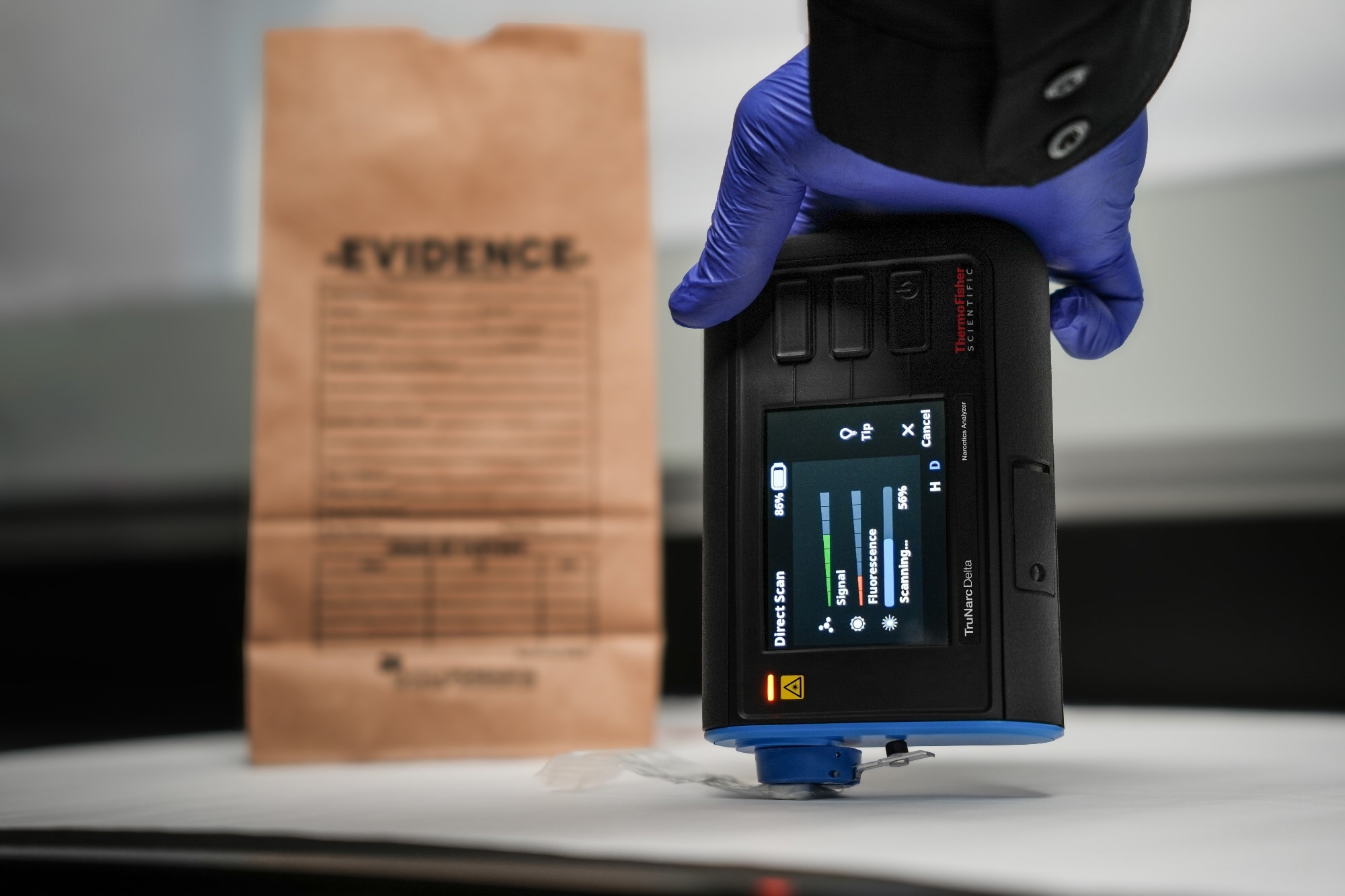
Image Credit: Thermo Fisher Scientific – Handheld Elemental & Radiation Detection
What is Gemini, and why is combining Raman and FTIR spectroscopy useful in one handheld device?
Gemini is Thermo Fisher’s flagship handheld chemical identification system for unknown chemicals, explosives, narcotics, precursors, and other threats. Where TruNarc is designed for a specific purpose, Gemini is designed to do it all.
The key differentiator is that Gemini combines Raman and FTIR spectroscopy in a single handheld device. That means customers do not have to choose between two separate instruments or carry two instruments into the field; they have both technologies in one unit.
Because Raman and FTIR are complementary techniques, Gemini can cover a wider range of sample types and provide higher confidence for difficult samples.
Raman is often the fastest path to an answer and can support contactless analysis, but some materials fluoresce, glow, or combust when analyzed with a laser. Furthermore, dark or highly colored samples can also be challenging for Raman spectroscopy. In those cases, FTIR can provide cleaner identification.
Gemini allows the user to switch between techniques directly on the device, instead of returning to a vehicle or carrying separate instruments.
Click here to watch Analyze That episode 18 - Turning Unknown Threats into Informed Action: Chemical and Narcotics Identification Analyzers
How does Gemini support different missions without overwhelming the user?
Many customers do not know what they are going to encounter on any given day, so they need one instrument that can cover a lot of ground. Gemini supports that with a broad onboard library of more than 14,000 chemicals and automated mixture analysis.
The system is designed to be inherently user-friendly. The Scan Assist tool can walk users through choosing the right technique with a few simple questions, so they do not need to be spectroscopy experts. Configurable user profiles allow agencies to tailor settings to their mission, threat tolerance, and standard workflow before entering the scene.
The interface is designed for field use, with clear results, a large tactile keypad, a glove-friendly touchscreen, and a consistent workflow across both Raman and FTIR technologies. For especially difficult cases, Gemini also offers reach-back support, allowing users to send results for deeper analysis when needed.
Safety-focused features are also important. Scan delay allows users to set the instrument, step away, and let the scan run from a safer distance, which is particularly useful for energetic or reactive materials. Gemini supports scan delay in both Raman and FTIR modes, with its rugged design, including MIL-STD-810G and IP67 certifications, helping to ensure it can operate in heat, cold, vibration, rough handling, and demanding field environments.
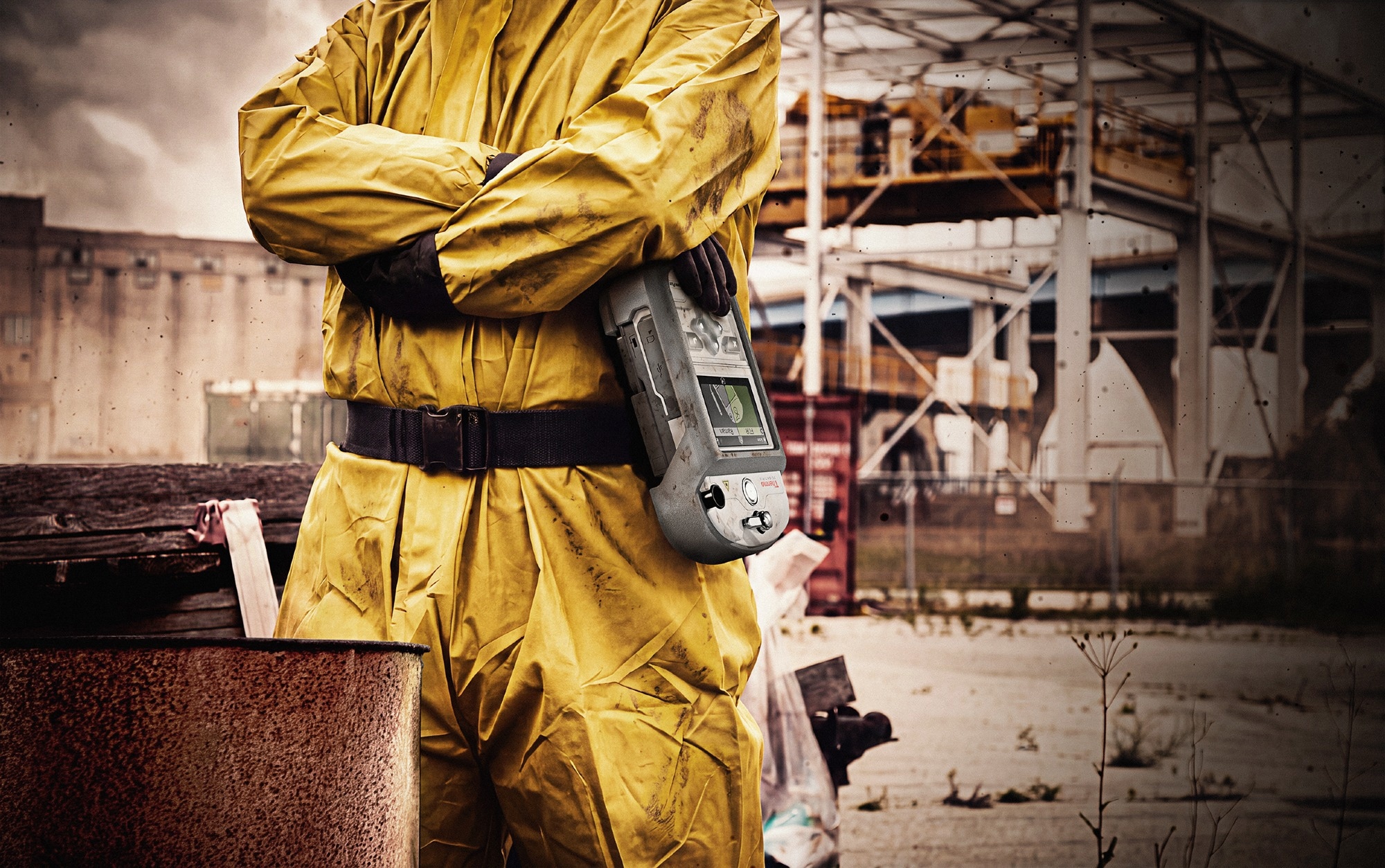
Image Credit: Thermo Fisher Scientific – Handheld Elemental & Radiation Detection
Looking ahead, what trends will shape the future of field-based threat detection?
Emerging threats will continue to become more complex. We expect to see more synthetics, more mixtures, more low-dose and high-potency materials, and faster turnover of analogs. The challenge will be staying ahead of those changes and closing gaps as soon as they appear.
The field will also demand safer workflows, with less handling, more standoff capability, and more decision support for non-expert users. These devices need to provide confidence without requiring long training programs, because many users need to make fast decisions in demanding environments.
Library updates, connectivity, and reach-back support will become increasingly important. We are not just shipping hardware; we want to work closely with customers so their feedback helps drive product innovation, library updates, new features, and case studies. The goal is to help customers track real threats, improve their workflows, and stay prepared as the threat landscape continues to change.
Analyze That episode 18 - Turning Unknown Threats into Informed Action: Chemical and Narcotics Identification Analyzers
Turning Unknown Threats into Informed Action: Chemical and Narcotics Identification Analyzers
About Mike Bates 
Michael Bates is a Senior Research Scientist at Thermo Fisher Scientific, where he develops spectroscopic libraries for handheld Raman, FTIR, and XRF instruments while supporting application development and customer workflows. He holds a PhD in Physical/Analytical Chemistry from Northeastern University and a BS in Chemistry from Salem State University.

This information has been sourced, reviewed, and adapted from materials provided by Thermo Fisher Scientific – Handheld Elemental & Radiation Detection.
For more information on this source, please visit Thermo Fisher Scientific – Handheld Elemental & Radiation Detection.
Disclaimer: The views expressed here are those of the interviewee and do not necessarily represent the views of AZoM.com Limited (T/A) AZoNetwork, the owner and operator of this website. This disclaimer forms part of the Terms and Conditions of use of this website.