From the Pantheon and the Great Wall to modern icons such as the Burj Khalifa or the Sydney Opera House, some of the world’s most enduring buildings prove that long-lasting structures depend on resilient materials, precise detailing, and construction practices tuned to their environment. Whether constructed two millennia ago or in the last decade, these examples demonstrate that durability is never accidental.
That same principle drives today’s building environment. As expectations for energy performance, fire safety, and climate resilience grow and as buildings become taller, tighter, and more complex, the demands placed on the building envelope rise substantially. At the same time, the rapid adoption of modular, unitized, and off-site construction increases the need for fast installation, consistency, and efficiency.
Saint-Gobain® Tape Solutions carries this tradition forward by designing long-lasting materials, protecting what matters, and strengthening the performance of contemporary building envelopes.
Protecting What Matters is important in many industries; however, it is truly critical in construction, where the fundamental purpose of any building is shelter.
Saint-Gobain Tape Solutions is committed to delivering innovative protective materials and solutions that complement surrounding building systems - giving architects, builders, fabricators, and DIYers greater peace of mind today and for years to come.
Phil Guy, General Manager, Tape Solutions
Saint-Gobain’s Capabilities
Saint-Gobain teams engineer tapes to function as coordinated system components, compatible with membranes, glazing assemblies, and critical interface junctions, to support airtightness, moisture control, and long-term durability across the entire building envelope.
This blog gathers the most frequently asked questions regarding airtightness, fire performance, moisture management, off-site installation, and system compatibility, while highlighting how various solutions point toward integrated tape and membrane systems.
Today’s Building Envelope Requirements: Setting the Context
What is Really Changing?
Contemporary building envelopes are systems engineered to deliver proven performance across climates and building types. Whether a project faces coastal wind, northern cold, or warm-humid moisture loads, the building envelope must function as a unified whole.
Instead of standalone products, specification-driven systems have provided the most dependable path to compliance as regulations tighten. Project teams now prioritize components with validated, tested performance that integrate smoothly with surrounding building envelope layers and contribute to long-term resilience.
Demand is highest at roof-edge details, façade transitions, and other high-risk interfaces, where validated system performance is crucial. These are the areas where market growth continues to outpace overall construction.
What Does the Building Envelope Market Look Like Today?
The market continues to grow, fueled by renovation, tighter energy and safety expectations, and increasing façade complexity.
Broader investment in building envelopes and a focus on energy efficiency continue to drive demand, especially for façade and roof systems. The global building envelope market is anticipated to grow at approximately 5.5% CAGR this decade, as regulations and renovation programs prioritize thermal performance and airtightness (areas in which high-performance tapes contribute to system assembly).
Adhesive tapes remain a leading auxiliary material across Europe's building and construction industry. Europe holds the largest regional share of the global building and construction tapes market, with the category expected to expand at approximately 5% CAGR over the medium term.
Core applications span windows and doors, roofing, and other building envelope interfaces, where tapes are utilized for bonding, sealing, protection, insulation, glazing, and weatherproofing.
What Do the New Requirements Actually Mean?
Requirements for verified airtight layers, sealed transitions, and long-lasting weather protection continue to increase, and certification bodies and energy consultants now require unambiguous evidence at joints, seams, and penetrations.
Meeting these demands requires solutions that deliver data, documentation, and repeatable installation techniques that can be consistently executed in both the field and the factory. These requirements favor materials that can be audited, traced, and installed in a controlled, repeatable manner, giving specifiers clearer assumptions and contractors fewer variables.
Fire performance has likewise quickly shifted to the foreground, reinforcing the need for coordinated, system-level detailing.
Why is Fire Performance now Front-and-Center?
Incorporating glazing, ventilated cavities, and combustible materials into façades makes the connections between these elements, including perimeter seals, linear joints, and transitions, essential for overall fire safety. Treating these areas as part of a coordinated system, rather than viewing them as isolated details, helps preserve fire integrity and minimizes risk throughout design and installation.
To support this, many teams now specify Norseal® FS1000 at perimeter and linear joints. Its combination of watertight, airtight, soft, resilient, intumescent, and adhesive-backed characteristics allows it to expand during fire while still accommodating movement and maintaining a reliable seal.
Choosing the right tape, using a clear installation technique, and confirming that each detail aligns with the correct façade or joint test standard helps ensure that performance is proven, not assumed.
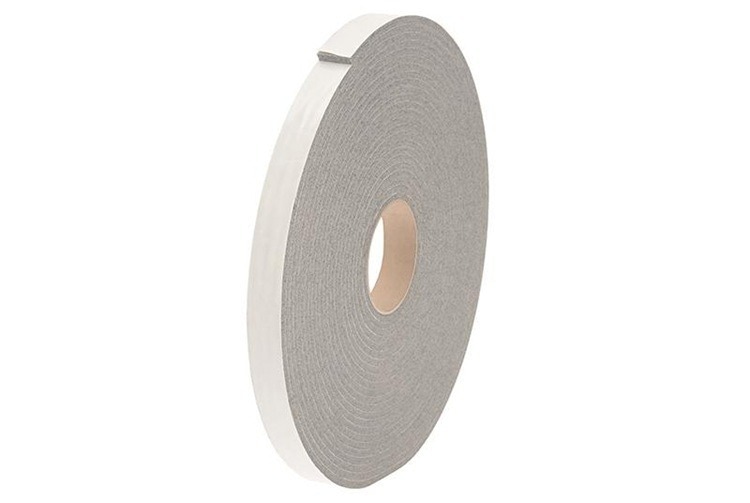
Image Credit: Saint-Gobain Tape Solutions
How Does Indoor-Air Quality Factor In?
Airtight detailing is as much a health issue as it is an energy issue. Sufficient airtightness helps maintain indoor air cleanliness and minimizes the likelihood of moisture entering walls. Continuous, well-sealed layers at joints and penetrations support healthier indoor environmental quality and enhance long-term durability.
Maintaining this degree of accuracy consistently is difficult in standard field conditions, which is why the industry is increasingly choosing off-site and modular construction. Factory-controlled environments make it easier to achieve tight tolerances, consistent sealing, and repeatable quality, as well as the properties that high-performance building envelopes and indoor air quality goals rely on.
How Does Off-Site Construction Change Expectations?
Predictable processes drive factory workflows. Clean, rapid adhesives and dimensionally stable spacers deliver the speed and precision demanded in these environments.
In off-site lines, clean acrylic cores and dimensionally stable spacers are essential, supporting repeatable sealing across temperature and humidity fluctuations, common in controlled shop-floor environments.
Modular builders, curtain wall fabricators, and off-site manufacturers prioritize materials that eliminate variability, ensure consistent curing, and maintain stable performance across typical shop-floor conditions.
How Integrated Building Envelope Systems Deliver Continuous, Code-Ready Performance
Across indoor air quality, fire protection, airtightness, and off-site manufacturing, one theme is consistent: building envelope performance relies on system continuity and dependable detailing where materials meet.
In this context, Norseal Sealing Solutions help build continuous, weather-resistant, and airtight layers at window-to-wall, panel-to-panel, and perimeter joints (including fire-relevant interfaces), while Norbond® Structural and Bonding Tapes deliver clean, long-lasting attachment for modular assemblies, glazing accessories, and façade panels.
In applications such as windows and doors, Norbond T-Series Tapes provide long-lasting muntin-bar attachment and glazing-partition bonding with OEM-validated performance, supporting both on-site installers and high-throughput manufacturing lines.
In cold climates especially, tape-forward solutions such as Arctic Edge™ workflows and Norseal AST/Extreme Sealing approaches allow teams to preserve installation speed when primers or heat-welding would otherwise slow production.
Why Saint-Gobain Tape Solutions is the Right Partner
Saint-Gobain spacer, sealing, bonding, and fire-resistant tapes align directly with the most challenging building envelope transitions.
The company supports clients with system-ready materials, standards-aligned documentation, and application support that helps minimize risk and speed up approvals.
Saint-Gobain’s teams collaborate closely with façade engineers, installers, and quality managers across Europe to help ensure details are workable on paper and achievable on site, closing the gap between design intent and practical execution.
Where Do Tapes Provide the Highest Value?
Specific segments are particularly well-suited for tape-driven innovation due to their position at the building envelope's “pressure points”, areas where airtightness, movement, moisture, or fire performance must be reliably proven. These are also locations where rapid, consistent installation delivers clear benefits.
By substituting high-performance tapes for multi-step wet-sealant assemblies, many teams increase repeatability and reduce dependency on weather windows or installer-to-installer variation.
Where Do Tapes Unlock the Most Value Today?
- Façades: Structural glazing spacing, ACM bonding, perimeter sealing, and air/water continuity.
- Windows and Doors: High-volume, performance-driven production and installation.
- Roof Interfaces: Long-term resilience at high-stress joints and penetrations.
These segments share a common requirement: the need for predictable, clean, and durable solutions that support both design accuracy and long-term weather resistance.
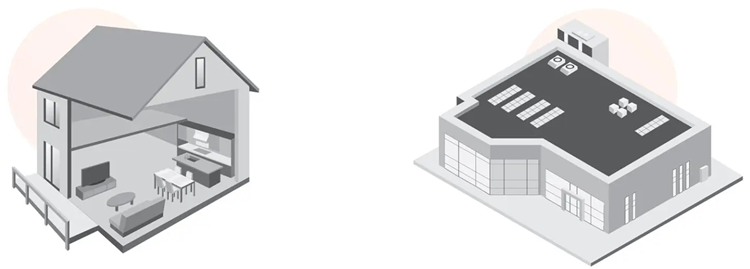
Image Credit: Saint-Gobain Tape Solutions
What Advantage Do Tapes Have that Other Materials Do Not?
Tapes deliver speed, precision, and dependable performance that stays consistent across factories and sites. By replacing multi-step assemblies with single-step, testable solutions, they reduce interface risk. This gives architects clearer design assumptions, installers fewer variables, and building owners greater certainty in long-term performance.
How Can the Tape Solutions Portfolio Align in This Market?
Saint-Gobain’s portfolio is designed for crucial interfaces:
- Thermalbond® Spacer Tapes for structural glazing
- Norbond Bonding Tapes for panels and components
- Norseal Sealing Tapes for watertightness, airtightness, and movement
- Norseal FS1000 & PS-V0 and co-developed products for fire performance
These are paired with documentation, detailed reviews, and expertise in materials and applications, differentiators consistently cited by solution-brand leaders. This support model helps ensure that window parameters, module joints, and façade transitions meet specified performance standards, even under tightening project timelines or fluctuating site conditions.
How Do Trends Map to Tape Innovation?
Four shifts are transforming building envelope specifications. These shifts favor solutions that do more with less, deliver factory-grade consistency, document performance clearly, and include hands-on support. These include:
- Hybridization (one tape, several jobs). By integrating movement accommodation, weather sealing, airtightness, and, where needed, documented fire performance in a unified solution, multifunction tapes reduce complexity and installation risk.
- Off-site construction (factory precision). As the building construction market continues to move into controlled factories, materials must provide predictable behavior, dimensional stability, and clean, rapid installation.
- Policy-driven performance (prove it, don’t promise it). Tighter energy and fire-safety expectations demand standardized, aligned, and verifiable data to streamline submittals and approvals.
- Technical support (details decide results). Correct installation at crucial transitions is essential for high-performance building envelopes. Saint-Gobain experts review details, support mockups, offer on-site coaching, and establish practical QC checks to ensure consistent installations that meet specifications and achieve intended performance.
How Saint-Gobain Delivers, from Technology to Execution
Across transitions, roofs, doors, windows, modules, and façades, Saint-Gobain Tape Solutions enhances building envelopes through systemized spacer, bonding, and sealing technologies. The company designs buildable and repeatable details, supports decisions with standards-aligned data, and provides systemized kits and training to help teams improve speed and minimize rework.
Operating within the larger Saint-Gobain construction ecosystem, the company coordinates solutions spanning construction chemicals, finishing, insulation, glazing, and membranes.
The result is one partner providing systems engineered to perform, proven to comply, and installed with long-term confidence. Connect with our teams to learn more today.
Acknowledgments
Produced from materials originally authored by Maggie Bieniek.

This information has been sourced, reviewed, and adapted from materials provided by Saint-Gobain Tape Solutions.
For more information on this source, please visit Saint-Gobain Tape Solutions.