With climate change making headlines almost every day due to devastating fires, extended droughts, record-breaking sea temperatures such as those recently recorded in the Mediterranean, and historically low water levels in rivers and lakes that severely restrict the transport of goods, the need for a more sustainable energy supply has never been more evident.
As part of a more renewable energy supply, Battery Energy Storage Systems (BESS) are emerging as an essential element of modern energy infrastructure. As renewable energy adoption continues to grow worldwide, utilities, companies, and communities increasingly depend on battery storage to balance fluctuations in power generation and maintain grid stability. BESS are transforming the energy landscape, while the regulatory landscape is evolving just as quickly.
At the same time, storage systems are becoming larger, more powerful and increasingly energy dense. This expansion is accompanied by growing attention from regulators, insurers and system operators, all of whom are putting greater emphasis on battery safety.
Although developments in cell chemistry, battery management systems, and monitoring technologies have considerably enhanced safety, thermal runaway remains a major design challenge. Consequently, industry focus is increasingly shifting from preventing every potential failure scenario to minimizing the impact when a failure does occur.
This article examines how changing safety requirements are influencing battery design and why passive protection solutions are playing a progressively important role in today's BESS architectures.
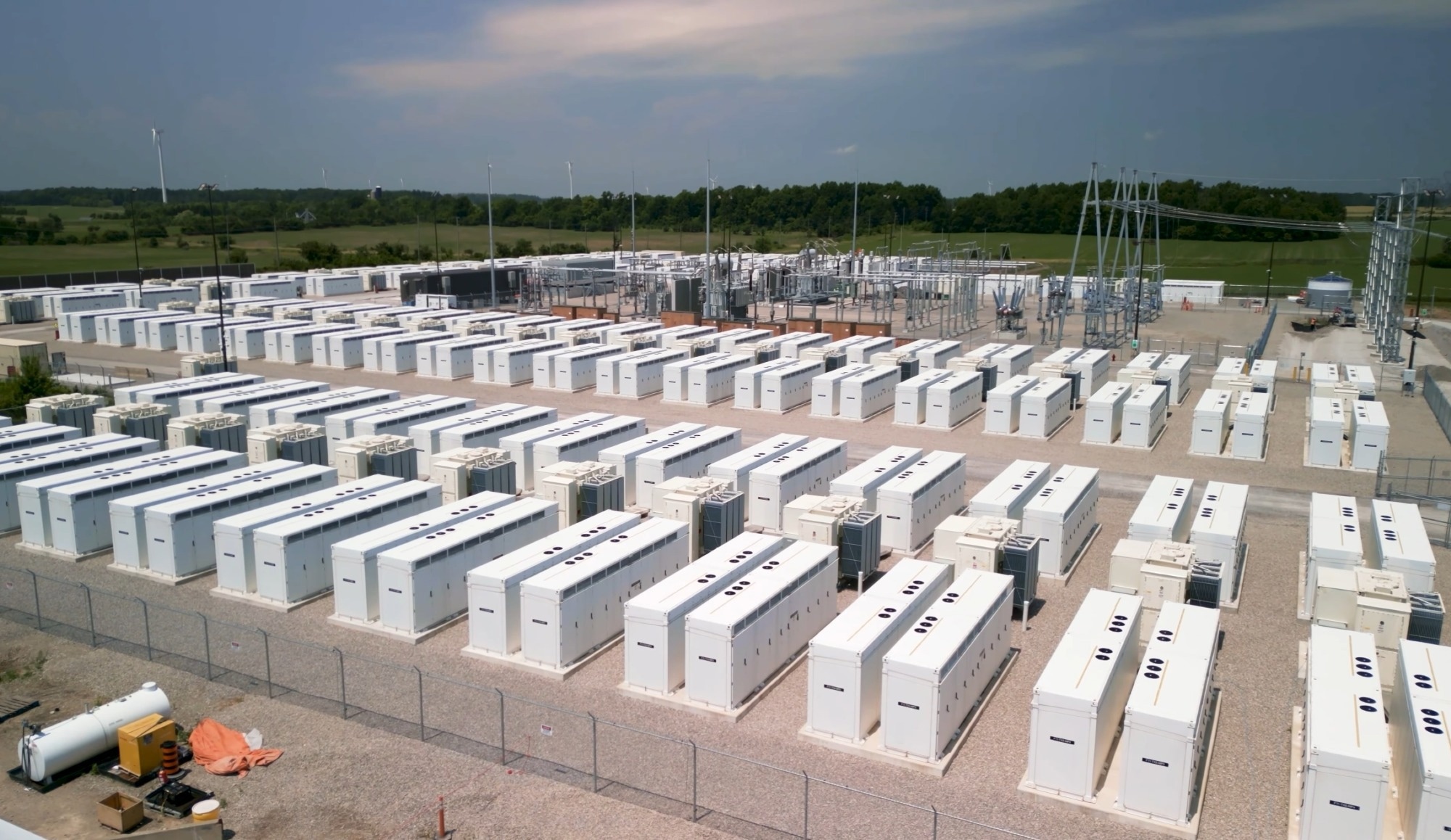
Image Credit: harhar38/Shutterstock.com
Why Battery Safety Has Moved Center Stage
Around the globe, engineers are developing new battery technologies with remarkable results. Battery energy density has reached unprecedented levels, and further technologies and achievements are already in development. However, these experts are focused not only on maximizing energy density but also on making batteries safer.
One of the most important battery safety challenges is thermal runaway events. Battery cells are complex, with each cell engineered to deliver high performance. With today's technology, there is always a residual risk of cell failure. The challenge is that, under certain circumstances, a cell can enter thermal runaway and produce heat that can impact neighboring cells and initiate a propagation event.
Since these incidents can be serious, thermal runaway has become a major area of attention. However, the industry's focus is changing from asking, "Can thermal runaway events occur?" to "How can thermal runaway be safely contained when it occurs?"
Naturally, the ultimate objective is to avoid cell failure in the first place. However, the industry has not yet reached that point. For this reason, modern battery safety approaches increasingly focus on slowing, isolating, and containing thermal events rather than assuming they can always be avoided. Innovative tape solutions can contribute significantly to this process - but that is a topic for later.
As batteries become larger and more valuable, the aim is to restrict thermal events to a specific area, postpone propagation, and stop a failure from spreading across the battery module, pack, or system. To develop safer, more dependable battery systems, new regulations are being introduced, which the following section examines.
The Regulatory Landscape is Evolving
As BESS installations continue to increase in scale and complexity, safety expectations are developing alongside them. Historically, battery safety discussions largely concentrated on cells, modules, and individual battery components. Today, regulators, insurers, and utilities are increasingly assessing the safety performance of complete energy storage systems.
According to Dominique Burgeff, who works closely with Battery Energy Storage Systems at Saint-Gobain® Tape Solutions, this transition is particularly apparent in grid-scale installations. Many contemporary BESS are installed as completely integrated 20-foot container solutions that bring together battery cells, battery management systems, power conversion systems, thermal management, and fire protection systems within a single enclosure.
Safety regulations have evolved from cell or module safety toward full container safety. If a thermal runaway event starts inside a container, the resulting fire should be contained within that container and should not propagate to the next one.
Dominique Burgeff, Battery Energy Storage Systems, Saint-Gobain® Tape Solutions
Although regions pursue different regulatory approaches, a common pattern is emerging: authorities are placing greater importance on thermal runaway containment and system-level safety.
In the United States, standards such as UL 9540A and NFPA 855 have established some of the most extensive requirements worldwide for container-level fire resilience. For certain projects, authorities, utilities, and insurers may even demand full-scale fire testing to confirm the safety performance of a BESS installation.
Europe is following a somewhat different route. The EU Battery Regulation (2023/1542), CE marking requirements, and the increasing application of IEC 62933 standards are placing greater emphasis on compliance, traceability, lifecycle transparency, and system safety. Battery passports and documentation requirements are becoming increasingly important elements of market access.
China is also strengthening its safety requirements. The country's GB 38031-2025 standard introduced considerably more stringent thermal runaway requirements. Although the standard was initially developed for electric vehicle batteries, industry specialists increasingly anticipate these principles could also shape future BESS safety requirements. The focus is moving toward designs that prevent fire propagation beyond the affected battery system and rely on advanced thermal barriers, insulation, and venting concepts.
While regulations vary by region, the direction of travel is clear: battery safety is no longer evaluated solely at the cell level. Increasingly, designers need to demonstrate how an entire battery system behaves when a failure occurs and how effectively thermal events can be isolated, delayed, and contained.
What This Means for Battery Designers
According to Dominique Burgeff, today's AC and DC block designers increasingly need to address thermal runaway protection at several levels throughout a containerized BESS architecture. He discusses a "multilayer protection strategy", which is clarified in the following section.
Previously, thermal management and fire protection frequently concentrated on individual battery cells or modules. Today, engineers are adopting a considerably more comprehensive approach.
A multilayer protection strategy consists of various levels, not just a single solution. Thermal runaway barriers may need to be integrated between individual cells, between battery modules, between racks and, in some cases, even along the inner walls of the container itself.
Dominique Burgeff, Battery Energy Storage Systems, Saint-Gobain® Tape Solutions
Modern BESS thermal management and fire safety can be divided into passive and active management.
Passive systems include components that do not require external activation, while active systems, such as cooling, can be adjusted based on the battery's current condition. For instance, most large-scale BESS installations currently depend on liquid cooling systems to maintain safe operating temperatures and optimize performance. These increasingly sophisticated cooling architectures introduce additional reliability requirements.
Every connection point represents a potential leak path. If coolant escapes and contacts electrical components, it can introduce new safety risks, including short circuits and system failures. Consequently, sealing performance using innovative materials has become an important design consideration alongside thermal management and fire protection.
For battery designers, safety is therefore no longer confined to cell selection or battery management systems. It calls for a comprehensive approach that considers thermal propagation, cooling efficiency, electrical insulation, sealing integrity, and fire containment as interconnected elements of the overall system design. This is one reason advanced passive protection materials are becoming increasingly valuable in contemporary BESS architectures.
The Growing Importance of Passive Protection Materials
The key distinction between active and passive protection solutions is whether they require external activation. The two approaches work together.
According to Dominique Burgeff, one of the main benefits of passive protection solutions is their inherent reliability:
Unlike active fire suppression systems, passive protection materials do not need to be activated by an external signal or trigger. While active systems allow for more precise and ad hoc management, they also need data and complex systems which can be a great instrument and a significant risk at once.
Dominique Burgeff, Battery Energy Storage Systems, Saint-Gobain® Tape Solutions
This seemingly straightforward property can significantly influence overall system safety. Passive materials are engineered to perform their function continuously, whether by slowing heat transfer, postponing thermal propagation, enhancing electrical insulation, or supporting fire containment.
Examples include thermal runaway barrier foams, aerogel and microporous insulation materials, fire-resistant gasketing solutions, and compression pads with improved fire performance. Integrated throughout the battery system, these materials can help reinforce a multilayer protection strategy designed to reduce the consequences of a thermal event.
Passive protection materials provide an extra layer of protection without depending on sensors, control systems, or activation mechanisms. Consequently, they are becoming increasingly important to the development of safer, more dependable, and more resilient battery energy storage systems.
Designing for Compliance Starts Early
For battery designers, this is an especially interesting period. Demand for more and better energy storage solutions is increasing rapidly, as is the range of technologies and technical achievements.
New regulations are setting the standards, and as technology and battery use evolve, these regulations will adapt. To meet these requirements while delivering safer, more efficient BESS, engineers can turn to innovative materials and solutions.
Acknowledgments
Produced from materials originally authored by Alexander Dewald.

This information has been sourced, reviewed, and adapted from materials provided by Saint-Gobain Tape Solutions.
For more information on this source, please visit Saint-Gobain Tape Solutions.