Analyzing the moisture content of food and feed offers a useful indication of lifespans, quality, and nutrient content.
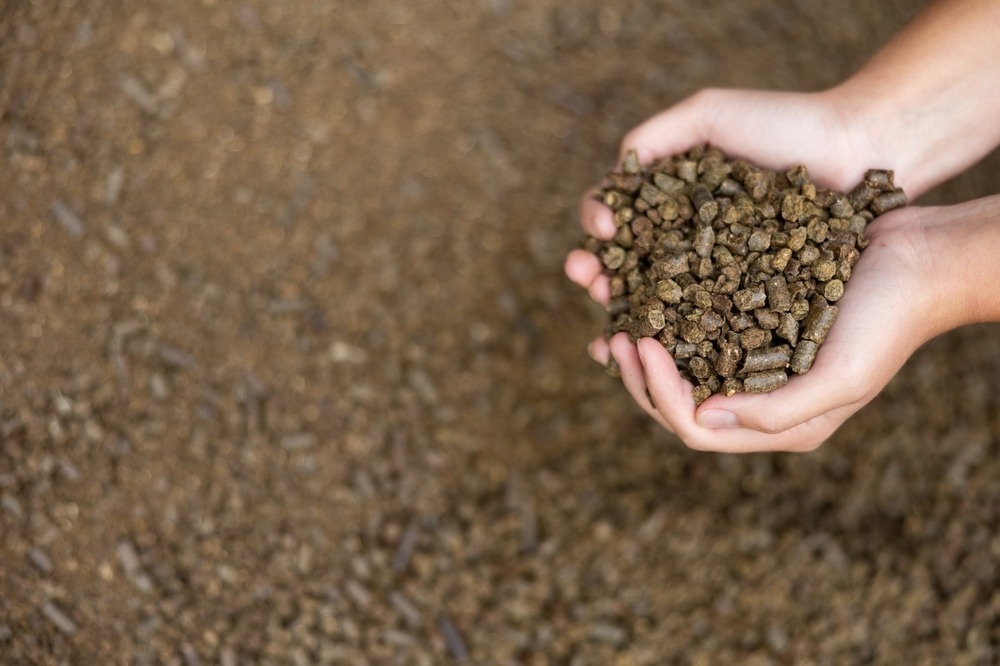
Image Credit: BearFotos/Shutterstock.com
Moisture in these products must be carefully controlled for safety, because too much moisture can encourage the appearance of bacteria. Moisture measurement and control also help improve the management of manufacturing procedures and ensure that products adhere to specific regulations.
It is possible to directly determine the moisture content of food and feed using a thermogravimetric analyzer. This is done by increasing the temperature of a sample and observing any changes in weight caused by the evaporation of liquid.
This article looks at the use of thermogravimetric analyzers with food and feed, outlining how they are used to make direct moisture determinations.
Understanding Thermogravimetric Analysis
Thermogravimetric analysis (TGA) is a form of thermal analysis whereby a sample’s mass is monitored as a function of time or temperature under a controlled atmosphere.
Its core use is the characterization of materials to assess their thermal stability, measuring weight changes that occur as the sample is heated or maintained at a constant temperature.
Thermogravimetric analysis is especially beneficial for the analysis of polymeric materials, including foods and feeds, where moisture content is a critical parameter.
Principle of Moisture Determination via Thermogravimetric Analysis
In terms of moisture analysis, thermogravimetric analysis measures the amount of weight loss as a sample is heated.
The procedure involves heating the sample from room temperature to a predetermined endpoint, and this is generally performed in an inert atmosphere to prevent oxidation.
Temperatures typically range between 100 °C and 160 °C, depending on the volatility of other components in the sample under investigation. This temperature is high enough to evaporate water but low enough to prevent the decomposition of the majority of organic substances.
The sample’s weight is continuously recorded during TGA moisture analysis as the temperature increases.
Weight loss observed during this process will be primarily due to moisture evaporation, so it is possible to plot this weight loss against temperature to distinguish between different types of weight loss events, for example, loss of water or the decomposition of organic components.
Moisture Analysis Methodology
There are a few key steps in the moisture analysis methodology using thermogravimetric analysis.
Sample Preparation
Samples are initially prepared to a known mass to ensure that any weight-change measurements are accurate and representative of the entire sample.
Baseline Determination
A baseline is recorded at the start temperature before introducing the sample. This accounts for any drift in the balance or other potential systemic errors.
Heating Protocol
The sample is then heated in line with a specific temperature program. Both the heating rate and final temperature are critical parameters that must be optimized based on the specific food or feed being analyzed.
Data Collection
Weight loss data is continuously collected as the sample is heated. Advanced thermogravimetric analysis systems can automate data collection and analysis, improving both efficiency and accuracy.
Analysis and Interpretation
The thermogravimetric curve is analyzed to learn about moisture content. The area under the curve will be integrated to quantify total moisture. This area corresponds to the temperature range where water loss took place.
Thermogravimetric Analysis Applications in Food and Feed Analysis
Thermogravimetric analysis is a highly versatile technique, meaning it can be applied in a range of aspects of food and feed analysis.
Quality Control
TGA is crucial for assessing the quality and shelf life of food products by offering a rapid and reliable means of moisture content determination.
Nutritional Analysis
It is important to understand moisture content to accurately calculate other nutritional parameters, for example, caloric content on a dry basis.
Research and Development
New food formulations typically require rigorous testing to optimize their stability and shelf life; moisture content analysis is key to this process.
Advantages and Limitations of TGA
TGA offers a range of benefits but does have some limitations.
Advantages
- Thermogravimetric analysis offers high accuracy and precision for moisture determination, which are key to regulatory compliance and quality control.
- It is considerably faster than traditional drying methods, delivering results in minutes rather than hours.
- TGA requires only minimal sample preparation, reducing the risk of errors or contamination.
Limitations
- The high initial cost of equipment and maintenance is the primary limitation of thermogravimetric analysis.
- Technical expertise in thermal analysis techniques is required for the proper operation and interpretation of TGA data.
Direct Moisture Determination with Thermogravimetric Analysis
TGA is a reliable technique, offering in-depth insight into a sample's moisture content. This information can help ensure that feed contains the right amount of nutrients and is safe for use, for example, in pet feed.
Moisture determination using a TGA analyzer can also support manufacturers looking to better manage the quality of their food products, such as chocolate and flour.
The xrTGA 1100 from XRF Scientific can be used to examine moisture within a range of different materials; its large throughput can be used to analyze 30 materials at one time. It complies with CE regulations and is designed to offer rapid heating and cooling.
Thermogravimetric analysis can be used to ensure that materials’ moisture levels are at a satisfactory standard. XRF Scientific offers TGA equipment that helps users better understand their samples and how they respond to changing temperatures.

This information has been sourced, reviewed, and adapted from materials provided by XRF Scientific.
For more information on this source, please visit XRF Scientific.