Thermogravimetric analysis is highly beneficial in quality control processes, helping ensure that the pharmaceutical, chemical, petroleum, and polymer manufacturing industries comply with a range of key safety procedures.
Image Credit: Valery Lisin/Shutterstock.com
Users can learn a great deal about a material via thermogravimetric analysis (TGA), including its purity, structure, and the rate at which it combusts, decomposes, or dries. TGA can also be used to investigate how well a material remains stable under different heat levels or how well it can absorb liquid.
Fundamentals of Thermogravimetric Analysis
Thermogravimetric analysis works by measuring the mass of a sample as it is:
- Heated
- Cooled
- Maintained at a constant temperature
The primary output of this process is a thermogram, a plot showing the relationship between a sample's mass and time or temperature.
This analysis facilitates critical insight into a material’s:
- Decomposition temperatures
- Thermal stability
- Absorbed moisture content
TGA can also be used to detect the presence of a range of components such as reinforcements, fillers, and plasticizers in polymers.
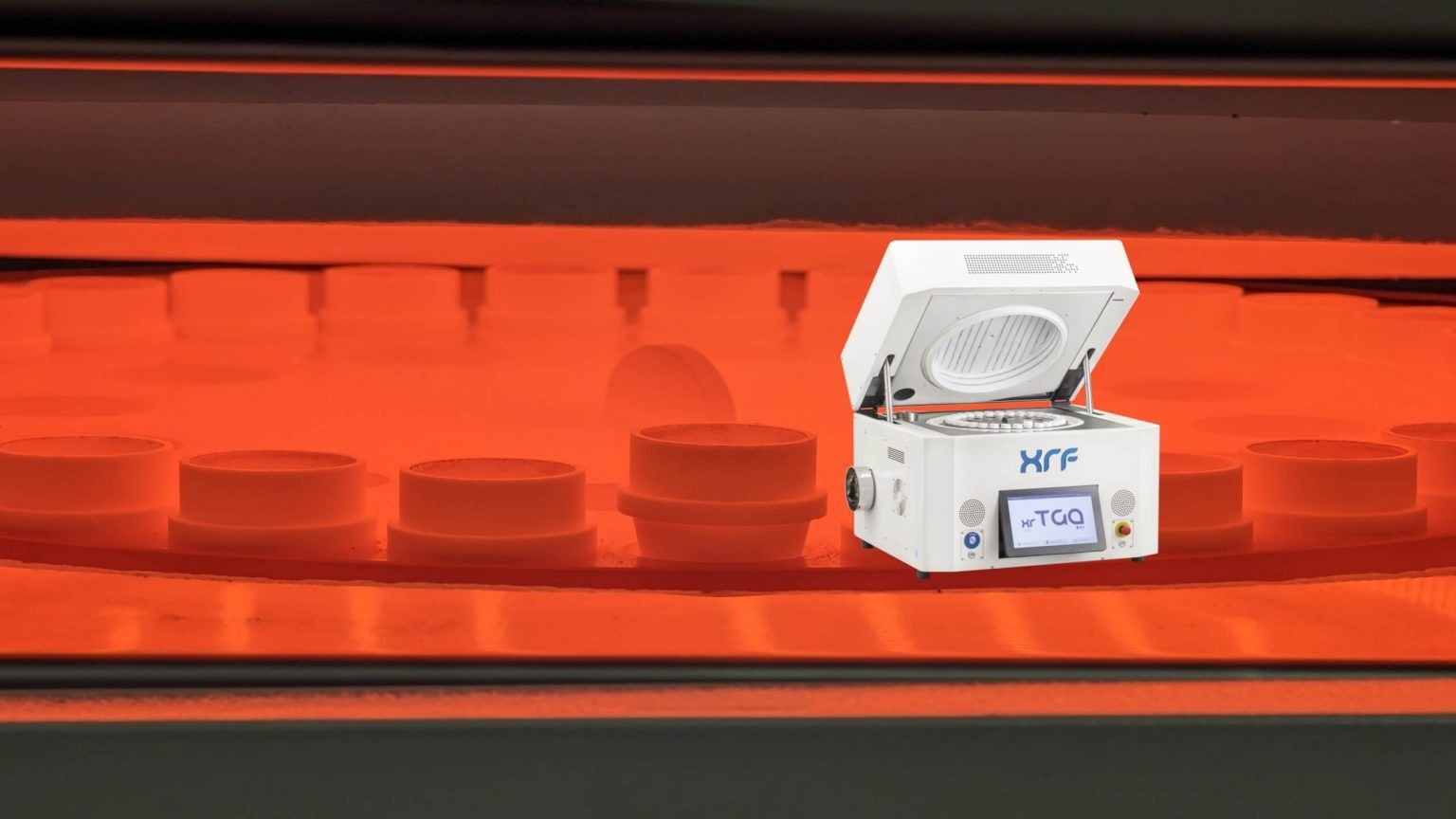
Image Credit: XRF Scientific
Principle of Operation
Thermogravimetric analysis’s principle of operation is simple yet powerful. A sample is initially placed in a small pan or crucible before being positioned in a furnace with a precisely controlled temperature program.
Next, the sample is subjected to a controlled temperature regime that generally involves heating at a constant rate, though isothermal (constant temperature) conditions can also be applied.
Changes in sample mass during the heating process are continuously recorded by a highly sensitive balance. These mass changes are related to different chemical and physical processes such as:
- Dehydration
- Decomposition
- Oxidation
Key Components of Thermogravimetric Analysis
TGA typically involves a range of essential components.
Balance System
A high-precision balance is at the heart of the thermogravimetric analysis instrument. This balance detects minute mass changes at the microgram or even nanogram scale.
Furnace
The instrument’s furnace can typically reach temperatures that exceed 1000 °C. This controlled heating rate is key to the thermal treatment of the sample.
Temperature Control
Accurate thermogravimetric analysis measurements require precise temperature control, including both heating rate and atmosphere (oxidative, inert, or reducing), depending on the application.
Data Acquisition and Analysis Software
The current generation of thermogravimetric analysis instruments includes advanced software designed for data recording, analysis, and the interpretation of analysis results.
Thermogravimetric Analysis Applications
Thermogravimetric analysis sees widespread use in applications across a range of fields due to its capacity to provide detailed information about material properties.
Material Characterization
TGA can be used to determine complex materials’ composition, identifying their components based on their thermal decomposition profiles. It is suitable for use with polymers, composites, pharmaceuticals, and more.
Thermal Stability
The ability to assess materials’ thermal stability is central to applications where materials may be subjected to high temperatures.
Lifetime Prediction
Thermogravimetric analysis can be used to investigate the kinetics of decomposition, helping to predict the lifetime of specific materials under certain thermal conditions.
Moisture and Volatile Content Analysis
Thermogravimetric analysis is also highly effective in measuring materials’ moisture and volatile content, making it a valuable tool in many industrial processes.
Advantages and Limitations
Advantages
TGA offers a wide range of advantages, including:
- Versatility with the capacity to analyze a diverse array of materials, including metals, ceramics, polymers, and composites
- Quantitative analysis, offering useful quantitative data on materials’ composition and thermal stability
- High sensitivity, with its ability to detect small changes in mass, making TGA suitable for analyzing minute samples
Limitations
There are some limits to TGA, however, including:
- TGA requires a representative sample that is small yet homogeneous
- The interpretation of thermogravimetric analysis data can be challenging, particularly when working with materials that undergo multiple overlapping or simultaneous processes
- Results can be influenced by the furnace’s atmosphere, requiring careful selection and control of the gas environment
Thermogravimetric Analysis: A Key Tool with a Wide Range of Applications
Leveraging thermogravimetric analysis principles allows researchers and scientists to learn more about a material’s reactivity, including how the energy of its molecules can affect its physical properties.
Thermogravimetric analyzers and other thermogravimetric analysis tools will continue to be enhanced as technology develops, including the implementation of automated thermogravimetric analysis technology designed to make devices more efficient.
XRF Scientific can help users determine the ideal thermogravimetric analysis solution for their work, whether that involves using TGA to meet industry-specific quality control standards or simply learning more about its principles. The company’s thermogravimetric analyzers represent innovation at its finest, and the xrTGA-1100 is an excellent starting point.
This thermogravimetric analyzer can be employed with a range of materials and features an improved, easy-to-use system able to offer rapid temperature variations. This instrument also features a carousel for 30 samples, making it ideally suited to use in a fast-paced laboratory.

This information has been sourced, reviewed, and adapted from materials provided by XRF Scientific.
For more information on this source, please visit XRF Scientific.