Precision, efficiency, and careful quality control are paramount in the steel production industry. Thermogravimetric analysis (TGA) stands out for its ability to enhance these aspects of steel manufacturing.
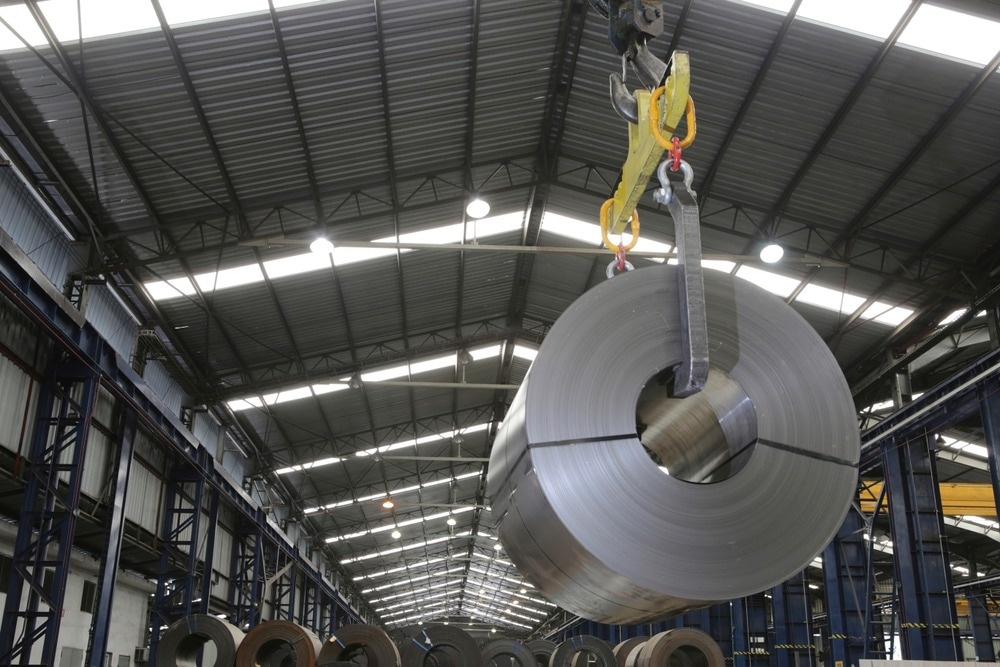
Image Credit: casa.da.photo/Shutterstock.com
TGA can measure a sample’s weight loss or gain by leveraging a thermal function and a time function. This method allows researchers and scientists to learn about the impact of specific heating rates on different materials.
This article looks at why TGA is becoming an essential steel manufacturing tool, as well as exploring how it supports the industry’s advancement towards more efficient and higher-quality production processes.
Understanding Material Properties
The main use of TGA is to gain useful insights into how materials react to heat. For example, characterization of these materials includes:
- Adsorption
- Absorption
- Weight loss or gain
- Thermal decomposition
- Chemisorption
Steel is an alloy primarily comprised of carbon and iron, with a number of other elements. Steel’s strength, corrosion resistance, ductility, and other properties are significantly influenced by its composition and the presence of impurities.
TGA offers an accurate means of analyzing steel’s composition, including carbon content determination and confirming the presence of other alloying elements.
This analysis is key to ensuring that steel meets specific performance requirements and standards.
Improving Quality Control
Quality control underpins steel production, with TGA supporting this process by providing detailed insight into steel components’ thermal stability and decomposition behavior.
Understanding how steel reacts to different temperatures allows manufacturers to optimize critical heat treatment processes to develop the steel’s desired mechanical properties. This enables the production of higher-quality steel that is better able to withstand the demanding applications it is typically used for.
Lowering Production Costs
TGA can also help reduce steel production costs. Manufacturers can optimize their production processes by leveraging thermal analysis of steel properties, thereby minimizing waste and reducing energy consumption.
For instance, TGA can help determine the most efficient temperature range for sintering, annealing, and other processes, potentially leading to energy savings.
Advancing Research and Development
In the realm of research and development, TGA is a valuable tool for developing new steel grades and improving existing ones. It provides insights into the effects of different alloying elements and heat treatments on steel properties.
This information is essential, allowing innovators throughout the steel industry to experiment with new treatment methods and compositions when a sample is heated. This allows performance enhancements and the development of specialized types of steel for various applications.
Environmental Considerations
The steel industry is under constant pressure to lower its environmental footprint. TGA supports this vital work by providing data that can help optimize energy usage and minimize waste.
Manufacturers can develop more eco-friendly production methods by understanding the thermal properties of steel and its components. This is key to aligning with global sustainability goals.
Regulatory Compliance
Steel products are subject to a range of international regulations and standards. TGA underpins compliance with these standards by offering accurate and detailed analysis of the composition and properties of steel.
Not only does this support steel manufacturers’ efforts to adhere to regulatory requirements, but it also improves trust in and reliability of steel products in the market.
Improving Product Reliability
Reliability is crucial for steel products, particularly in construction, automotive, and aerospace applications. TGA ensures that the steel utilized in these industries has appropriate properties to perform in different environmental conditions and under stress.
This improves the overall reliability and safety of end products, a key aspect in these demanding sectors.
Thermogravimetric Analysis for Steel Product Characterization
Steel production can be advanced and enhanced by utilizing thermogravimetric analysis, offering detailed insights into material properties.
This powerful characterization can reduce production costs, improve quality control, and ensure comprehensive environmental and regulatory compliance.
Demand for high-quality, sustainable, and reliable steel continues to increase, meaning that the role of TGA is becoming an increasingly invaluable resource in the steel industry.
Steel manufacturers leveraging TGA’s material characterization capabilities are extremely well-positioned to lead in quality, innovation, and sustainability.

This information has been sourced, reviewed, and adapted from materials provided by XRF Scientific.
For more information on this source, please visit XRF Scientific.