Sponsored by ServomexReviewed by Olivia FrostNov 3 2026
Hydrogen (H2) is an important energy source for a low-carbon future because it only emits water when burned. However, present methods of hydrogen production emit greenhouse gases. Over 90% of hydrogen is produced as "gray" with steam methane reforming (SMR) or "blue" with carbon capture, utilization, and storage (CCUS).
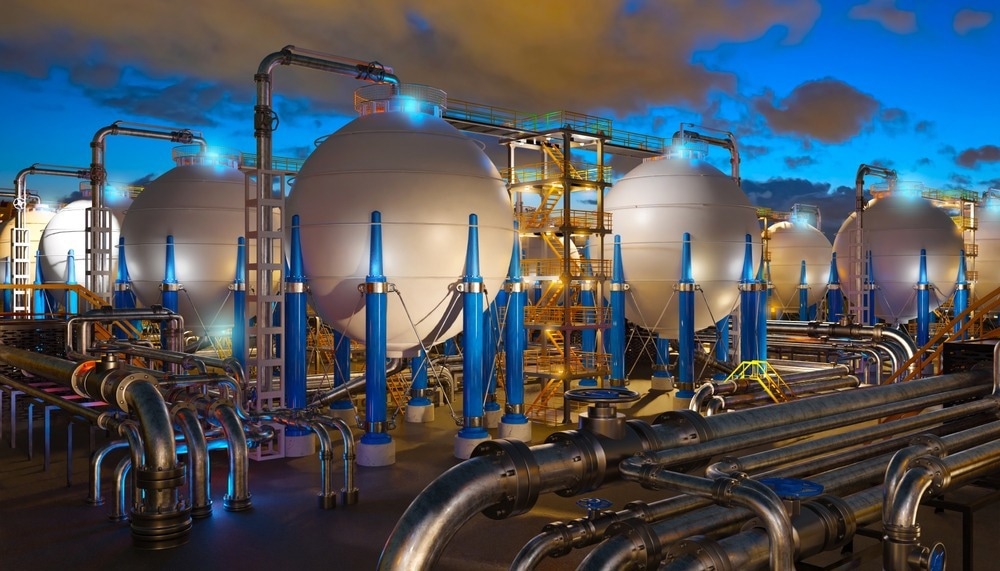
Image Credit: FOTOGRIN/Shutterstock.com
Only a small percentage is "green" hydrogen, which is created renewably through electrolysis. Integrating hydrogen also presents obstacles such as high production costs, storage constraints, and flammability issues.
Significant investment is required to develop production and distribution. As a gas analysis leader, Servomex offers cutting-edge solutions to accelerate hydrogen adoption, including air separation unit (ASU) applications.
This helps to ensure regulatory compliance, operating efficiency, and safety, making it suitable for all industrial applications.
Introduction
Worldwide, 97 million tons (Mt) of hydrogen are consumed each year.1 Refineries absorb half of the global supply, converting crude oil into products such as gasoline and diesel.2
However, the gas could now replace the very fossil fuels it has contributed to producing. As a result, the demand for H2 is expected to increase sixfold over the next 25 years, reaching 125–585 Mt per year.3 This represents a massive financial opportunity, but it also poses technical problems.
A multifaceted strategy will be required to achieve net zero emissions by 2050. It is thought that energy efficiency, electrification, and renewable power can reduce emissions by up to 70%.4
However, decarbonizing heavy industries that produce critical materials such as steel, cement, and aluminum requires a different approach. Simply using less is not an option. In fact, demand for these materials is increasing rapidly, projected to rise by up to 80% by 2050, owing in part to the development of renewable energy infrastructure.5,6
Temperatures beyond 1000 °C are frequently required in production, making it challenging to power production solely with renewable energy sources. Carbon dioxide (CO2) is a natural byproduct of various chemical processes, including plastics, cement, and steel production.7
As a highly reactive element and known energy transporter, H2 provides a solution. Industry can burn the gas to generate extreme heat, with only water vapor as a byproduct. It can also replace fossil fuels in reduction and reaction processes.8
For example, replacing coal with hydrogen in iron ore processing can lower steel-making emissions by 80%.9 Importantly, industrial processes and infrastructure that presently use natural gas can be converted to use H2.10
This enables businesses to use their existing equipment with minimal modification, reducing the need for entirely new systems. As a result, one UK study indicated that the gas might replace 40% of the fossil fuels used in manufacturing by 2040.10
The Need for Accurate Gas Analysis
Despite these advantages, hydrogen is not a miracle worker. The way it is currently manufactured is quite carbon-intensive, so increasing gas use risks canceling out the benefits of switching.
The same properties that make H2 an excellent fuel for heavy industry also make it extremely harmful. The gas has a much lower flashpoint than gasoline, at -43 °C, so extra measures must be taken.10
It is also the lightest element with a low volumetric energy density. This makes it difficult to store and transport H2 unless it is compressed or liquefied.10 However, these obstacles can be overcome.
This article will discuss how air separation units (ASUs) and precise gas analysis can ensure that H2 production is safe, efficient, and, ultimately, sustainable. It will explore how these technologies are critical to making hydrogen a realistic component of our energy future.
The Role of SMR in H2 Production
The majority of H2 is produced by unregulated fossil fuels, particularly natural gas. Steam methane reforming (SMR) is the process of combining natural gas and heated water to produce steam. The product is H2, but for every ton generated, roughly 12 tons of CO2 are discharged into the atmosphere.11
This process accounts for over 2% of global carbon emissions each year.12 However, it does not have to be that way. Electrolysis, which uses an electric current to split water into oxygen (O2) and hydrogen (H2), can generate pure "green hydrogen" using only solar or wind power.
This is still a developing business, and it will take time to expand electrolyzer capacity globally. In the battle to meet emissions objectives, so-called "blue hydrogen" offers a practical, implementable solution.
New Technologies, New Opportunities
Blue hydrogen also produces hydrogen from fossil fuels, but carbon capture, utilization, and storage (CCUS) limits emissions. This is compatible with conventional SMR, making it easier to convert current manufacturing units. However, other technologies are being investigated, notably autothermal reforming (ATR).
Similar to SMR, this method generates energy by burning a portion of the fuel with O2. When paired with CCUS, this can lead to improved energy efficiency, lower investment costs, and a simpler manufacturing process. While not completely net zero, this technology can absorb 99% of carbon emissions.13
Using O2 as a feedstock offers up new possibilities for ASUs. This technology separates ambient air into its essential components: oxygen (O2), nitrogen (N2), and argon (Ar). The cryogenic distillation process is the most common way of accomplishing this, producing high-quality, high-volume liquid and gaseous products.
References and Further Reading
- International Energy Agency (2024) Global Hydrogen Review 2024. Paris: IEA. Available at: https://www.iea.org/reports/global-hydrogen-review-2024 (Accessed: 14 May 2025).
- The Royal Society (2021) The role of hydrogen and ammonia in meeting the net zero challenge. Climate Change: Science and Solutions Briefing 4. London: The Royal Society. Available at: https://royalsociety.org/-/media/policy/projects/climate-change-science-solutions/climate-science-solutions-hydrogenammonia.pdf (Accessed: 14 May 2025).
- McKinsey & Company (2024) Global Energy Perspective 2023: Hydrogen Outlook. McKinsey & Company. Available at: https://www.mckinsey.com/industries/oil-and-gas/our-insights/global-energy-perspective-2023-hydrogen-outlook (Accessed: 14 May 2025).
- International Renewable Energy Agency (2022) World Energy Transitions Outlook 2022: 1.5°C Pathway. Abu Dhabi: IRENA. Available at: https://www.irena.org/Publications/2022/Mar/World-Energy-Transitions-Outlook-2022 (Accessed: 14 May 2025).
- Whiting, K. (2024) How 6 heavy-emitting industries are working to decarbonize. World Economic Forum. Available at: https://www.weforum.org/stories/2024/09/decarbonization-heavy-emitting-industries/ (Accessed: 14 May 2025).
- Gross, S. (2021) The challenge of decarbonizing heavy industry. Washington, D.C.: Brookings Institution. Available at: https://www.brookings.edu/articles/the-challenge-of-decarbonizing-heavy-industry/ (Accessed: 14 May 2025).
- Environmental Protection Agency (2024) Chapter 4. Inventory of industrial processes and product uses, in Inventory of U.S. Greenhouse Gas Emissions and Sinks: 1990–2022. Washington, D.C.: EPA. Available at: https://www.epa.gov/system/files/documents/2024-04/us-ghg-inventory-2024.pdf (Accessed: 14 May 2025).
- The Royal Society (2021) The role of hydrogen and ammonia in meeting the net zero challenge. Climate Change: Science and Solutions Briefing 4. London: The Royal Society. Available at: https://royalsociety.org/-/media/policy/projects/climate-change-science-solutions/climate-science-solutions-hydrogenammonia.pdf (Accessed: 14 May 2025).
- Bartlett, J. and Krupnick, A. (2021) The potential of hydrogen for decarbonization: Reducing emissions in iron and steel production. Washington, D.C.: Resources for the Future. Available at: https://www.resources.org/common-resources/the-potential-of-hydrogen-for-decarbonization-reducing-emissions-in-iron-and-steel-production/ (Accessed: 14 May 2025).
- Stock, G. (2024) Powering the future: Tackling the cost of green hydrogen with innovation. Energy Monitor. Available at: https://www.energymonitor.ai/sponsored/powering-the-future-tackling-the-cost-of-green-hydrogen-with-innovation/ (Accessed: 14 May 2025).
- Dalmazzone, D. (2021) Why hydrogen emits CO2. Polytechnique Insights. Available at: https://www.polytechnique-insights.com/en/braincamps/energy/sustainable-hydrogen-still-a-long-way-to-go/why-hydrogen-emits-co2/ (Accessed: 14 May 2025).
- The Royal Society (2021) The role of hydrogen and ammonia in meeting the net zero challenge. Climate Change: Science and Solutions Briefing 4. London: The Royal Society. Available at: https://royalsociety.org/-/media/policy/projects/climate-change-science-solutions/climate-science-solutions-hydrogenammonia.pdf (Accessed: 14 May 2025).
- Toogood, J. (2023) Net zero needs hydrogen: Let’s not be blinded by colours. Johnson Matthey. Available at: https://matthey.com/hydrogen-autothermal-reforming-atr-ghr (Accessed: 14 May 2025).

This information has been sourced, reviewed, and adapted from materials provided by Servomex.
For more information on this source, please visit Servomex.