In this interview, News Medical speaks with Dr. Joerg Koehler, Senior Director for Cleantech, Industrial and Applied Markets at Bruker, and Dr. Markus Hecht, Solution Portfolio Manager at Bruker BioSpin, about recent advances in NMR technology and how automation, improved hardware, and quantitative analysis software are helping laboratories achieve more efficient, reproducible, and accessible analytical workflows.
Can you please introduce yourselves and your roles at Bruker?
Dr. Joerg Koehler: My name is Joerg Koehler, and I work in portfolio and strategic partnership management at Bruker, focusing on NMR as a technology. My role covers our portfolio strategy for industrial and applied markets, and a key part of that is looking at how we continue to develop NMR technologies to meet the changing requirements of laboratories and industrial users.
In NMR, we are addressing several major application areas. These include quantitative NMR, structure verification, and structural elucidation. NMR can be used in process research and optimization, material classification, authenticity testing, and forensic analysis.
It is also an important orthogonal method because it can be used to calibrate or validate other analytical methods. Structural elucidation is perhaps its most prominent application, in which NMR enables researchers to determine the three-dimensional structures and interactions of macromolecules in both solids and liquids.
Dr. Markus Hecht: I am Markus Hecht, Solution Portfolio Manager at Bruker BioSpin. My focus is on developing solutions that translate NMR capabilities into practical analytical workflows. One of the areas we are currently focusing on is quantitative NMR and, specifically, how software can automate those workflows so that sophisticated analytical methods can be deployed beyond traditional NMR expert environments.
Watch the full webinar here
What are some of the most important recent developments in NMR technology?
Dr. Joerg Koehler: One important development is the latest generation of our floor-standing NMR spectrometer series, the Avance Neo X. The goal is to provide greater flexibility, performance, and stability while strengthening both data quality and workflow reliability.
The new console uses a compact, modular design and next-generation electronics. We have also reduced overall power consumption by around 15% compared with the previous generation by simplifying the architecture and further integrating the different subsystems within the console.
Automation is another major focus. NMR-augmented workflows need the instrument to operate as the centerpiece of a much broader workflow. On the frontend, that can include robotics for sample preparation and sample delivery. On the backend, it includes data feeds, LIMS connectivity, and other data-management layers.
The objective is ultimately to reduce the amount of repetitive manual work that highly trained NMR experts need to perform. If we automate sample handling and repetitive data processing, those experts have more time to concentrate on developing and optimizing experiments and generating scientific insight.
How is software helping to make NMR more accessible to non-expert users?
Dr. Joerg Koehler: TopSpin 5 is an important part of this. It is our NMR software suite for spectrometer control, data processing and analysis, and the latest version introduces developments in automation, security, user experience, and AI-driven data processing.
We have introduced a more user-friendly parameter selection interface that makes experiment setup faster and more intuitive; this design reduces training requirements and minimizes setup errors. It also includes artificial intelligence (AI) and machine learning workflows designed to reduce the need for hands-on supervision. The overall objective is to improve accuracy and reproducibility while reducing manual intervention, enabling non-expert users to achieve high-quality results with NMR instruments.
There is also SpinPilot, our new automation software for NMR experiments, sample handling, and data handling. The broader idea is to create a seamless environment in which the software can control sample robotics, acquire and process data, and then feed the results into the appropriate data repositories.
What is Advanced Chemical Profiling 2.0, and what does it add to quantitative NMR?
Dr. Markus Hecht: Advanced Chemical Profiling 2.0, or ACP 2.0, is our next-generation solution for quantitative NMR workflow automation from sample to report.
A key concept behind ACP 2.0 is that you can develop a sophisticated analytical method and then deploy it in an environment where the person actually running the analysis does not necessarily need NMR expertise. Once everything has been established, the analysis can essentially be executed with a single button press.
A major improvement over the previous generation is that ACP 2.0 can automate virtually any quantitative NMR workflow. The new algorithms allow us to address highly complex spectra with overlapping signals and even spectra containing background signals from polymers or other macromolecules.
At the same time, it is equally useful for relatively straightforward routine applications such as purity determination or relative quantification. It integrates with the broader Bruker software environment, so methods developed in ACP 2.0 can be linked directly to the instrument control software’s acquisition parameters.
How does this level of automation improve consistency between different laboratories and operators?
Dr. Markus Hecht: The improved consistency is one of the key benefits. ACP 2.0 lets the instrument do much more of the work, giving scientists time to focus on more important tasks. At the same time, it standardizes decision-making because the data, from acquisition through analysis, is much less dependent on the individual operator.
That means you can harmonize methods between different shifts, laboratories, and even sites globally. We can also use AI-trained baseline filtering and advanced fitting methods to provide reliable quantitative analysis in much more complicated cases.
There are really two complementary applications. ACP 2.0 can be a workflow automation tool, but it can also act as a scientific tool that helps extract information from samples that would be difficult or impossible to obtain through manual analysis or other software.
How can automated NMR be applied to routine quality control?
Dr. Markus Hecht: Acrylic acid provides a good example as an important monomer used in superabsorbent polymers, adhesives, paints, textiles, and many other products. Because it is highly reactive, it tends to dimerize; the dimer content can affect polymerization efficiency, product purity, yield, and final product performance.
Traditionally, you can measure the dimer content using techniques such as titration or gas chromatography, but these approaches can require substantial sample preparation and can introduce operator-dependent differences. There can also be variability associated with column type, column age, calibration, and the detector.
Using the Fourier 80 benchtop NMR together with ACP 2.0, we can create a fully automated workflow. The Fourier 80 uses a digital lock, so we do not require a deuterated solvent for this application; neat acrylic acid can simply be placed in an NMR tube and measured.
We define the analytical targets, establish pass-or-fail criteria, and set up any required calculations. Once we have tested and validated the method, we bind it to the acquisition parameters.
From that point, measurement of a new sample automatically triggers analysis and reporting. The final report can show the relevant component concentrations and indicate whether the sample passed the quality-control test.
What advantages can NMR offer over conventional techniques such as gas chromatography or HPLC?
Dr. Markus Hecht: One major advantage is reducing sample preparation. In the acrylic acid example, we can take the neat material, put it into an NMR tube, and measure it without deuterated solvent on the Fourier 80.
NMR is also inherently quantitative. When we combine that with ACP 2.0, the analysis, pass-or-fail decision according to predefined thresholds, and reporting can all be standardized. This helps us overcome operator-dependent variability associated with sample preparation, chromatography columns, calibration, and detector effects.
There is a similar opportunity with dietary supplements. An HPLC analysis might involve extraction and, potentially, derivatization before the compounds can be detected. With NMR, sample preparation can be significantly reduced.
An interesting example is branched-chain amino acid analysis. At high field, these mixtures can be relatively straightforward to analyze manually. On a benchtop system, however, the signals can overlap to the point where manual analysis becomes virtually impossible. ACP 2.0 can resolve those overlapping signals, thereby allowing us to gain much more information from benchtop NMR spectra and making the approach highly competitive with conventional HPLC methods.
Can automated software really extract quantitative information from highly overlapping NMR spectra?
Dr. Markus Hecht: Yes, and the branched-chain amino acid example demonstrates this well. We can define valine, leucine, and isoleucine as individual targets, provide basic information such as their molar masses and the number of protons represented by the observed signals, and then perform coherent fitting.
After setting up the internal calibration, ACP 2.0 can fit the experimental spectrum using the three target components and calculate their absolute quantities in weight percent. The combined fit closely follows the experimental spectrum.
This illustrates the software’s scientific side, as it can answer analytical questions that would be extremely challenging to address manually. Importantly, complexity does not prevent automation. Once the method is established and linked to acquisition, the complete analysis can still be executed from sample to report as a routine workflow.
What role do new NMR probes and higher sensitivity play alongside these advances in automation?
Dr. Joerg Koehler: Sensitivity remains fundamental to NMR because improvements in signal-to-noise ratio can dramatically reduce experiment times and allow us to study samples that were previously difficult to access.
One example is our cryogenic MAS probe technology for solid-state NMR. Cryogenic cooling of the RF coil and preamplifiers can yield a signal-to-noise ratio up to 10 times higher than that of conventional room-temperature MAS probes. This capability can provide access to information from scarce, weak, or low-yield solid samples while reducing experiment time and sample consumption.
We are also developing very high-speed magic-angle spinning. With the 0.4 mm probe, for example, spinning speeds can reach 160 kHz. The smaller sample diameter allows us to achieve higher rotational speeds, which are needed to average out anisotropic interactions in solid-state NMR.
So automation is only one part of the story. Improvements in hardware, probes, electronics, software, and data analysis all work together to extend what NMR can do.
How do you see automation changing the role of NMR scientists in the laboratory?
Dr. Joerg Koehler: The objective of automation is not to remove human expertise, but rather to use that expertise more effectively.
Automated workflows significantly reduce manual effort. Highly trained NMR specialists should be spending their time optimizing methods, developing new experiments, and solving challenging scientific problems rather than repeatedly handling samples or performing routine data processing.
At the same time, automation enables NMR to be used more widely. If routine workflows can be standardized and operated reproducibly by non-experts, NMR can enter environments where, historically, it might have required a dedicated specialist at every step. That gives laboratories greater throughput and accessibility while preserving the technique’s scientific capabilities.
It is also important that this transition protects existing investments, so new systems and software are being designed with backward compatibility and future upgrades in mind. For example, SpinPilot and the established IconNMR automation environment currently coexist; there is no requirement for users to transition immediately. SpinPilot will continue to gain functionality, with a migration pathway provided as the platform develops.
Watch the full webinar here
About Dr. Joerg Koehler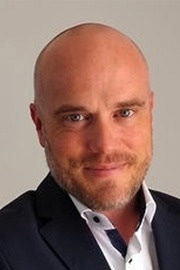
Dr. Joerg Koehler is Senior Director for Cleantech, Industrial and Applied Markets at Bruker, where he is responsible for global strategy and activities involving magnetic resonance technologies across a range of industrial and applied markets. His work encompasses portfolio strategy and the development of NMR solutions that translate advanced magnetic resonance capabilities into practical industrial workflows.
Dr. Koehler studied Physics at the University of Regensburg in Germany and holds a doctoral degree from the university’s Institute of Biophysics and Physical Biochemistry. His academic research focused on high-pressure NMR studies of folding intermediates in biologically active macromolecules. He also worked as a postdoctoral research scientist, continuing research involving NMR and biomolecular folding.
Before joining Bruker, Dr. Koehler held several positions spanning sales, sales management, and business administration. He subsequently joined Bruker as Head of the Industrial Business Unit and has since taken responsibility for global business strategy and product portfolio management across Bruker BioSpin’s cleantech, industrial, and applied markets.
His combination of an academic background in NMR and experience in commercial and strategic roles gives him a broad perspective on how magnetic resonance technologies can move from specialist research environments into routine industrial applications.
About Dr. Markus Hecht
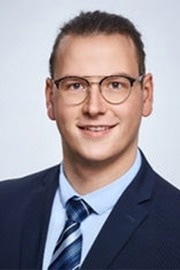
Dr. Markus Hecht is a Solution Portfolio Manager at Bruker BioSpin, where he focuses on providing analytical solutions for customers in the chemical industry, as well as for commercial and governmental testing laboratories. His work includes translating NMR capabilities into practical analytical workflows and supporting the development of solutions for automated quantitative analysis.
Dr. Hecht holds a doctoral degree in Chemistry from Julius-Maximilians-University of Würzburg in Germany. Before joining Bruker, he gained extensive industrial research experience at BASF and Sun Chemical, where he led research laboratories focused on developing new products and manufacturing processes for organic pigments.
At Bruker, Dr. Hecht’s work brings together his background in chemistry, industrial research, and analytical technology. His current focus includes solutions that make advanced NMR analysis easier to deploy in routine environments, including quantitative NMR workflows in which acquisition, analysis, and reporting can be standardized and automated. This approach is particularly relevant for laboratories seeking to extend sophisticated analytical capabilities beyond dedicated NMR specialists while maintaining reproducibility and analytical quality.
About Bruker BioSpin Division
The Bruker BioSpin Division designs, manufactures, and distributes advanced scientific instruments based on magnetic resonance, preclinical imaging technologies, and biosensor technologies. These include our industry-leading NMR and EPR spectrometers, imaging systems utilizing MRI, PET, SPECT, CT, Optical and MPI modalities, as well as molecular interaction technologies like SPR, switchSENSE® and single-cell Interaction Cytometry (scIC). The Division also offers integrated software solutions and automation tools to support digital transformation across research and quality control environments.
Our customers in academic, government, industrial, and pharmaceutical sectors rely on these technologies to gain detailed insights into molecular structure, dynamics, and interactions. Our solutions play a key role in structural biology, drug discovery, disease research, metabolomics, and advanced materials analysis. Recent investments in lab automation, optical imaging, and contract research services further strengthen our ability to support evolving customer needs and enable scientific innovation.
Disclaimer: The views expressed here are those of the interviewee and do not necessarily represent the views of AZoM.com Limited (T/A) AZoNetwork, the owner and operator of this website. This disclaimer forms part of the Terms and Conditions of use of this website.