In this interview, News Medical speaks with Dr. Bruno Chencarek, Solution Portfolio Manager at Bruker BioSpin, and Dr. Eduardo Nascimento, Solution Product Manager at Bruker BioSpin, about how NMR, laboratory automation, and connected data ecosystems can improve analytical workflows across research and industry.
Can you please introduce yourselves and your roles at Bruker BioSpin?
Dr. Bruno Chencarek: I am a Solution Portfolio Manager at Bruker BioSpin. My background is in NMR physics, and my work has focused on developing analytical methods based on magnetic resonance for both research and quality control. Today, my focus is on NMR-based solutions for functional food and nutrition applications, where I work on bringing the analytical capabilities of NMR into more complete and automated workflows that fit naturally into routine laboratory operations.
Dr. Eduardo Nascimento: I am a Solution Product Manager at Bruker BioSpin, with a particular focus on industrial applications. My work involves understanding the analytical challenges faced by industries such as polymers, fine chemicals, and batteries, and developing magnetic resonance solutions to address them. An important part of that is not only the NMR measurement itself, but how we integrate the instrument and its data into the broader laboratory environment.
Watch the full webinar here
What is driving laboratories toward more automated and connected NMR workflows?
Dr. Bruno Chencarek: From the different customer interactions we have, a few common themes come up repeatedly. Laboratories want to increase throughput and reduce time to results, but without compromising quality or reproducibility. At the same time, there is increasing demand for traceability and for data that can be used directly in digital environments.
Automation can reduce human errors in repetitive tasks and free laboratory experts to focus on work where their scientific expertise is really needed. It can also help us create clean, standardized data that is better suited for subsequent processing and potentially for artificial intelligence (AI) or machine learning applications.
What I think is particularly important is that we are not looking only at automating the NMR instrument. We are looking at the complete workflow, beginning with sample creation and preparation and continuing through measurement, evaluation, and data handling.
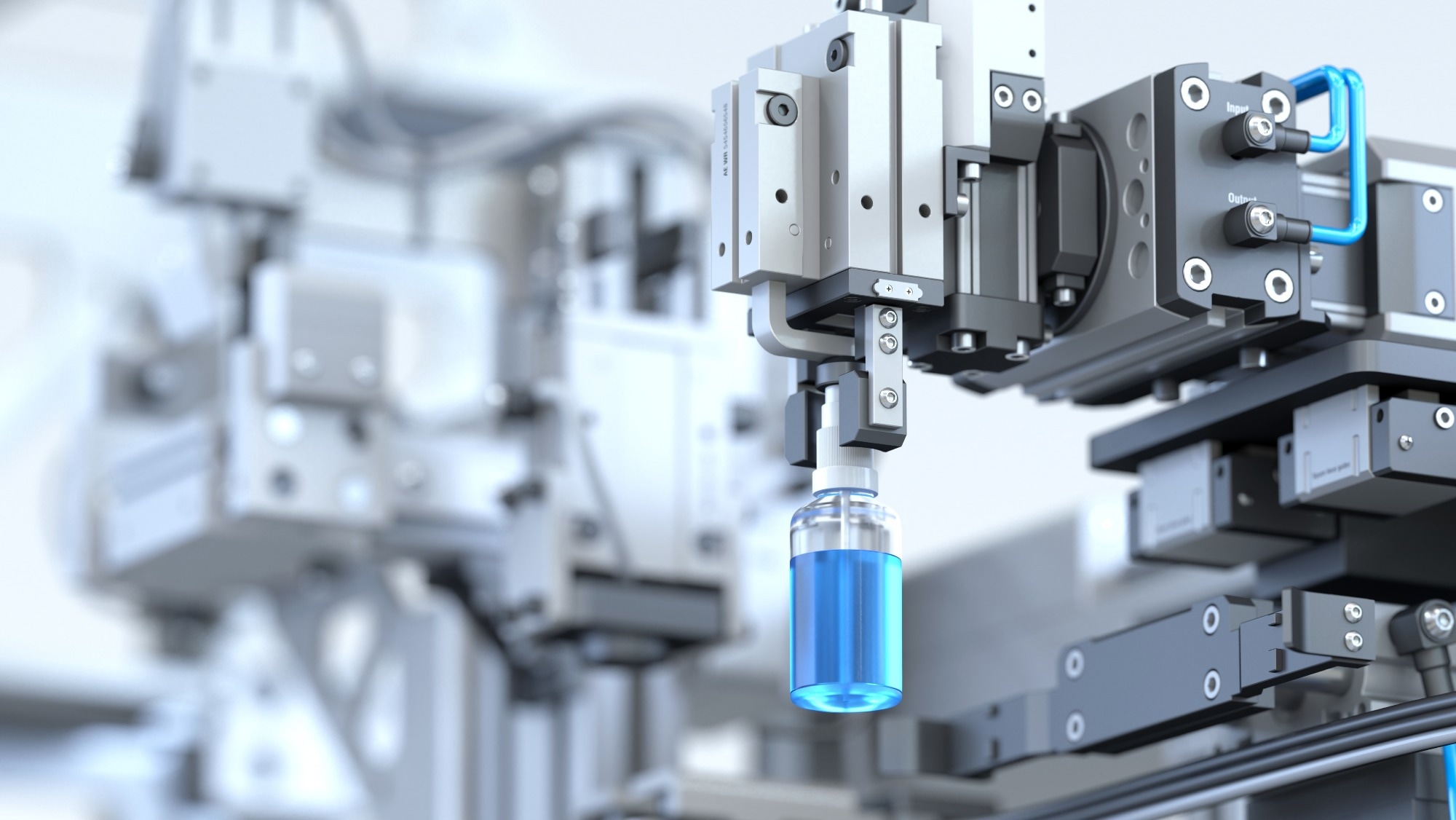
Image Credit: Borshch Filipp/Shutterstock.com
How can automated sample preparation improve the quality and reproducibility of NMR analysis?
Dr. Bruno Chencarek: Sample preparation is fundamental because the quality of the analytical result depends on the quality and consistency of the sample that reaches the instrument.
In an automated workflow, different operations can be integrated, such as dispensing, pipetting, synthesis, and other sample-preparation steps. These workflows can be designed in a modular way depending on the chemistry, the required throughput and the analytical objective. The prepared samples can then move directly into an NMR workflow.
This gives us much stronger control over how samples are produced. In my experience, that translates directly into better reproducibility, fewer manual errors, and much stronger traceability.
The result is not simply automation for the sake of automation. Rather, it is about ensuring that the NMR data generated downstream are quality-assured and reproducible.
How does NMR fit into automated workflows for functional food and nutrition applications?
Dr. Bruno Chencarek: NMR is very attractive in functional food and nutrition for the same reason as in other areas: because it can provide a great deal of information from a single measurement. Depending on the workflow, we can look at areas such as composition, quality control, authenticity, and nutritional assessment.
For me, the key is to move from simply generating a spectrum to generating information that can be automatically evaluated and placed into the proper context. When we combine standardized sample handling with standardized NMR acquisition and automated evaluation, the workflow becomes much more suitable for routine use.
This is particularly important when laboratories handle many samples. Rather than requiring an expert to manually interpret each spectrum, we can establish workflows that produce consistent analytical results and make them available for subsequent decisions.
What role does benchtop NMR play in bringing these workflows closer to routine laboratories?
Dr. Eduardo Nascimento: Benchtop NMR is important because it allows us to bring NMR much closer to the point where the analysis is actually required. The Fourier 80, for example, is a compact system that can be integrated into automated workflows without the infrastructure associated with traditional high-field NMR installations.
In industrial environments, ease of use, cost efficiency, and low maintenance are very important. In this context, users need an analytical system that can operate as part of the workflow rather than being isolated from it.
These needs make benchtop NMR particularly interesting for routine R&D and quality control. It delivers automated sample preparation for NMR analysis, and from there, the analytical information can flow into the laboratory’s digital infrastructure. This creates an end-to-end workflow rather than a collection of disconnected analytical steps.
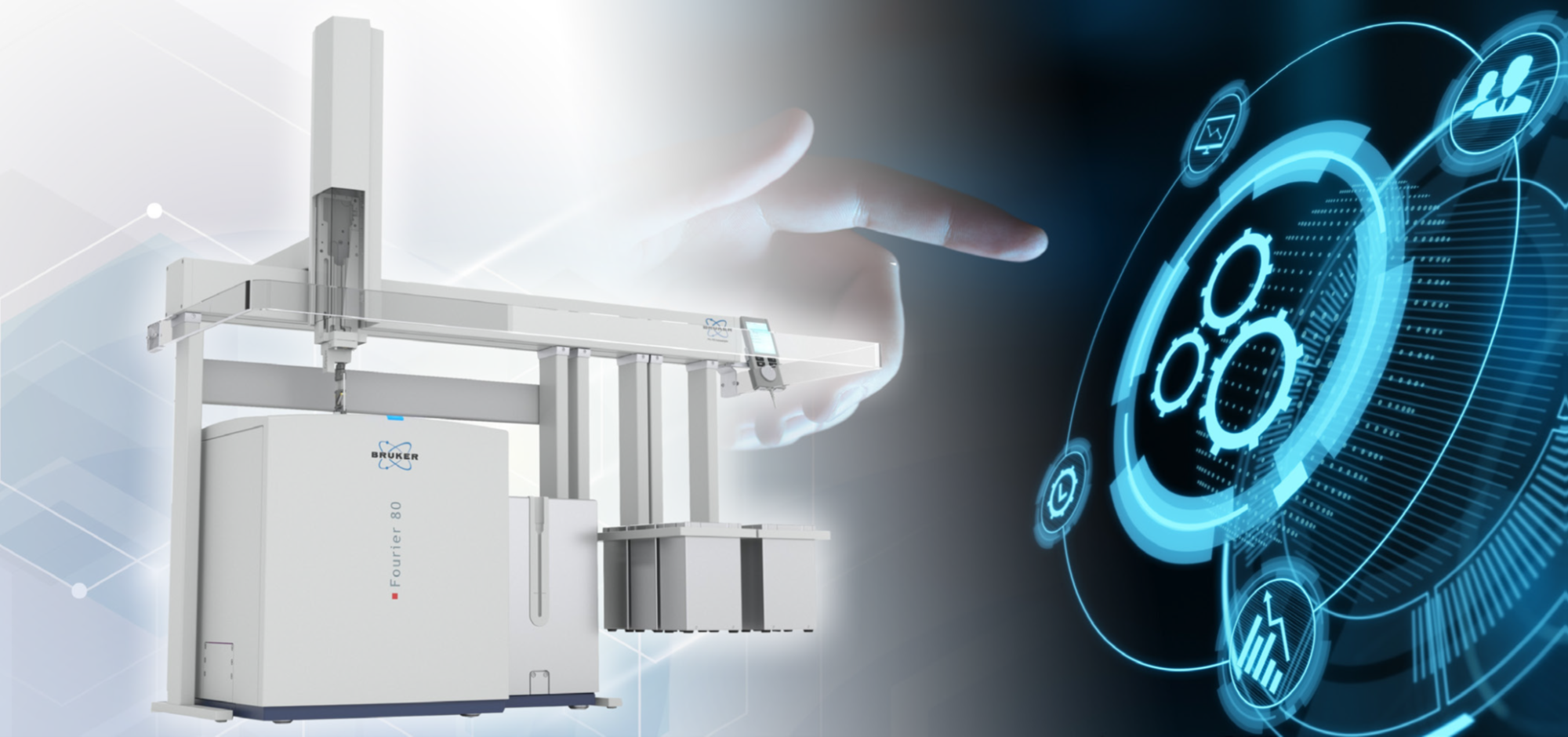
Image Credit: Bruker BioSpin
How can these connected NMR workflows support industries such as fine chemicals, polymers, and batteries?
Dr. Eduardo Nascimento: Though these industries have different analytical questions, many of the workflow requirements are similar; they need efficiency, reproducibility, standardized methods, and reliable data that can be transferred between different parts of an organization.
In an industrial environment, the NMR measurement should not become an isolated data point. We want the information generated by the instrument to support process monitoring, quality assurance and decision-making.
In areas such as polymers and batteries, there is also a need to connect research and development with increasingly routine analytical processes. NMR has traditionally been viewed as a powerful research technique, but with automation and benchtop systems, we can bring its capabilities into environments that require standardized, repeatable measurements on a regular basis.
Why is digital connectivity becoming as important as the analytical measurement itself?
Dr. Eduardo Nascimento: Today, generating good analytical data is only one part of the challenge. You also need to move the data efficiently to the systems where it can be used.
Laboratories increasingly work with LIMS, electronic laboratory notebooks, databases, and other digital platforms. If analytical results have to be transferred manually between these systems, additional work is introduced, alongside greater opportunities for errors.
The objective is therefore to create interoperability. NMR data can be captured and analyzed, and the relevant results can then be automatically transferred to the appropriate enterprise or laboratory system. This is especially valuable when you are trying to harmonize analytical procedures across different sites. Standardized acquisition and standardized data transfer make it much easier to compare results and maintain consistent quality.
How does greater automation affect the role of scientists and NMR experts?
Dr. Bruno Chencarek: The purpose of increased automation is not to remove scientific expertise, but to use that expertise more effectively.
Many laboratory operations are repetitive and do not necessarily require an expert to be involved in every single iteration. In this context, if sample preparation, acquisition, and routine evaluation become standardized and automated, scientists will have more time to concentrate on interpreting difficult results, developing new methods, and solving scientific problems.
At the same time, automation enables non-NMR specialists to access the benefits of NMR through well-defined workflows. The expert is still essential for developing and validating those methods, but once the workflow is established, it can become much more accessible to routine users.
What does the fully connected NMR laboratory of the future look like?
Dr. Eduardo Nascimento: I think the direction is toward an analytical ecosystem where the different stages communicate with each other. You start with sample creation and preparation, move into automated NMR measurement and evaluation, and then transfer the resulting information into LIMS, ELN, databases, or other digital platforms. That workflow would provide traceability from the physical sample to the final analytical result.
The key advantage is scalability. Once you have standardized workflows, they can potentially be reproduced across laboratories and sites. For industry, that can support much stronger harmonization and quality assurance.
Dr. Bruno Chencarek: From my perspective, a fully connected NMR laboratory would allow NMR to become a much more integrated part of the overall decision-making process. We are moving beyond the idea of an instrument simply producing a spectrum. The real goal is to generate reliable information that can be understood quickly and used to support decisions. That combination of automation, NMR, and digital connectivity is what makes these workflows particularly powerful.
Watch the full webinar
About Dr. Bruno Chencarek
Dr. Bruno Chencarek is a Solution Portfolio Manager at Bruker BioSpin specializing in NMR-based analytical solutions, with a current focus on the functional food and nutrition market. He has spent approximately a decade working on the development and improvement of analytical methods for R&D and quality control using nuclear magnetic resonance (NMR) and magnetic resonance imaging (MRI).
Before moving into portfolio management and market development, he worked extensively as an application scientist and method developer across areas including oil research, food, functional nutrition, polymers, and battery materials.
He graduated in Physics from the Federal University of Mato Grosso do Sul in Brazil. His postgraduate research focused strongly on NMR and its industrial applications. He completed a PhD in Physics at the Brazilian Center for Research in Physics, CBPF, in 2021, where his doctoral research investigated high-field relaxation and diffusion NMR for characterizing confined fluids. His wider research included applications in petrophysics and oil research.
Dr. Chencarek joined Bruker BioSpin in Germany in 2021 as an NMR method developer, working on NMR and time-domain NMR methods for applied and industrial markets before progressing into his current portfolio-focused position.
About Dr. Eduardo Nascimento
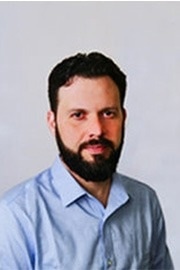
Dr. Eduardo Nascimento is a Solution Product Manager at Bruker BioSpin and manages Bruker’s global magnetic resonance solutions activities for the lithium battery and polymer industries. His work focuses on identifying analytical challenges within industrial environments and developing magnetic resonance solutions tailored to customer requirements, particularly where NMR and time-domain NMR can support research, quality control, and process optimization.
Dr. Nascimento holds a PhD in Chemistry and has an academic background in NMR-based metabolomics, including the analysis of biofluids and food. His doctoral studies were undertaken at the Federal University of São Carlos in Brazil, where his work involved nuclear magnetic resonance (NMR), metabolomic analysis, and chemometrics. As a researcher, he also worked on analytical approaches for red meat and beer using techniques including HPLC-SPE-NMR and matrix-assisted DOSY.
He joined Bruker in Brazil in 2013 as an Application Engineer, where his responsibilities included NMR installation, customer training, and support. His subsequent work expanded into applied and industrial magnetic resonance, including TD-NMR and dedicated analytical solutions.
Today, his activities particularly encompass polymer and battery applications, including battery electrolyte quality control, electrode slurry characterization and stability, and the development of NMR-based analytical workflows for battery research and manufacturing.
About Bruker BioSpin Division
The Bruker BioSpin Division designs, manufactures, and distributes advanced scientific instruments based on magnetic resonance, preclinical imaging technologies, and biosensor technologies. These include our industry-leading NMR and EPR spectrometers, imaging systems utilizing MRI, PET, SPECT, CT, Optical and MPI modalities, as well as molecular interaction technologies like SPR, switchSENSE® and single-cell Interaction Cytometry (scIC). The Division also offers integrated software solutions and automation tools to support digital transformation across research and quality control environments.
Our customers in academic, government, industrial, and pharmaceutical sectors rely on these technologies to gain detailed insights into molecular structure, dynamics, and interactions. Our solutions play a key role in structural biology, drug discovery, disease research, metabolomics, and advanced materials analysis. Recent investments in lab automation, optical imaging, and contract research services further strengthen our ability to support evolving customer needs and enable scientific innovation.
Disclaimer: The views expressed here are those of the interviewee and do not necessarily represent the views of AZoM.com Limited (T/A) AZoNetwork, the owner and operator of this website. This disclaimer forms part of the Terms and Conditions of use of this website.