In this interview, AZoMaterials speaks with experts from Johnson Matthey, Wohlers Associates, Ketjen, and Malvern Panalytical about the future of catalysts. Drawing on presentations from Malvern Panalytical's Catalyst Future Days, they explore how advanced characterization, standardization, and new technologies are helping to improve catalyst performance and accelerate industrial innovation.
Maurits, can you introduce yourself and explain your background in catalyst technologies?
Dr. Maurits van Tol: I have worked in the chemical industry since 1993 and most recently served as CEO of Johnson Matthey's Catalyst Technologies business.
Throughout my career, I have seen how catalysis has helped optimize the conversion of fossil feedstocks into the fuels and chemicals we rely on today.
Looking ahead, the challenge is to meet growing global demand while reducing environmental impact. Catalysis, chemistry, engineering, and digital technologies all have important roles in enabling the conversion of alternative feedstocks, including biomass and CO2, into valuable products.
Christian, how can standardization help accelerate the adoption of new catalyst technologies?
Prof. Dr. Christian Seidel: Developing a technological breakthrough is one thing, but successfully introducing it into the market is another.
Industrial adoption requires comparable performance data, reproducible characteristics, and accepted qualification pathways. Standards help build confidence among customers and investors.
We saw this in additive manufacturing, where international standardization helped an emerging technology become more widely adopted.
For catalysis, I would recommend three things: agree on terminology, standardize measurements, and establish international collaboration from the beginning.
Importantly, standardization does not inherently mean sharing proprietary catalyst formulations. It means establishing common frameworks for characterization, testing, and qualification.
Matthew, what are the most important factors in ensuring consistent catalyst quality during manufacturing?
Dr. Matthew Rayner: At Ketjen, we focus on three main analytical areas: composition, accessibility, and integrity.
Composition tells us whether the catalyst contains the correct materials and phases. Accessibility concerns properties such as pore architecture, surface area, and particle size, which influence how reactants reach active sites. Integrity is about whether the catalyst can withstand manufacturing and the conditions it will experience inside a reactor.
We monitor these properties throughout production, from raw materials to finished products.
Our objective is not necessarily to achieve identical measurements every time. Rather, we want to understand variability and make adjustments before it affects catalyst performance at the customer's facility.
Ignacio, how are catalysts helping transform waste materials into valuable products?
Ignacio Garcia: Traditionally, we have followed a linear model in which resources are extracted, converted into products, and eventually discarded.
However, waste streams such as CO2, biomass, plastics, and industrial gases contain valuable molecules that can be reused.
Catalysts enable us to convert these materials efficiently and selectively into useful chemicals and fuels.
For example, CO2 can be hydrogenated to produce methanol, which can then be converted into products such as olefins, formaldehyde, or fuels.
Biomass can also be converted into synthesis gas through gasification, followed by Fischer-Tropsch synthesis to produce hydrocarbons.
The challenge is developing catalysts that achieve the right balance between activity, selectivity, and stability while making these processes economically viable.
Jan, how can X-Ray absorption spectroscopy improve our understanding of catalyst performance?
Dr. Jan Gertenbach: One of the key questions in catalysis is understanding what changes around the active atom during a reaction.
A catalyst can become activated or deactivated without significant changes to its overall crystalline structure. However, the oxidation state of the active metal may change.
X-ray absorption spectroscopy, or XAS, allows us to investigate these changes.
Within the XAS umbrella, X-ray absorption near-edge structure (XANES) spectroscopy provides information on oxidation states, while extended X-ray absorption fine structure (EXAFS) spectroscopy helps us understand the local atomic environment, including neighboring atoms and bond distances.
Historically, these measurements have mainly been performed at synchrotron facilities. However, by integrating XAS capabilities into laboratory-based diffractometers, we can provide researchers with an additional characterization tool to screen materials and select the most promising samples for further investigation.
Luca, how does understanding catalyst surface properties help researchers design more effective materials?
Dr. Luca Lucarelli: Traditionally, catalyst development often involved synthesizing a material, testing it, and seeing whether it worked.
We now want to move towards rational catalyst design, where we understand the properties responsible for performance before making improvements.
For supported metal catalysts, surface area, pore size distribution, metal dispersion, and metal-support interactions are particularly important.
A high surface area does not necessarily mean higher catalytic activity. Reactants must be able to access the active sites, and products must be able to leave the porous structure.
Techniques such as physisorption, chemisorption, and temperature-programmed analysis help us measure these characteristics.
By combining these measurements with spectroscopy, microscopy, and molecular simulations, we can better understand catalyst behavior and design more efficient materials.
Maurits, what are the biggest challenges in scaling up new catalyst technologies for industrial applications?
Dr. Maurits van Tol: Many clean technologies are already technically ready for deployment, but bringing them to industrial scale remains challenging.
A first-of-a-kind chemical plant can require an investment of between one and five billion dollars; investors are understandably cautious about investing large sums into a technology without an established operating history.
This is why collaboration across the entire industrial ecosystem is essential. Project developers need to work alongside licensors, engineering companies, feedstock suppliers, customers, and governments.
For example, long-term offtake agreements in sustainable aviation fuel can provide confidence that there will be demand for the product.
We also need sufficiently large pilot plants and reliable data to demonstrate that a technology can operate successfully at commercial scale.
Luca, what role will artificial intelligence (AI) play in the future of catalyst development?
Dr. Luca Lucarelli: AI offers opportunities to accelerate catalyst development by helping researchers interpret large datasets and improve molecular simulations.
For example, density functional theory is valuable for understanding catalytic systems at the atomic level, but calculations can take considerable time. AI can help accelerate some of these computational processes.
This could support the development of advanced materials, such as single-atom catalysts, in which the objective is to maximize the utilization of active metals.
However, AI does not eliminate the need for experimental validation. We still need to test catalysts under real operating conditions and use scientific expertise to interpret the results. The future of catalyst development will involve combining characterization, simulation, AI, and experimental testing.
About the Speakers
Dr. Maurits van Tol 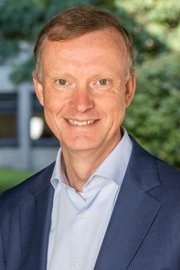
Dr. Maurits van Tol is the former CEO of Catalyst Technologies at Johnson Matthey. He has worked in the chemical industry since 1993, with experience spanning catalysis, industrial innovation, and sustainable technologies. He holds an MSc in Physical Chemistry and Catalysis and a PhD in Catalysis from Leiden University.
Video Credit: Malvern Panalytical
Prof. Dr. Christian Seidel 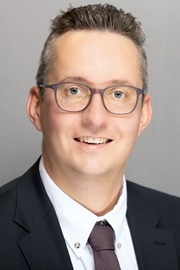
Prof. Dr. Christian Seidel is Chief Advisor at Wohlers Associates and Professor of Manufacturing Technologies and Additive Manufacturing at Munich University of Applied Sciences. He earned his doctorate at the Technical University of Munich and has extensive experience in international standardization.
Video Credit: Malvern Panalytical
Dr. Matthew Rayner 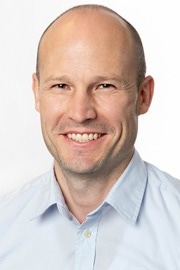
Dr. Matthew Rayner is Senior Specialist in Analytical Excellence at Ketjen. His work focuses on catalyst characterization, manufacturing quality, and analytical standardization, supporting the production of fluid catalytic cracking and hydroprocessing catalysts.
Video Credit: Malvern Panalytical
Ignacio Garcia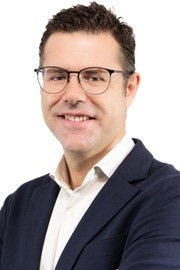
Ignacio Garcia is the General Manager, PID, at Malvern Panalytical, working with technologies that support catalyst characterization, chemical reactivity, and process development. His work includes applications in circular chemistry and waste valorization.
Video Credit: Malvern Panalytical
Dr. Jan Gertenbach 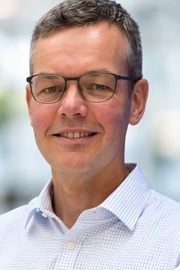
Dr. Jan Gertenbach is Market Development Manager at Malvern Panalytical. His work includes analytical techniques such as X-ray absorption spectroscopy and X-ray diffraction to understand the structure and chemical properties of advanced materials.
Video Credit: Malvern Panalytical
Dr. Luca Lucarelli 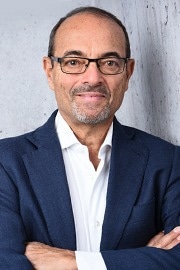
Dr. Luca Lucarelli is a Senior Application Specialist at Malvern Panalytical, with more than three decades of experience in materials characterization. He graduated in Industrial Chemistry from Milan State University in 1988 and specializes in gas-solid interactions, surface characterization, and heterogeneous catalysis.
Video Credit: Malvern Panalytical
This information has been sourced, reviewed, and adapted from materials provided by Malvern Panalytical.
For more information on this source, please visit Malvern Panalytical.
Disclaimer: The views expressed here are those of the interviewee and do not necessarily represent the views of AZoM.com Limited (T/A) AZoNetwork, the owner and operator of this website. This disclaimer forms part of the Terms and Conditions of use of this website.