During crude oil production and storage, true vapor pressure (TVP) and Reid vapor pressure (RVP) are crucial parameters that must be accurately determined. This is because vapor pressure affects how crude oil behaves during handling, identifies conditions that may lead to bubble formation, and indicates where light ends may escape and create pressure build-ups.
Image Credit: Hamara/Shutterstock.com
For this reason, vapor pressure measurement helps avoid expensive damage to pipelines and vessels used to move crude oil. It also informs the design of transportation facilities so they can withstand worst-case operating conditions.
Before crude oil is sent to a distribution point, pipeline operators establish its TVP and bubble point. Wellhead crude must have gas removed to satisfy pipeline, storage, and tanker requirements. Excess gas may be separated or flared to control vapor pressure and protect the transportation system.
When crude oil vapor pressure is excessive, two principal safety concerns emerge: cavitation during pumping and transfer, and a rise in vapor pressure within a pipeline or vessel caused by temperature changes. Direct sunlight can increase the vapor pressure of crude oil in a transportation system and, in severe cases, cause damage. Operators should therefore use a vapor pressure analyzer to avoid costly failures and demonstrate that delivered crude meets specifications.
TVP Measurement and Bubble Point Determination
The precise definitions of TVP and bubble point remain widely debated among engineers. It is important to distinguish between the two terms: bubble point describes a temperature, while bubble point vapor pressure describes a pressure.
The International Maritime Organization states that TVP and bubble point pressure (BPP) are equivalent:
The TVP or bubble point vapor pressure is the equilibrium vapor pressure of a mixture when the gas/liquid ratio is effectively zero. It is the highest vapor pressure which is possible at any specified temperature. As the temperature of a petroleum mixture increases, its TVP also increases. If the TVP exceeds atmospheric pressure, the liquid commences to boil.
IMO, 2006, p140
Under this definition, TVP is effectively the crude oil’s total vapor pressure (Ptot) minus the vapor pressure contributed by air and dissolved gases (Pgas). The result is the absolute vapor pressure (Pabs or Pliquid) of the liquid, commonly called TVP, as measured by ASTM D2879 (US EPA, 2006).
ASTM D2879 is intended only for single-component materials. Because crude oil is generally a multi-component liquid, it requires another analytical approach.
The relationship TVP = BPP at a vapor-to-liquid (V/L) ratio of 0/1 addresses many practical issues in crude oil transportation. In floating-roof tanks, the roof rests directly on the crude oil, and pipelines operate under pressure. In both situations, the V/L ratio is effectively zero, so TVP provides an accurate indication of bubble point pressure at a given temperature.
In certain circumstances, however, this relationship is not enough. In multi-component mixtures, bubbles can form whenever liquid vapor pressure exceeds ambient pressure, regardless of whether the V/L ratio is 0/1 or 100/1.1
Pressure, volume, and temperature all affect the bubble point. A more precise definition considers varying temperatures and V/L ratios: for a multi-component mixture, the bubble point is the temperature at which the first bubbles form at a fixed V/L ratio.
Pumping Cavitation
Pumping cavitation is one of the key hazards in crude oil transportation. It occurs when the TVP or bubble point vapor pressure at a V/L ratio close to 0/1 is reached, often with severe consequences. As crude oil moves through a pumping system, acceleration creates low-pressure zones.
If surrounding pressure falls below the crude’s vapor pressure, bubbles form, expand, and then collapse, producing high pressure and temperature at their surfaces. Near a fixed surface, such as inside a pump, this collapse creates a shockwave that can harm the pump or transportation system.
Knowledge of crude oil vapor pressure is necessary for designing new pipelines and pumping systems and for developing standard operating procedures. To avoid bubble formation and cavitation in an existing system, system pressure must remain above the crude oil’s vapor pressure under all anticipated conditions.
If vapor pressure is too high, pressure, volume, or temperature must be adjusted. System pressure can be raised above the crude’s vapor pressure. Alternatively, vapor pressure can be lowered by separating or burning excess gas, which also reduces volume. A third approach is to lower the transportation temperature, thereby reducing vapor pressure.
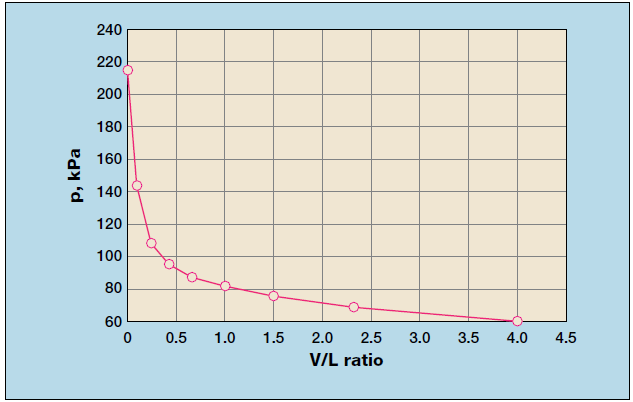
Figure 1. Vapor pressure of crude oil at different vapor-liquid ratios at 37.8 °C (100 °F). Image Credit: Grabner Instruments
Lord and Rudeen's research recommends oil degasification or cooling: “The degasification program removes gas from oil in selected caverns, which reduces its bubble point pressure and gas-oil ratio, which in turn significantly increases the predicted margin of system performance under the safety criteria.”2
Crude oil producers face a difficult challenge because extracted crude is not homogeneous; therefore, its vapor pressure may vary during production. Different quantities of natural gas in the crude substantially alter the V/L ratio and can sharply increase vapor pressure. Highly viscous crude also requires elevated temperatures to maintain flow through pumps and pipelines, and temperature changes further influence vapor pressure.
Depending on the quantity of light ends present, vapor pressure at 60 °C can be considerably higher than at 37.8 °C (100 °F). Most vapor pressure testers evaluate crude only at 37.8 °C and a V/L ratio of 4/1. Yet crude may sometimes be transported at 85 °C and near a V/L ratio of 0/1.
Under such extreme conditions, some volatiles may dissolve even in “dead” crude oil and form a gaseous mixture, producing a non-linear rise in pressure. Measuring vapor pressure only at 37.8 °C and 4/1 cannot predict this risk.
For effective bubble point risk management, vapor pressure should therefore be measured at multiple temperatures and at a V/L ratio of 0/1. Only an analyzer capable of monitoring vapor pressure across different temperatures and V/L ratios enables operators to adjust their transportation system promptly.
Vapor Pressure Increase in the Transportation Medium
Another possible issue in crude oil transportation is an unforeseen pressure rise in a pipeline or tanker. “Dead” crude oil is generally less problematic during transport, whereas “live” crude contains volatiles. Natural gases and other volatiles raise the vapor pressure of the crude.
When a pipeline or tanker carrying live crude is heated by direct sunlight, vapor pressure can rise substantially. Live crude loaded at 20 °C may more than double in vapor pressure when heated to 50 °C.
The absolute pressure increase caused by temperature changes becomes greater when live crude is transported at a very low V/L ratio. In Russia, crude oil vapor pressure must be tested at a V/L ratio of 0.02/1 to represent tanker or pipeline conditions. A tanker is typically 98% filled with crude oil. Figure 1 illustrates the resulting increase in vapor pressure.
Testing vapor pressure at various temperatures and V/L ratios addresses several transportation-related questions:
- How much will vapor pressure increase if crude at a V/L ratio of 0.02/1 (98% liquid-filled) is transported at 50 °C instead of 37.8 °C because the tanker is exposed to sunlight?
- Do control personnel need to lower vapor pressure before shipment or storage?
- Should tankers carrying particular volatile crude grades be filled to only 90% to avoid vessel damage or excessive outgassing and air pollution?
- Is vapor pressure sufficiently low to allow natural gas blending before shipment without creating a damage risk?
Vapor Pressure Analyzer
Continuous monitoring of vapor pressure, TVP, and BPP at different V/L ratios is essential so operations can adjust transportation systems without delay. The Grabner VPSO on-line vapor pressure process analyzer from Grabner Instruments can determine TVP or BPP at temperatures from 20–60 °C and simulate TVP at higher temperatures. It can also measure V/L ratios as low as 0.02/1 across a pressure range of 0–1000 kPa.
The analyzer uses ASTM D6377, the current standard for determining crude oil vapor pressure without sample preparation. This method replaces the more than 80-year-old ASTM D323 and is used to measure TVP or BPP in the analyzer.
Through its sample conditioning system, pressurized crude is transferred directly into the measuring chamber, where vapor pressure is measured against a vacuum through one expansion of an integrated piston. A three-point expansion sequence is conducted at different V/L ratios, followed by curve fitting to assess TVP at a V/L ratio of 0/1.2
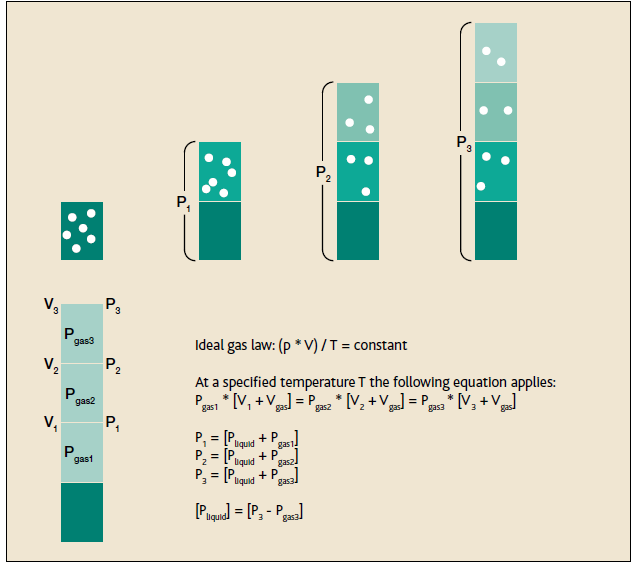
Figure 2. Vapor pressure measurement using the triple expansion method. Image Credit: Grabner Instruments
The VPSO on-line analyzer also uses the triple expansion method in accordance with ASTM D6378, allowing direct measurement of total vapor pressure (Ptot), liquid vapor pressure (Pabs or Pliquid), and gas vapor pressure (Pgas) in the sample (see Figure 2).
Because liquid vapor pressure remains constant and components such as dissolved air follow the ideal gas equation, (p*V)/T = constant, three expansions are performed at constant temperature. Three total pressure values are obtained, from which the air partial pressure, liquid solubility factor, and absolute liquid vapor pressure are calculated.
Results for sample TVP (Ptot), liquid pressure (Pabs or Pliquid), and gas pressure (Pgas) are available every five to seven minutes. The measurement’s precision has been validated through ASTM Round Robin testing and is substantially better than that of conventional vapor pressure methods.
Crude Blending
An analyzer capable of measuring both TVP and RVPE can recover its cost quickly.
Suppliers and refiners commonly establish maximum vapor pressure limits for crude delivered to a plant or terminal. These limits protect transportation and storage safety and help ensure that the refiner receives crude of the required quality.
Crude blending can raise sales value and make crude easier to process. By combining lower-grade crude with higher-grade crude or natural gas to meet, but not exceed, target specifications, crude valuation can increase substantially. Profit is generated when specifications are met using the lowest possible quantity of high-grade crude and the greatest practical amount of low-cost hydrocarbons.
The maximum RVP restricts how many of these hydrocarbons can be added. Depending on the starting RVP, blends typically contain 1–5% hydrocarbons. Every blending facility aims for the highest possible accuracy in standardized vapor pressure testing because greater precision permits a higher blending ratio.
The VPSO on-line analyzer's precision supports close C4 blending to RVP limits and maximizes profit potential. Its measurement method fully meets stringent ASTM, EN, and IP standards, as well as US EPA regulations for vapor pressure testing of crude oil, gasoline, and LPG, so additional laboratory testing is not required to verify measurement accuracy.
Acknowledgments
Produced using materials originally authored by Hannes Pichler and Klaus Hense from Grabner Instruments.
References and Further Reading
- International Maritime Organization (2006) Specialized training for oil tankers. IMO Model Course 1.02. London: International Maritime Organization.
- Lord, D.L. and Rudeen, D.K. (2010) Strategic Petroleum Reserve crude oil equation of state model development: current performance against measured data. Research Report SAND2010-6893. Albuquerque, NM & Livermore, CA: Sandia National Laboratories.
- US Environmental Protection Agency (2006) Organic liquid storage tanks, in Compilation of air pollutant emission factors (AP-42). 5th edn. Durham, NC: US EPA Office of Air Quality Planning and Standards, Chapter 7.1.

This information has been sourced, reviewed, and adapted from materials provided by Grabner Instruments.
For more information on this source, please visit Grabner Instruments.