Microplastics rarely appear in clean, simple samples. They are found among minerals, organic matter, fibers, biological residues, and other particles that can look similar under a microscope. As monitoring expands across marine environments, drinking water, wastewater, and biological tissue, laboratories need reliable ways to distinguish polymers from the surrounding material and determine each particle’s size, shape, and chemical identity.
Download your eBook now
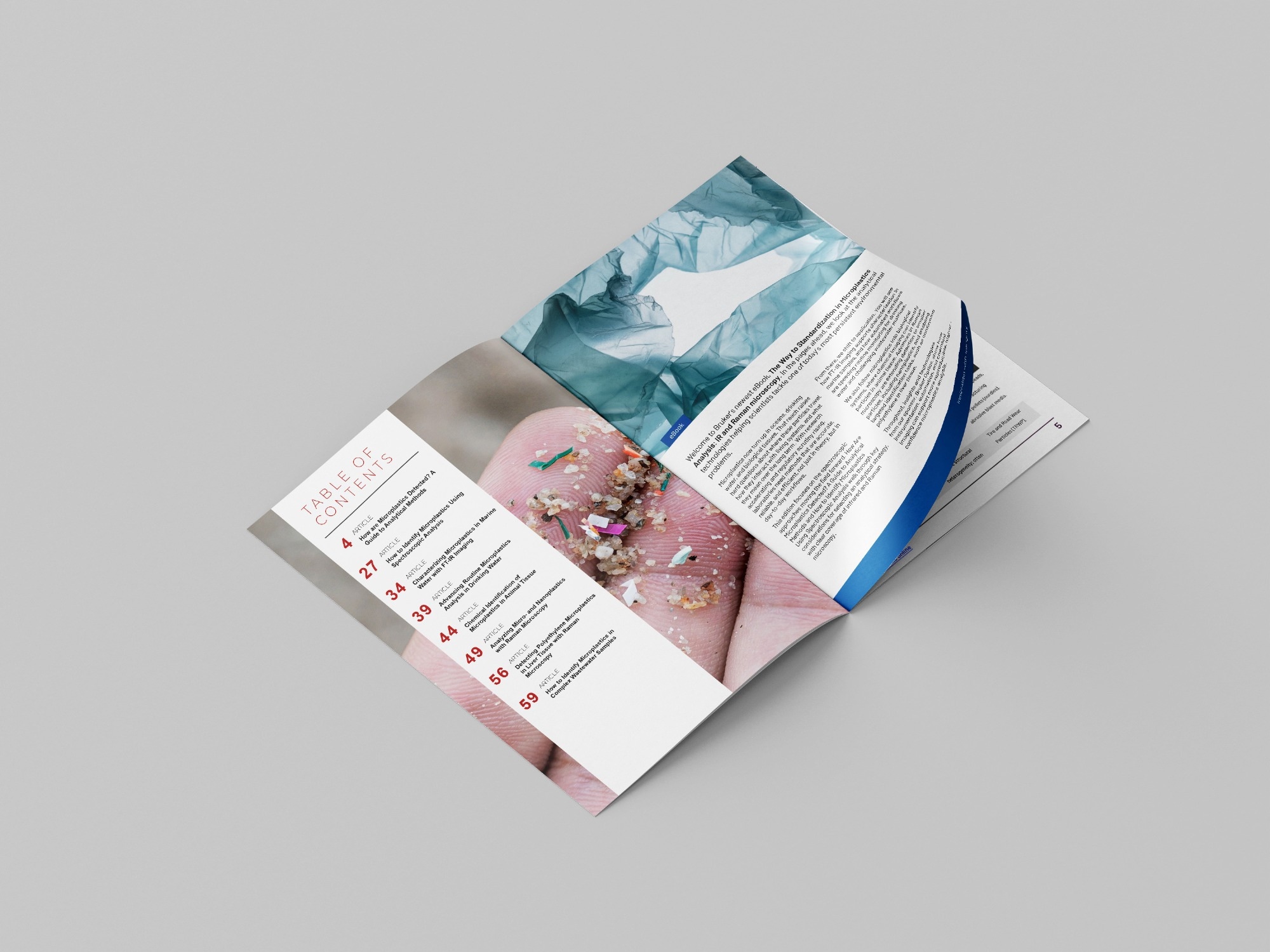
This eBook examines how Fourier transform infrared (FTIR) imaging, infrared laser imaging, and Raman microscopy address that challenge. It explains the practical trade-offs between throughput, spatial resolution, sample compatibility, and particle-level detail, from rapid full-filter screening to the analysis of microplastics and nanoplastics at submicron scales. It also considers how automated detection, machine learning, and chemical imaging can reduce reliance on operators in complex analytical workflows.
Drawing on representative environmental and biological applications, the guide connects method selection with the realities of routine analysis. Download the eBook to explore how complementary spectroscopic techniques can support faster, more reproducible microplastics identification across diverse sample types.
Download the full eBook

This information has been sourced, reviewed, and adapted from materials provided by Bruker Optics.
For more information on this source, please visit Bruker Optics.