Volumetric Karl Fischer (KF) titration is a fast, accurate technique for determining water content in a diverse range of samples. This determination is based on a chemical reaction involving the dissolution of water with a titrant containing iodine in an alcoholic solvent of specific composition.
The volumetric Karl Fischer method can be used with solid, liquid, and gaseous samples, provided water can be released from the sample into the Karl Fischer solvent.
The European Pharmacopoeia (Ph. Eur.) contains internationally recognized quality standards for analytical procedures that are used throughout the pharmaceutical industry. These standards considerably enhance the quality of pharmaceuticals produced, sold, and prescribed in Europe.
European Pharmacopoeia Chapter 2.5.12. (Water: Semi-micro determination) describes a suitability test for the volumetric Karl Fischer method for a defined combination of solvent, titrant, and sample.1,2,3
This suitability test is designed to verify KF titration systems in terms of linearity, recovery, and measurement range.
This article presents a suitability test for certified liquid water standards performed using a Mettler Toledo EVA V3 titrator.
Overview
The suitability test for the volumetric Karl Fischer technique contained in Chapter 2.5.12. of the European Pharmacopoeia was designed to verify the accuracy of Karl Fischer determinations for a known combination of titrant, solvent, and sample. This procedure is appropriate for corresponding sample sizes from 2.5 to five milligrams of water per injection.
Method A of Ph. Eur. 2.5.12. requires the water content of the sample under investigation to be determined in an initial sample injection. Five more sample injections are then performed.
Determined water content of each sample is then compared with the amount of water added, with the injection recovery of each also calculated.
A linear regression is done on the water content found in the cumulated water, which is determined by titration. This is compared with the cumulated added water contents following each sample.
The guidance provides a series of acceptance criteria for the determination to be found suitable:3
- Between 97.5 % and 102.5 % mean recovery for found versus added water amounts
- A slope between 0.975 and 1.025 on the linear regression line
- Less than 2.5 % relative x- and y-axis intercept errors
In the example presented here, the EVA V3 KF Titrator was used to perform a suitability test in line with Ph. Eur. 2.5.12. This was done using a certified liquid water standard as the sample.
Procedures
- Begin method M903.
- Inject an initial sample as a blank to determine the water content. This should be done using the back-weighing technique to determine sample weight.
- Inject a further five samples with sample sizes of around 50 % to 100 % of the initial sample for the acceptance test. This should also be done using the back-weighing technique to determine the sample sizes.
Chemistry
ROH + SO2 + 3 RN + I2 + H2O → (RNH)·SO4R + 2 (RNH)I
Solutions
- Titrant: HYDRANAL™ Composite 5, c = 5 mg H2O/mL, one-component KF Titrant
- Solvent: HYDRANAL™ Methanol dry
- Standard: HYDRANAL™ Water standard 10.0, water content 10 mg/g = 1 %
Instruments and Accessories
- Karl Fischer Titrator EVA V3 (30869281)
- Analytical balance
- 10 mL syringe and needle
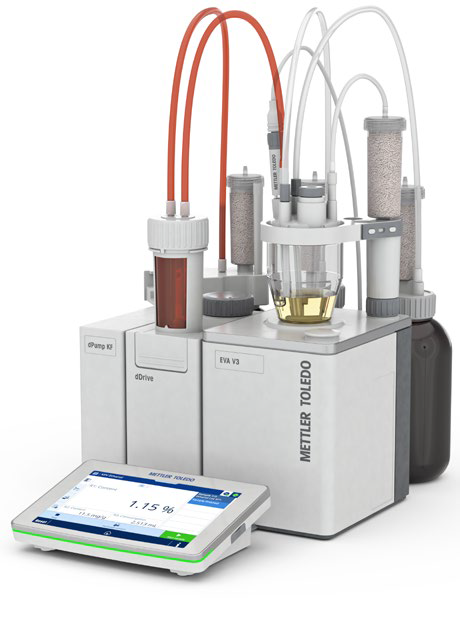
Figure 1. Karl Fischer Titrator EVA V3 assembly. Image Credit: Mettler-Toledo - Titration
Results
A liquid water standard with a certified water content of 10.03 mg/g was used to determine the titrant concentration before sample determination. The concentration was determined as 5.218 mg/mL (n=3).
Six injections of water standard 10.0 were recorded, with the first injection used to determine the water concentration.
The result was then treated as a blank value in later calculations of the amount of added water in relation to sample injections two to six. Table 1 summarizes these results.
Table 1. Found and added water contents for the KF suitability test according to Ph. Eur. 2.5.12. Source: Mettler-Toledo - Titration
| Standard aliquot |
Sample size [g] |
Water found [mg] |
Content found [mg/g] |
| 1 (Blank) |
1.0374 |
10.34910 |
9.976 |
| Standard aliquot |
Sample size [g] |
Water found [mg] |
Content found [mg/g] |
| 2 |
0.6744 |
6.68240 |
6.72781 |
| 3 |
0.5276 |
5.20849 |
5.26334 |
| 4 |
0.6128 |
6.05345 |
6.11329 |
| 5 |
0.7264 |
7.21569 |
7.24657 |
| 6 |
0.7976 |
7.95276 |
7.95686 |
Linear regression and the defined acceptance parameters were automatically calculated using the instrument’s programmed method.
Table 2. Calculated test parameters for the KF suitability test according to Ph. Eur. 2.5.12. Source: Mettler-Toledo - Titration
| Test parameter |
Found value |
| Mean percentage recovery |
99.365 % |
| Slope of the linear regression line |
0.994 |
| y-Axis intercept percentage error |
-0.29 % |
| x-Axis intercept percentage error |
0.28 % |
All test parameters were found to be confidently inside the acceptance range defined by Ph. Eur. 2.5.12.
Remarks
This method complied with Ph. Eur. 2.5.12. Method A, with all parameters corresponding to Ph. Eur.’s acceptance criteria calculated by the instrument’s programmed titration method.
The first injection of the sample series was treated as a blank value to determine the sample’s water content. The determined water content was used to calculate the absolute amount of water added:
Water added = m • Content found.
Where m is the sample size measured in grams.
A new blank value is created in the setup to use the blank value in the presented method. The name of the blank value is “samplecontent” in this example, and its unit is mg.
It is important to note that it may be possible to omit the water content determination step when the water content is already known. If already known, users may skip the blank determination at the beginning of the task.
Waste Disposal and Safety Measures
Users should wear personal protection at all times while working in the laboratory, including lab coats, safety glasses, and gloves. Sample solutions should be disposed of as organic solvent waste after neutralization.
Measured Values
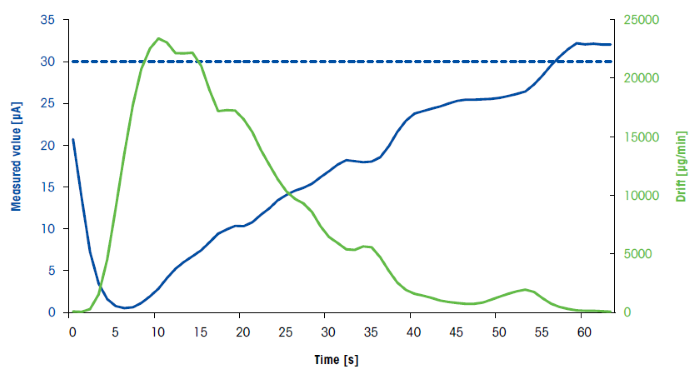
Figure 2. Titration curve obtained for the last sample. Image Credit: Mettler-Toledo - Titration
Table 3. Measured values for sample 5. Source: Mettler-Toledo - Titration
| Time [s] |
Volume [mL] |
Measured value [μA] |
Water [mg] |
Drift [μg/min] |
| 0 |
0 |
20.71952 |
0 |
90.3 |
| 1 |
0.000207 |
13.72729 |
0.00108 |
62.1 |
| 2 |
0.006095 |
7.236539 |
0.031802 |
281.8 |
| 3 |
0.029644 |
3.458559 |
0.154673 |
1548.1 |
| 4 |
0.075158 |
1.605391 |
0.392149 |
4533.6 |
| 5 |
0.139393 |
0.765484 |
0.727306 |
8871.1 |
| 6 |
0.213755 |
0.525218 |
1.115302 |
13523.7 |
| 7 |
0.298424 |
0.635714 |
1.557077 |
17714.5 |
| 8 |
0.377463 |
1.150055 |
1.969476 |
20771 |
| 9 |
0.457639 |
1.922473 |
2.387808 |
22534.6 |
| 10 |
0.533948 |
2.864141 |
2.785963 |
23398.6 |
| … |
… |
… |
… |
… |
| 53 |
1.527817 |
26.42984 |
7.97164 |
1944.1 |
| 54 |
1.529032 |
27.26243 |
7.977979 |
1752.6 |
| 55 |
1.529187 |
28.31202 |
7.978788 |
1238.7 |
| 56 |
1.529252 |
29.52222 |
7.979127 |
768.6 |
| 57 |
1.529471 |
30.55427 |
7.98027 |
484.2 |
| 58 |
1.529467 |
31.47755 |
7.980249 |
308.4 |
| 59 |
1.52947 |
32.18131 |
7.980265 |
187.3 |
| 60 |
1.530462 |
32.04423 |
7.985441 |
153.9 |
| 61 |
1.530468 |
32.13412 |
7.985472 |
155 |
| 62 |
1.530469 |
32.0181 |
7.985477 |
115.3 |
| 63 |
1.53047 |
32.02625 |
7.985482 |
69.9 |
Method
General Settings. Source: Mettler-Toledo - Titration
| . |
. |
| Name |
M903 |
| ID |
KFV Suitability Test |
| Compatibility |
Titration |
| Model compatibility |
V3 |
| Method type |
KF Volumetric |
| SOP |
NO |
| Task comment |
NO |
Configuration. Source: Mettler-Toledo - Titration
| Analysis |
|
| Analyze more than one sample |
YES |
| Initial sequence |
NO |
| Final sequence |
YES |
| Determine blank |
YES |
| Open series |
NO |
| Analysis start |
Manual |
| Number of samples |
5 |
| Create statistics |
NO |
| Activate ‘KF conditioning’ after the method ends |
YES |
| KF cell |
KF cell 1 |
| Category |
Volumetric (large) |
| Unit for drift |
μg/min |
| Work with solvent exchange |
YES |
| KF pump |
dPump KF 1 |
| Start criteria |
Absolute drift values |
| Min. start drift |
0.0 μg/min |
| Max. start drift |
50.0 μg/min |
| Blank |
|
| Blank measurement |
Decide at task start |
| Open series |
NO |
| Number of blanks |
1 |
| Create statistics |
NO |
| Blank calculation (mean value) |
R1 |
| Blank “B” |
samplecontent |
| Unit “B” |
mg |
| Result limits |
NO |
| Live View |
|
| Displayed results (Sample) |
3 |
| Field 1 |
R3: water found |
| Field 2 |
R4: water added |
| Field 3 |
R7: recovery |
| Displayed results (Blank) |
1 |
| Field 1 |
R1: water content |
| Displayed results (Final) |
5 |
| Field 1 |
R8: mean recovery |
| Field 2 |
R9: slope |
| Field 3 |
R12: R2 |
| Field 4 |
R13: e1 |
| Field 5 |
R14: e2 |
| Analysis graph: Horizontal axis |
Time |
| Analysis graph: Vertical axis |
Measured value |
| Additional curve |
Drift |
| Conditioning graph: Horizontal axis |
Time |
| Conditioning graph: Vertical axis |
Drift |
Blank Sequence. Source: Mettler-Toledo - Titration
| 1 Drift (Determination – online) |
|
|
| Drift determination |
|
YES |
| Determine online (during conditioning) |
|
YES |
| 2 Blank (Addition) |
|
|
| Prompt for blank addition |
|
YES |
| Blank detection |
|
Automatic |
| Prompt for blank size |
|
YES |
| 3 Titration (KF Vol) |
|
|
| Resources |
|
|
| Titrant |
Titrant |
Titrant 1 |
|
Nominal concentration |
5 mg/mL |
| Sensor |
Sensor |
dSens M143 |
|
Category |
Polarized |
| Stirrer |
Stirrer |
Stirrer 1 |
|
Category |
Magnetic |
|
Stir speed |
35 % |
| Titration |
|
|
| Preparation |
Stir before titration |
2 seconds |
| Control |
Control focus |
Accuracy |
|
Indication |
Amperometric |
|
Unit |
μA |
|
Potential (Upol) |
100 mV |
|
Set current |
30 μA |
|
Cautious mode |
NO |
| Termination |
Type |
Drift stop relative |
|
Drift relative |
50.0 μg/min |
|
Delay |
0 seconds |
|
Min. time |
0 seconds |
|
Max. time |
∞ seconds |
|
At Vmax |
10 mL |
| 4 Result R1: water content |
|
|
| Formula type |
Editable |
|
| Result name |
water content |
|
| Formula |
(VEQ*CONC-TIME*DRIFT/1000)/m |
|
| Unit |
mg/g |
|
| Decimal places |
3 |
|
| Result limits |
NO |
|
| 5 Result R2: water found |
|
|
| Formula type |
Editable |
|
| Result name |
water found |
|
| Formula |
VEQ*CONC-TIME*DRIFT/1000 |
|
| Unit |
mg |
|
| Decimal places |
5 |
|
| Result limits |
NO |
|
Sample Sequence. Source: Mettler-Toledo - Titration
| 1 Drift (Determination – online) |
|
|
| Drift determination |
|
YES |
| Determine online (during conditioning) |
|
YES |
| 2 Sample (Addition) |
|
|
| Prompt for blank addition |
|
YES |
| Blank detection |
|
Automatic |
| Prompt for blank size |
|
YES |
| 3 Titration (KF Vol) |
|
|
| Resources |
|
|
| Titrant |
Titrant |
Titrant 1 |
|
Nominal concentration |
5 mg/mL |
| Sensor |
Sensor |
dSens M143 |
|
Category |
Polarized |
| Stirrer |
Stirrer |
Stirrer 1 |
|
Category |
Magnetic |
|
Stir speed |
35 % |
| Titration |
|
|
| Preparation |
Stir before titration |
2 seconds |
| Control |
Control focus |
Accuracy |
|
Indication |
Amperometric |
|
Unit |
μA |
|
Potential (Upol) |
100 mV |
|
Set current |
30 μA |
|
Cautious mode |
NO |
| Termination |
Type |
Drift stop relative |
|
Drift rel2ative |
50.0 μg/min |
|
Delay |
0 seconds |
|
Min. time |
0 seconds |
|
Max. time |
∞ seconds |
|
At Vmax |
10 mL |
| 4 Result R3: water found |
|
|
| Formula type |
Editable |
|
| Result name |
water found |
|
| Formula |
VEQ*CONC-TIME*DRIFT/1000 |
|
| Unit |
mg |
|
| Decimal places |
5 |
|
| Result limits |
NO |
|
| 5 Result R4: water added |
|
|
| Formula type |
Editable |
|
| Result name |
water added |
|
| Formula |
m*B |
|
| Unit |
mg |
|
| Decimal places |
5 |
|
| Result limits |
NO |
|
| 6 Result R5: water found cumulated |
|
|
| Formula type |
Editable |
|
| Result name |
water found cumulated |
|
| Formula |
sum(R3.Result)+R2[1].Result |
|
| Unit |
mg |
|
| Decimal places |
5 |
|
| Result limits |
NO |
|
| 7 Result R6: water added cumulated |
|
|
| Formula type |
Editable |
|
| Result name |
water added cumulated |
|
| Formula |
sum(R4.Result) |
|
| Unit |
mg |
|
| Decimal places |
5 |
|
| Result limits |
NO |
|
| 8 Result R7: recovery |
|
|
| Formula type |
Editable |
|
| Result name |
recovery |
|
| Formula |
R3.Result/R4.Result*100 |
|
| Unit |
% |
|
| Decimal places |
3 |
|
| Result limits |
NO |
|
Final Sequence. Source: Mettler-Toledo - Titration
| 1 Result R8: mean recovery |
|
| Formula type |
Editable |
| Result name |
mean recovery |
| Formula |
mean(R7.Result) |
| Unit |
% |
| Decimal places |
2 |
| Result limits |
YES |
| Lower limit |
97.5 |
| Upper limit |
102.5 |
| Action if limits exceeded |
Continue task |
| 2 Result R9: slope |
|
| Formula type |
Editable |
| Result name |
slope |
| Formula |
slope(R5.Result;R6.Result) |
| Unit |
|
| Decimal places |
5 |
| Result limits |
YES |
| Lower limit |
0.975 |
| Upper limit |
1.025 |
| Action if limits exceeded |
Continue task |
| 3 Result R10: y-intercept |
|
| Formula type |
Editable |
| Result name |
y-intercept |
| Formula |
intercept(R5.Result;R6.Result) |
| Unit |
mg |
| Decimal places |
5 |
| Result limits |
NO |
| 4 Result R11: x-intercept |
|
| Formula type |
Editable |
| Result name |
x-intercept |
| Formula |
-R10.Result/R9.Result |
| Unit |
mg |
| Decimal places |
5 |
| Result limits |
NO |
| 5 Result R12: R2 |
|
| Formula type |
Editable |
| Result name |
R2 |
| Formula |
GoodnessOfFit(R5.Result;R6.Result) |
| Unit |
|
| Decimal places |
5 |
| Result limits |
NO |
| 6 Result R13: e1 |
|
| Formula type |
Editable |
| Result name |
e1 |
| Formula |
100*(R10.Result-R2.Result)/R2.Result |
| Unit |
% |
| Decimal places |
2 |
| Result limits |
YES |
| Lower limit |
-2.5 |
| Upper limit |
2.5 |
| Action of limits exceeded |
Continue task |
| 7 Result R14: e2 |
|
| Formula type |
Editable |
| Result name |
e2 |
| Formula |
100*(abs(R11.Result)-R2.Result)/R2.Result |
| Unit |
% |
| Decimal places |
2 |
| Result limits |
YES |
| Lower limit |
-2.5 |
| Upper limit |
2.5 |
| Action if limits exceeded |
Continue task |
| 8 Report |
|
References and Further Reading
- Angew. Chem., vol. 48, pp. 304 – 396, 1935
- Scholz, E. (1984). Karl Fischer Titration. Chemical Laboratory Practice. Berlin, Heidelberg: Springer Berlin Heidelberg. https://doi.org/10.1007/978-3-642-69989-4.
- Linh. 2.5.12. Water semi-micro determination. (online) Available at: https://www.scribd.com/document/681905573/2-5-12-Water-semi-micro-determination.
Acknowledgments
Produced from materials originally authored by Mettler Toledo.

This information has been sourced, reviewed, and adapted from materials provided by Mettler-Toledo - Titration.
For more information on this source, please visit Mettler-Toledo - Titration.