This article explores how to verify that gas has been transferred from liquid or large cylinders into smaller ‘homecare’-sized cylinders with a minimum volume of 99 % oxygen. This is crucial for enabling companies to comply with FDA criteria, as carrying out these operations causes them to fall under the label ‘pharmaceutical manufacturer’.
Application Details
Several homecare cylinders are usually filled simultaneously, at times exceeding 50. As they are all filled from the same header, only one bottle needs to be tested to verify the whole batch. The bottle is taken out of the filling rig before being integrated into a system that minimizes gas pressure so it may then enter the analyzer. The operator then records the reading and ensures the batch meets required specifications.
Market Drivers
Oxygen must be measured safely and accurately. To this end, Servomex offers operator training courses, which consist of a study pack and an exam. When passed, the course leads to an annual competency certificate.
Current good manufacturing practices (CGMP) guidelines recommend regular training and retraining and documentation of this. To this end, the Servomex operator training course allows transfillers to meet this requirement. Servomex has historically offered rental programs to ensure the availability of critical equipment.
Calibration Recommendations
The FDA states that an accuracy of ±0.1 % oxygen is necessary from any chosen approach to calculate oxygen content. At high oxygen concentrations, day-to-day variations can occur in barometric pressure exceeding ±0.1 %. It is therefore recommended that the SERVOFLEX MiniMP 5200 multi purpose analyzer is calibrated on a daily basis according to operating instructions. If the analyzer moves, or ambient temperature is altered by over ~3 °C the analyzer needs to be recalibrated to stay within the necessary accuracy limits.
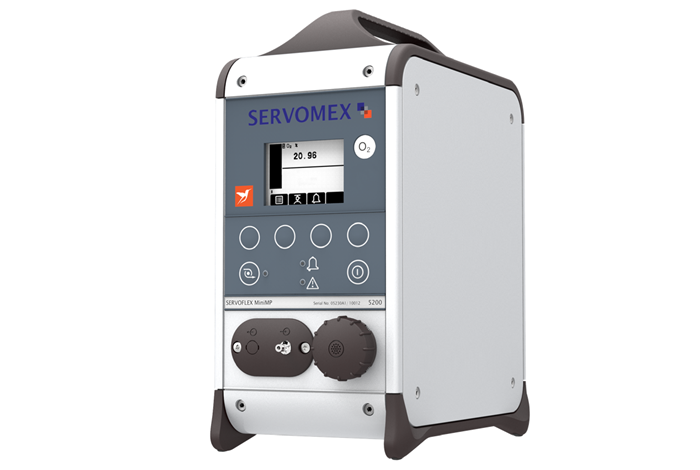
Image Credit: Servomex
ORSAT and the USP
The old United States Pharmacopeia (USP) approach for verifying oxygen USP was known as the wet chemical ORSAT method. This approach was changed, however, to paramagnetic technology in the early 2010s.
To ensure compliance with the current US Pharmacopoeia, it is important that the ORSAT method is not used. An independent tester found that the SERVOFLEX MiniMP 5200 units offered several advantages over the ORSAT approach:
- Fast setup
- Easy calibration
- Portable instruments
- Durable instruments
- Limited skill and training needed
- Objective readings
Application
Specific Features (see also full FAB list)
- Password-protected calibration tracking facilitates operators in demonstrating compliance to FDA inspectors
- Concentration alarms facilitate pass / fail decisions
- QuickConnect fittings accelerate daily calibration while minimizing leaks
- RS 232 output facilitates connection to PC systems
- Option for vehicle power or rechargeable batteries
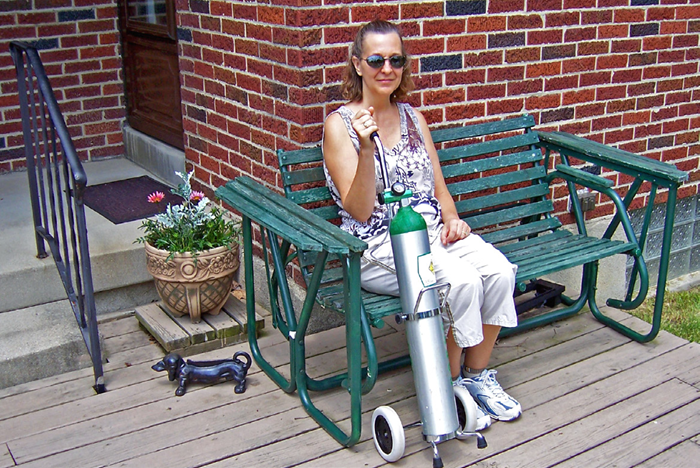
Homecare oxygen cylinders. Image Credit: Servomex

This information has been sourced, reviewed and adapted from materials provided by Servomex.
For more information on this source, please visit Servomex.