In this interview, AZoMaterials spoke with Samuel Evans, Senior Sales Development Manager, and Dan Merriman, Strategic Marketing Expert, both from Thermo Fisher Scientific, about the critical role of carbon capture monitoring in achieving net zero emissions. They explained the technological and industrial landscape surrounding CO2 purity analysis, the use of FTIR spectroscopy and process mass spectrometry in CCUS, and emerging solutions for sustainable carbon pipeline infrastructure.
Can you please introduce yourselves and your roles at Thermo Fisher Scientific?
Samuel Evans: I’m Samuel Evans, Senior Sales Development Manager at Thermo Fisher Scientific. I work closely with customers in the clean energy sector across Europe, the Middle East, and North America. My role is to understand their challenges, especially those related to carbon capture, utilization, and storage (CCUS), and help identify analytical solutions that meet both operational and regulatory demands.
Dan Merriman: I’m Dan Merriman, and I’ve been with Thermo Fisher Scientific and its predecessor companies since 1988, primarily in the field of process analytics. Currently, I support the strategic marketing team within our Environmental and Process Monitoring business. My focus is on aligning our technology portfolio with emerging needs in areas like carbon utilization and downstream chemical production.
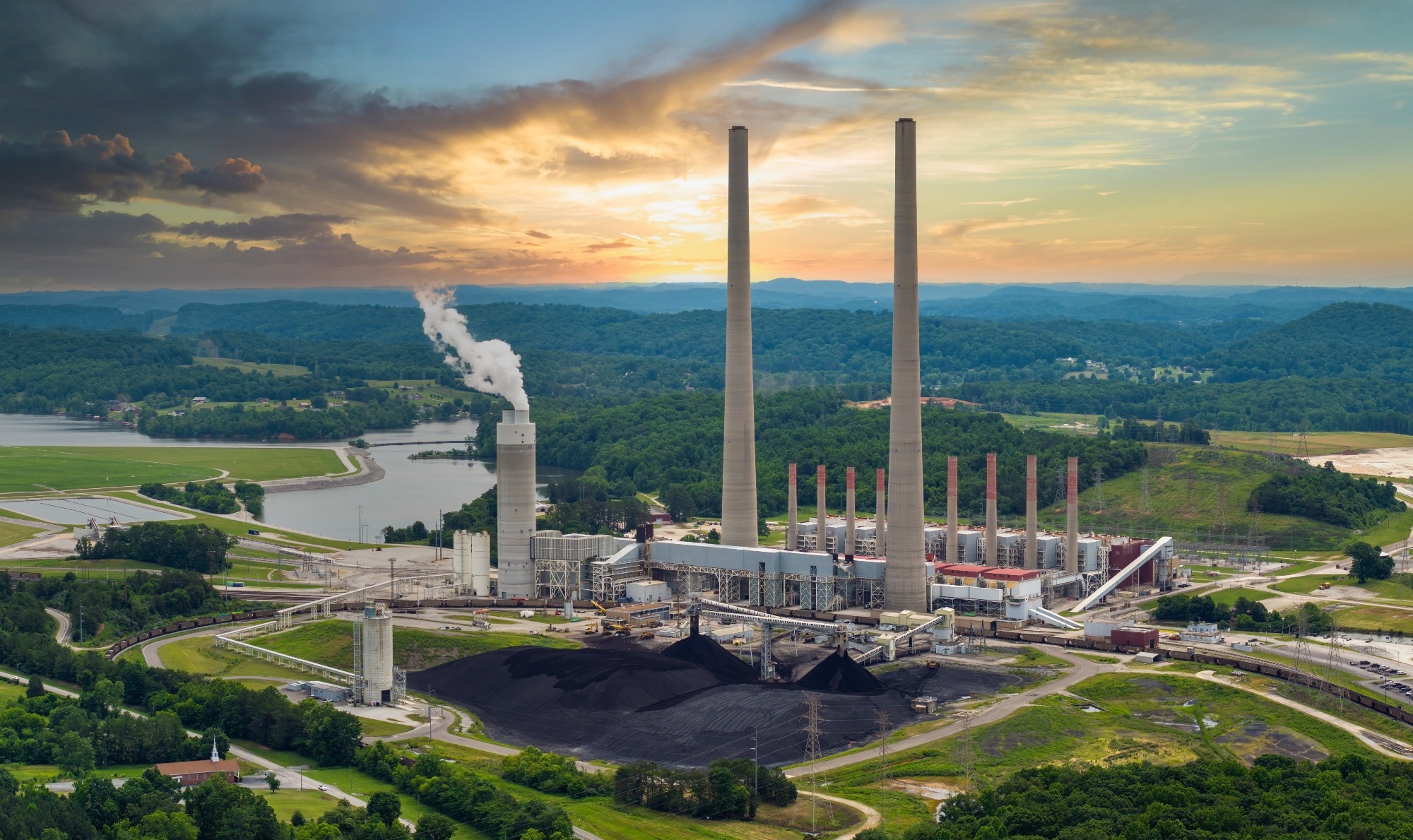
Image Credit: Bilanol/Shutterstock.com
What are the main drivers behind the adoption of carbon capture and storage (CCS) technology?
Samuel Evans: The push toward net zero emissions is at the heart of it. We’re seeing huge pressure, both regulatory and financial, as well as environmental, to decarbonize industries, particularly in hard-to-abate sectors such as cement, steel, and power generation.
Carbon capture enables these industries to reduce emissions without a full overhaul of their operations. Government incentives like tax credits and policies like the European Green Deal are also accelerating investment. For example, there are currently over 40 operational CCS facilities, and projections indicate we’ll see more than 500 by 2030.
What makes carbon capture monitoring so challenging, especially in pipeline networks?
Samuel Evans: The challenge lies in both the scale and the complexity of the gas stream. We're dealing with very high concentrations of CO2 – often 95 % or more – but we need to detect trace impurities at low parts-per-million (ppm) levels. These impurities vary based on the source, whether it's from combustion, fermentation, or chemical production, and can include sulfur compounds, nitrogen oxides, or alcohols.
If not properly monitored, these contaminants can cause corrosion in pipelines, which is a significant safety and integrity risk.
Why is FTIR spectroscopy particularly suited for CO2 purity analysis in CCUS applications?
Samuel Evans: Fourier Transform Infrared (FTIR) spectroscopy is ideal because it offers real-time, continuous monitoring with a wide dynamic range, ranging from trace impurities to pure CO2.
Each gas absorbs infrared light at specific frequencies, and FTIR can detect and quantify these absorption patterns accurately. Another key advantage is that calibrations can be easily transferred across instruments, making deployment scalable and consistent. This is critical as more capture sites come online.
Can you tell us about the MaxBev CO2 purity monitoring system and how it supports CCUS?
Samuel Evans: The Thermo ScientificTM MAX-Bev System was initially developed for the beverage-grade CO2 market, but it turns out its capabilities map perfectly onto the needs of CCUS. It provides continuous online analysis of both CO2 concentration and a customizable list of impurities.
With an accuracy of up to ±0.02 % for pure CO2, it meets the stringent demands of the industry. It integrates easily with control systems and allows operators to adapt the impurity list according to the process and regulatory requirements.
What typical measurement points are used in carbon capture infrastructure, and why?
Samuel Evans: There are several critical points: at the emission source to check for breakthrough gases; at the inlet and outlet of the capture unit to monitor efficiency; along the pipeline to ensure no unexpected chemical reactions; before liquefaction or shipping; and at the injection site to verify what’s being permanently stored.
Each point provides insight into performance, safety, and compliance, all of which are essential for regulatory approval and financial credibility.
Dan, your presentation focused on carbon utilization in downstream chemical processes. What’s emerging in that space?
Dan Merriman: One exciting area is the conversion of captured CO2 into synthetic fuels or e-fuels. This is where carbon utilization becomes circular. But the chemical processes involved, like methanol or syngas production, are extremely sensitive to gas composition.
Monitoring needs to be precise and continuous, especially when you're dealing with high value catalytic processes. Mass Spectrometry plays a big role in maintaining process control and product quality in these applications.
Are there any industry standards for CO2 purity, or is this still evolving?
Samuel Evans: That’s a really important point. There’s no universal global specification yet for CO2 purity in CCUS. Standards vary by region and even project. Some follow industrial gas specs, while others use proprietary criteria based on the infrastructure and end-use. This variability reinforces the need for flexible and adaptable monitoring systems. FTIR’s customizable gas lists and broad detection range help meet these diverse requirements.
How does Thermo Fisher ensure long-term reliability in remote or harsh environments?
Samuel Evans: We design our systems for durability and low maintenance. Many CCUS sites are in remote areas or operate under demanding conditions. Our analyzers are built to run 24/7, with automated calibrations and diagnostics.
Remote access options also help customers troubleshoot or fine-tune their systems without needing to be on-site. This resilience is key for uninterrupted compliance and operational continuity.
Looking ahead, how do you see carbon capture monitoring evolving over the next decade?
Dan Merriman: We’re going to see a shift from point solutions to fully integrated monitoring networks across the CO2 value chain – from capture to storage to utilization.
There’s also increasing interest in digital twins and predictive analytics, which rely on high-quality data. As CCUS scales, monitoring will no longer be optional – it will be foundational to both performance and trust. Thermo Fisher aims to be at the forefront of that evolution.
About the Speakers

Samuel Evans is the Senior Sales Development Manager at Thermo Fisher Scientific, where he specializes in supporting clean energy and decarbonization projects across EMEA and North America.
With a technical background in analytical instrumentation, Sam is focused on helping customers navigate the transition to net zero by applying advanced gas analysis solutions for carbon capture and hydrogen production. He works extensively with clients in sectors such as energy, power generation, and industrial manufacturing.
Dan Merriman brings over 35 years of experience in process analytics and strategic marketing. Having started his career with VG Instruments in 1988, he has held multiple technical sales and marketing roles within Thermo Fisher Scientific's environmental and process monitoring business.
Dan is currently focused on aligning Thermo Fisher’s analytics portfolio with future market demands in clean energy, chemical conversion, and environmental compliance. He is a subject matter expert in analytics applied to clean energy processes.

This information has been sourced, reviewed, and adapted from materials provided by Thermo Fisher Scientific – Environmental and Process Monitoring Instruments.
For more information on this source, please visit Thermo Fisher Scientific – Environmental and Process Monitoring Instruments.
Disclaimer: The views expressed here are those of the interviewee and do not necessarily represent the views of AZoM.com Limited (T/A) AZoNetwork, the owner and operator of this website. This disclaimer forms part of the Terms and Conditions of use of this website.