Flow Chemistry is changing how chemical synthesis is undertaken in both research labs and large-scale manufacturing. The transition from older batch processing methods to continuous flow methods, such as H.E.L.’s FlowCAT, has brought with it increased safety, better control, and faster optimization of reaction conditions.

Two ecologists, wearing rubber gloves, protective coveralls, eyeglasses, and respirators, are studying the characteristics of toxic water in a hazardous area. Image Credit: H.E.L Group
With continued developments in reactor design and automation, Flow Chemistry is widening its impact across industries, from sustainable manufacturing to pharmaceuticals. This article looks at how Flow Chemistry compares to legacy approaches, exploring its current applications and highlighting the important trends that drive innovative developments in this sector.
What is Flow Chemistry?
Legacy batch processing methods involve filling a reactor with reactants and waiting for the reaction to complete before emptying, cleaning, and repeating the cycle. Though this method works, it can be hard to scale and time-consuming while carrying safety risks, particularly with exothermic or hazardous reactions. There is also inevitable downtime between runs, limiting productivity.
Flow Chemistry presents an efficient alternative. Instead of stopping and starting, reactants are constantly pumped through a reactor, mixing and reacting in real time before the product leaves the system at the other end. This approach allows precision and control over reaction variables such as pressure, temperature, and residence time, making processes easier to scale up, faster, and safer.
Applications of Flow Chemistry
Flow Chemistry is particularly appealing due to its versatility. Its use is increasing in a range of industries because of its ability to reduce waste, improve safety, and increase the speed of reactions.
Pharmaceuticals and Personalized Medicine
Flow Chemistry is helping pharmaceutical companies to streamline the creation of active pharmaceutical ingredients (APIs). Continuous flow systems are particularly important for personalized medicine, in which small batches must be produced consistently and efficiently. Automated platforms also increase reproducibility due to the lower chance of human error, which is useful in high-precision environments where the consistent quality of batches is a necessity.
High-Throughput Screening
In research and development settings, Flow Chemistry enables many different reaction conditions to be screened efficiently. When combined with automation, these processes accelerate the optimization process, aiding chemists with the quick identification of the ideal parameters for a given reaction.
Green Chemistry
Flow systems align with green chemistry principles. Better heat and mass transfer, and smaller volumes, reduce the use of solvents and the generation of waste. Operating at a stable state also helps to improve energy efficiency.
Some of the key environmental benefits are as follows:
- Lower consumption of solvents
- Safer handling of hazardous reagents
- Fewer by-products and lower waste levels
- Lower energy use because of better control of heat
Thanks to small internal volumes, continuous operation, and an improved ratio of surface area to volume, flow reactors lower the possibility of thermal runaway, making them safer options for challenging chemistries.
Market Drivers
Several trends are quickening the adoption of Flow Chemistry:
- More Strict Regulations: Governments and agencies are developing legislation to create cleaner, safer, and more controlled manufacturing processes.
- Sustainability Goals: Many sectors are facing pressure to decrease the use of toxic substances such as solvents, improve process efficiency, and reduce emissions.
- Need for Complex Synthesis: The necessity for tailored polymers, APIs, and specialty chemicals is increasing.
- Support for Continuous Manufacturing: Regulatory bodies are starting to recognize that continuous production methods are compliant with GMP standards, further encouraging their adoption in pharmaceutical manufacturing.
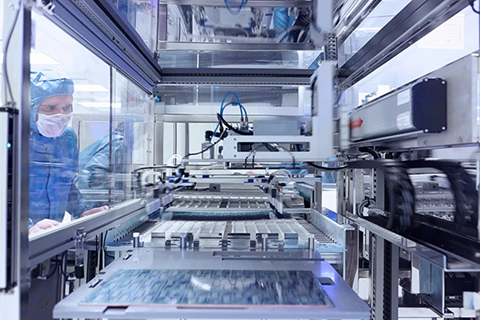
Image Credit: H.E.L Group
Accordingly, the worldwide Flow Chemistry market is expected to increase at a compound annual growth rate (CAGR) of over 12 %, reaching a predicted $3.5 billion USD by 2032.
Emerging Trends in Flow Chemistry
Flow Chemistry is changing quickly and becoming more desirable in the dynamic landscape that constantly sees innovations in process integration, digitization and reactor design. Some of the emerging trends include:
- Miniaturization and Modular Microreactor Platforms
Contemporary systems use compact, modular microreactors with lateral dimensions below one mm. Such systems have a high surface area to volume ratio, bettering reaction efficiency and heat transfer. Modular design makes it less difficult to reconfigure setups for different reactions, lowering cost and making the process less complex.
- Multi-Step Flow Synthesis
Recent developments have created configurations that enable multiple reaction steps within an isolated flow system. This includes multicomponent reactions where reagents are added successively based on their reaction pathways. The process enhances selectivity and streamlines workflows.
- Automation and Optimization
Automation in Flow Chemistry increases reproducibility by lowering the chance of human error, and speeds up the optimization of the reaction. Adding automated pumps and integrated control software (like H.E.L’s FlowCAT and WinISO) enables adjustments of flow rates, pressure, and temperature in real time, resulting in consistent product quality and improved yields.
- Integration with PAT and AI
Integrating Process Analytical Technology (PAT) allows in-line sensors such as UV-VIS, IR, and NIR to monitor reactions in real time. This enables closed-loop feedback to optimize the reaction by automatically adjusting process conditions.
Recent developments include AI-powered process optimization, in which machine learning models utilize data from earlier runs to predict reaction behavior and optimize variables with no input from humans.
- Novel Reactor Designs
Innovations such as electrochemistry, gas-phase flow, photochemistry, and packed-bed heterogeneous catalysis are increasing the number of reactions suited for Flow Chemistry.
In addition, 3D-printed reactors are making new reactor geometries more easily available. Current materials, such as polypropylene, have some limitations regarding chemical compatibility, and so innovation is being accelerated by this ability to quickly design and test new reactor formats.
Conclusion
Flow Chemistry continues to gain momentum as a powerful alternative to batch processing, offering improved safety, easier optimization, and better control. Recent breakthroughs, such as AI-powered process control and microreactor platforms, are continuing to push the boundaries of what is deemed possible in continuous chemical manufacturing.
Flow Chemistry is fast becoming the standard for modern chemical synthesis as a result of its alignment with industry regulations, compatibility with green chemistry initiatives, and scalability.
As industries continue to push for sustainability, safety, and efficiency, Flow Chemistry is proving to be a key tool, capable of delivering optimized solutions that meet environmental and regulatory expectations.

This information has been sourced, reviewed, and adapted from materials provided by H.E.L Group.
For more information on this source, please visit H.E.L Group.