AZoM speaks to Dan Merriman, an advisor within the Chemical Analysis Division at Thermo Fisher Scientific, about the role of process mass spectrometry in industrial process control, safety, and environmental monitoring, and how the Prima PRO and Sentinel PRO systems deliver fast, multi-stream gas analysis across a wide range of industries.
Please introduce yourself and your role at Thermo Fisher Scientific.
My name is Dan Merriman. I’m an advisor to the marketing team within the Chemical Analysis Division of Thermo Fisher Scientific. My primary focus is on process analyzers, primarily process mass spectrometry and sulfur analyzers, used for industrial process control and environmental protection.
Can you introduce the Thermo Scientific Prima PRO and Sentinel PRO systems, including their design purpose and who their users are?
The Thermo Scientific™ Prima PRO™ and Thermo Scientific™ Sentinel PRO™ are online process mass spectrometers used for fast gas analysis. They measure the composition of gases across various industries, including biotechnology and biopharma, chemicals and petrochemicals, iron and steel, as well as a range of environmental and safety applications.
They’re rapid composition analyzers, and, within seconds, they can provide a detailed breakdown of a gas mixture, reporting the concentration of each component. The primary use is process control, but we also support applications for emissions monitoring and for personnel protection – detecting toxic gases in the workplace.
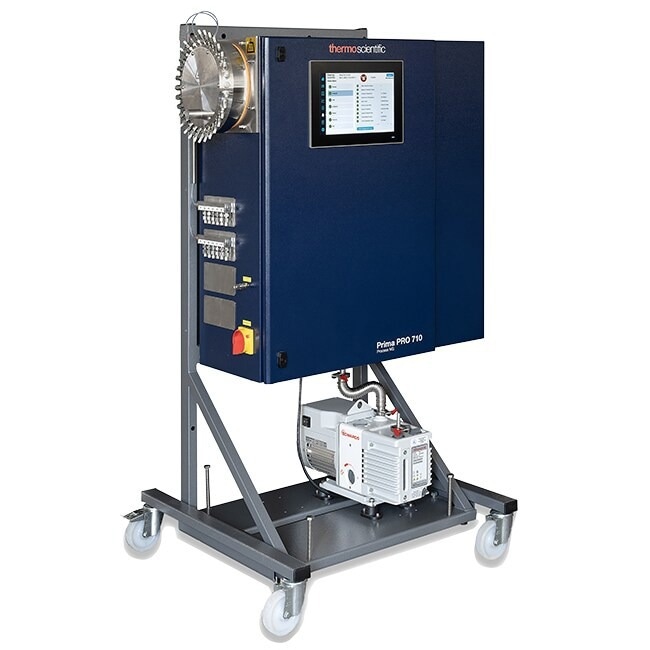
Image Credit: Thermo Scientific
Where does process mass spectrometry add the most value in industry?
Historically, one of the earliest and still most common applications is biotechnology and biopharma. Many drugs are manufactured using fermentation. By measuring the gases entering and exiting a bioreactor – especially oxygen consumption and carbon dioxide evolution – operators can understand cell respiration, how cells are metabolizing, and how quickly they’re growing.
Beyond biotech, process mass spectrometry is widely used across the chemical sector, from basic chemicals such as fertilizers (for example, ammonia) right through to plastics and fibers.
Many of these operations are reactor-based. Users want to understand what gases are going into a reactor and what’s coming out, because that directly informs production rate, efficiency, and product quality.
Traditionally, gas chromatography has been the workhorse for online gas analysis. However, process mass spectrometry can be dramatically faster, often enabling much tighter process control because models can be updated and setpoints adjusted more frequently.
Why does speed matter so much, and how does multi-stream monitoring fit in?
Because the analysis is so fast, it’s common to use one mass spectrometer to monitor many sample points. This can reduce capital and operating costs, with fewer analyzers to purchase, fewer spares, and fewer maintenance cycles. For specific processes, faster measurements translate directly into tighter control, improved yield, and more stable product quality.
What are some examples of applications outside of chemical and biotech?
Iron and steel is a big one. Across an integrated iron and steel plant, there can be many applications – monitoring off-gases from furnaces, from blast furnace ironmaking through to steelmaking. It’s used both to optimize production and to manage gases as energy sources across the site.
On the environmental and safety side, there’s detection of volatile organic compounds (VOCs) for personnel protection and monitoring of fugitive emissions. That’s where Sentinel PRO is used.
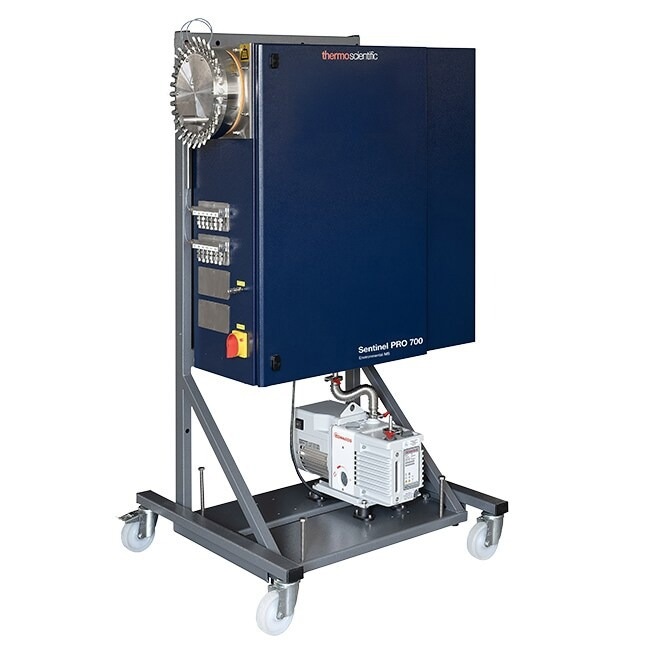
Image Credit: Thermo Scientific
How do Prima PRO and Sentinel PRO differ in day-to-day use?
Prima PRO is primarily used for process monitoring and control. It provides real-time composition data from one or multiple points across a process, enabling operators to increase productivity, improve efficiency, and maintain product quality.
Sentinel PRO is focused on safety and environmental protection. In refineries and certain chemical and plastics facilities, there is a risk of leakage of hazardous organic compounds – many of which are harmful, and some are known carcinogens. Sentinel PRO is employed as a 24/7 monitor across multiple points – both in areas with a higher risk of leaks and in areas where personnel work – sampling at short cycle times and detecting trace VOCs. Hence, conditions stay well below hazardous thresholds.
What is the core mass spectrometer technology inside Prima PRO and Sentinel PRO?
Both Prima PRO and Sentinel PRO are scanning magnetic sector mass spectrometers. There are three main stages.
First, we ionize the neutral gas molecules from the sample – most commonly using electron impact. A heated filament produces electrons; when those electrons collide with neutral molecules, they create positive ions.
Second, the ions are accelerated into a magnetic field. In a magnetic sector, ions follow a curved path, and the radius of curvature depends on their mass, the acceleration voltage, and the magnetic field strength. By scanning the magnetic field, we can sequentially transmit ions of different mass-to-charge ratios through the analyzer.
Third, ions are measured at the detector. A common detector is a Faraday cup: ions strike a metal cup, are discharged, and the resulting current is measured with a high-gain amplifier. This gives excellent linearity across a wide concentration range.
Because we scan quickly, we can measure a complex mixture – say 20 components – within tens of seconds, and cover a mass range of roughly 1 to 200 amu.
What’s new in the latest Prima PRO and Sentinel PRO “700 series” generation?
The Prima brand dates back to the early 1990s, and the scanning magnetic sector analyzer has remained because it’s robust, reliable, and accurate for complex industrial gas mixtures. Over time, much of the evolution has focused on improving usability and ruggedness, including enhanced enclosures, temperature management, and software.
In the current generation, Thermo Scientific offers Prima PRO 700 and Prima PRO 710; the key differentiation is the local touchscreen user interface on the 710 model, which complements PC-based operation.
Similarly, Sentinel PRO 710 adds a touchscreen interface for local operation and monitoring.
Can you explain how multi-stream sampling works for these systems?
A key feature is the Rapid Multi-Stream Sampler (RMS). Because mass spectrometry is fast, you need a stream selector that can switch frequently without becoming a maintenance burden.
The RMS is designed for fast, reliable switching and long service intervals. It’s available with 32 or 64 sample points, and for larger installations, two RMS units can be used in series for a total of up to 127 sample points.
What do customers think about the performance and cost of ownership versus alternatives like GC?
Process mass spectrometry offers a combination of high analytical performance, high speed, and high reliability. Compared to lower-cost sensors, you gain significantly stronger analytical capabilities; compared to chromatography, you receive dramatically faster updates.
While the analyzer itself is a high-value instrument, the ability to cover many sample points with one analyzer can reduce overall investment and reduce ongoing maintenance burden. In many plants, the systems are designed to operate continuously with minimal user intervention – users don’t need to be mass spectrometry experts to own and operate them.
What support and service is available?
Thermo Fisher Scientific provides a range of support options for the process analyzer portfolio, including on-site commissioning, routine maintenance, and emergency intervention through locally trained service personnel. Customers can also take maintenance plans and service agreements to manage the long-term cost of ownership and support requirements.
Watch the full video below:
TFS Prima PRO 710 & Sentinel PRO 710 _ Product Video
About Dan Merriman

Dan Merriman brings over 35 years of experience in process analytics and strategic marketing. Having started his career with VG Instruments in 1988, he has held multiple technical sales and marketing roles within Thermo Fisher Scientific's environmental and process monitoring business.
Dan is currently focused on aligning Thermo Fisher’s analytics portfolio with future market demands in clean energy, chemical conversion, and environmental compliance. He is a subject matter expert in gas-to-liquid technologies and carbon utilization processes.

This information has been sourced, reviewed and adapted from materials provided by Thermo Fisher Scientific – Environmental and Process Monitoring Instruments.
For more information on this source, please visit Thermo Fisher Scientific – Environmental and Process Monitoring Instruments.
Disclaimer: The views expressed here are those of the interviewee and do not necessarily represent the views of AZoM.com Limited (T/A) AZoNetwork, the owner and operator of this website. This disclaimer forms part of the Terms and Conditions of use of this website.