With global technological advances, so too come concerns in energy efficiency – for both industrial and consumer applications. One often-overlooked aspect of energy consumption is thermal management. Inefficient heat dissipation leads to increased power usage, reduced component lifespan, and system failures.
This article explores how Thermal Interface Materials (TIMs) enhance energy efficiency, reducing overall power consumption in electronic and industrial applications.
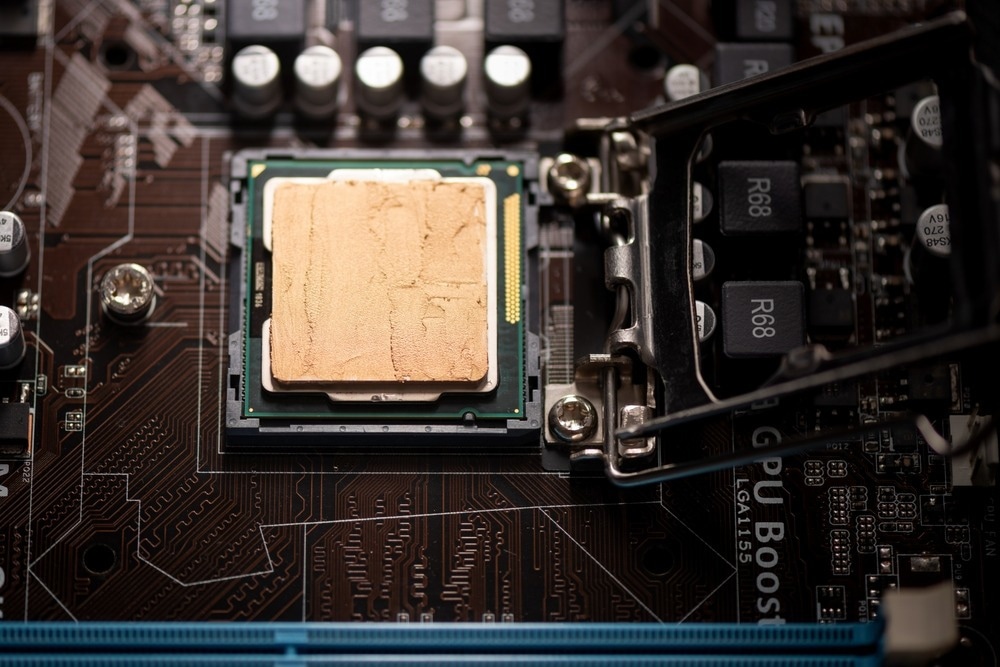
Image Credit: Nor Gal/Shutterstock.com
Understanding Thermal Interface Materials (TIMs)
TIMs are substances placed between heat-generating components and heat sinks to improve thermal conductivity and dissipate heat more effectively. These materials fill microscopic air gaps and imperfections that can act as thermal barriers. The most commonly used TIMs include:
- Thermal Greases and Pastes: High-performance materials offering excellent gap-filling properties and low thermal resistance.
- Phase-Change Materials (PCMs): Solid at RTP but become highly conductive when heated, providing consistent performance over time.
- Thermal Pads: Pre-formed sheets that provide reliable thermal conduction, often used in applications where ease of application is important.
- Metal-Based TIMs: High thermal conductivity materials such as indium or liquid metal alloys, offering superior heat transfer efficiency but requiring careful application to prevent electrical shorts.
- Graphene-Based TIMs: Emerging materials leveraging graphene's exceptional thermal conductivity properties for next-generation applications.
- Gap Fillers: Soft, compliant materials designed to bridge larger gaps between components, ensuring uniform heat transfer and minimizing thermal resistance in applications with uneven surfaces.
How Materials Direct Can Help
Materials Direct is a leading supplier of high-quality Thermal Interface Materials for industrial and consumer applications. The company provides a wide range of TIMs, including thermal pads, gap fillers, greases, and phase-change materials, ensuring optimal thermal management for various industries.
Key Benefits of Using Materials Direct:
- Wide Product Selection: A broad range of TIMs suitable for different applications, from high-performance computing to industrial automation.
- Custom Solutions: Offers tailored TIM solutions to meet specific design and performance requirements.
- Fast Delivery: Ensures quick turnaround times to support urgent manufacturing and maintenance needs.
- Expert Guidance: Provides professional support to help businesses select the most efficient TIMs for their applications.
By using the high-performance TIMs from Materials Direct, businesses can significantly reduce thermal resistance, improve energy efficiency, and extend the lifespan of electronic components.
Mechanisms of Heat Transfer in TIMs
TIMs work by improving heat conduction between components, reducing thermal resistance. The primary mechanisms of heat transfer in TIMs include:
- Conduction: The direct transfer of heat through the material, where higher thermal conductivity leads to better performance.
- Convection: In some cases, TIMs facilitate heat dissipation through convective interactions with surrounding air or liquid cooling systems.
- Phase Change: Some TIMs transition between phases to maintain optimal thermal performance, filling gaps and reducing contact resistance.
- Radiative Heat Transfer: Although minimal in comparison to conduction, radiative heat transfer can be influenced by surface properties and the emissivity of the TIM.
The Impact of Efficient Thermal Management on Power Consumption
When electronic and industrial components operate at high temperatures, their efficiency drops, requiring additional energy to maintain performance. Effective heat management via TIMs mitigates this issue. Below is a comparison of power consumption in a system with efficient thermal management versus one with poor heat dissipation.
Table 1. Impact of Thermal Efficiency on Power Consumption. Source: Materials Direct
| Parameter |
Efficient Heat Management (Using TIMs) |
Poor Heat Management (No TIMs) |
| Average Operating Temperature |
45 °C |
75 °C |
| Power Consumption Increase Due to Heat (%) |
5 % |
20 % |
| Cooling System Power Usage |
10 W |
25 W |
| Component Lifespan |
10 years |
5 years |
Analysis of Data
From the table above, we can infer several key points about the impact of thermal management on power consumption and component longevity:
- Temperature Reduction and Efficiency Gains
-
- With proper TIM application, the system's operating temperature is reduced from 75 °C to 45 °C. This lower temperature ensures that components operate within optimal efficiency ranges, reducing thermal stress and performance degradation.
- Overheating increases electrical resistance within circuits, leading to higher power draw. A poorly managed system shows a 20% increase in power consumption, whereas a well-managed system using TIMs keeps this increase to just 5%.
- Cooling System Load and Power Savings
-
- A system without effective TIMs places a higher burden on the cooling system. The table shows that cooling system power usage jumps from 10 W in an efficient setup to 25 W in a poorly managed system.
- This additional 15 W of power consumption per device scales significantly across data centers, industrial automation, and consumer electronics, leading to substantial energy waste.
- Component Longevity and Replacement Costs
-
- Heat is one of the leading causes of electronic component failure. The data illustrates that a system with efficient thermal management sees its lifespan double from 5 years to 10 years.
- This extension reduces the frequency of replacements and maintenance costs, leading to long-term financial savings and reduced electronic waste.
Industrial and Consumer Electronics
Industrial Applications
In industrial automation, motor controllers and power electronics generate substantial heat. Without effective heat dissipation, power losses increase. A study comparing two identical industrial motor controllers – one using high-quality TIMs and another without revealed a 15 % energy efficiency improvement in the system using high-quality TIMs.
In power plants and large-scale industrial processes, thermal efficiency is crucial. The application of advanced TIMs in heat exchangers and power conversion systems has led to significant reductions in operational energy costs and enhanced long-term equipment reliability.
Consumer Applications
Consumer electronics, such as laptops and smartphones, also benefit from improved thermal management. A laptop CPU without effective TIM can run 20-30 % hotter, causing throttling and increased fan power consumption, leading to higher energy consumption.
Source: Materials Direct
| Parameters |
High Quality TIM |
Poor Quality TIM |
| CPU Temperature (under load) |
55 °C |
85 °C |
| Fan Power Consumption |
3 W |
8 W |
| Battery Life Reduction |
5 % |
18 % |
Data Analysis:
- CPU Temperature and Performance:
-
- High-quality TIM usage keeps the CPU 30 °C cooler, preventing performance throttling. A hotter CPU (85 °C) triggers automatic downclocking, reducing processing speed and affecting the user experience.
- Cooling Fan Power Draw:
-
- The table shows that an inefficient TIM setup increases fan power consumption from 3 W to 8 W, a nearly threefold increase. This excessive energy use shortens battery life and adds operational noise.
- Battery Life and Overall Energy Efficiency:
-
- Increased power draw directly affects battery performance. A 5 % battery reduction in an optimized setup contrasts with an 18 % reduction in a system with a poor setup, translating to shorter usage time per charge and frequent recharging cycles.
Beyond consumer devices, data centers and cloud computing infrastructure rely heavily on efficient cooling solutions. TIMs play a crucial role in reducing cooling costs and ensuring stable server operations, which is essential for maintaining uptime and operational efficiency.
Emerging Trends in TIM Technology:
Achievements in TIM technology continue to drive improvements in energy efficiency. Some key trends include:
- Nanotechnology-Based TIMs – Materials incorporating carbon nanotubes and graphene offer superior thermal performance with minimal thickness.
- Hybrid TIMs – Combining properties of efficient TIM types (e.g., phase change with metal-based TIMs) for enhanced thermal performance.
- Eco-Friendly TIMs – Development of non-toxic, sustainable TIMs for environmentally conscious applications.
Conclusion
Improving energy efficiency through proper thermal management, particularly with Thermal Interface Materials, is essential for reducing power consumption and improving component longevity. Industrial and consumer applications alike benefit from well-chosen TIMs, as they significantly lower temperatures, decrease cooling system workload, and enhance overall energy efficiency.
By sourcing TIMs from reputable suppliers such as Materials Direct, businesses can access high-quality solutions that ensure optimal thermal performance. With ongoing research and development in TIM technology, the future holds even greater potential for achieving higher efficiency and reduced environmental impact.

This information has been sourced, reviewed, and adapted from materials provided by Materials Direct.
For more information on this source, please visit Materials Direct.