A team of researchers has demonstrated a sub-second volumetric 3D printing method that avoids one of the field’s most stubborn mechanical issues: rotating the sample.
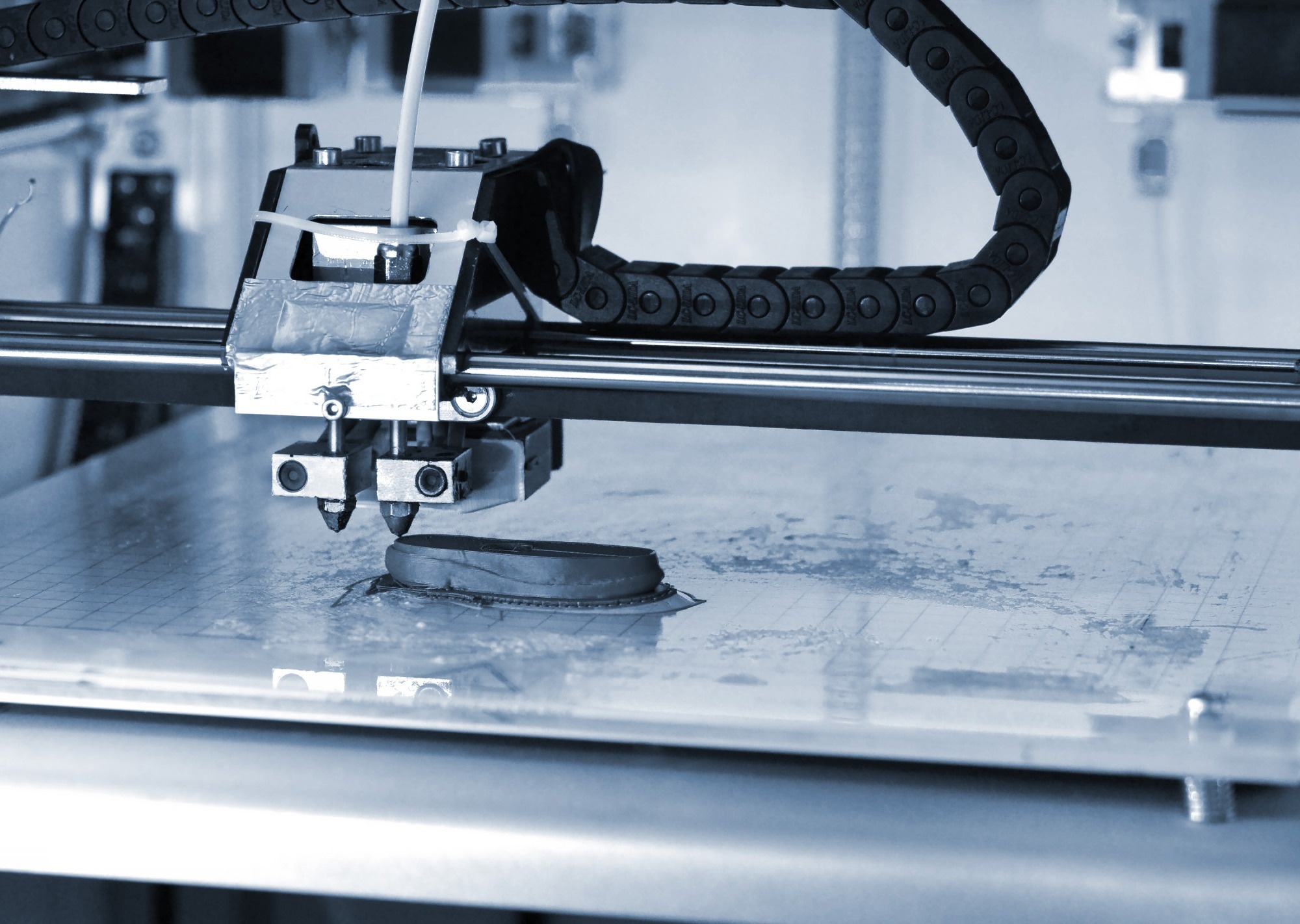 Study: Sub-second volumetric 3D printing by synthesis of holographic light fields. Image Credit: MarinaGrigorivna/Shutterstock.com
Their system, called Digital Incoherent Synthesis of Holographic Light Fields (DISH), instead rotates the illumination using a high-speed periscope, enabling millimetre-scale structures to be printed in 0.6 seconds with approximately 19 μm resolution across a 1 cm depth range.
Reporting in Nature, the advance addresses a longstanding trade-off in volumetric additive manufacturing between resolution, stability, and printable volume.
Get all the details: Download your PDF here!
Volumetric 3D printing has long hoped to fabricate entire objects simultaneously - rather than layer by layer. But established approaches, such as computed axial lithography, typically rotate the resin container during exposure.
Fast rotation introduces vibration and alignment errors. Slow rotation, meanwhile, requires highly viscous resins, often thousands of centipoise, to prevent features from drifting before polymerization completes.
When it comes to optics, higher resolution demands higher numerical aperture (NA) objectives. Yet higher NA optics come with a shallow depth of field.
The system used in the study has an intrinsic NA of 0.055 at 405 nm, with a native depth-of-field of roughly 0.4 mm. That's far smaller than the centimetre-scale volumes desirable for practical manufacturing.
DISH tackles both precision and scale at once.
Results Through Rotating the Light, not the Sample
In their method, instead of moving the resin container the researchers mounted a rotating periscope on a hollow stage to deliver synchronized angular illumination while keeping the sample stationary.
A 405 nm coherent laser is modulated by a Digital Micromirror Device operating at 17 kHz, projecting optimized binary patterns as the periscope rotates at speeds up to 10 revolutions per second.
The demonstrated sub-second fabrication corresponds to the specific exposure timing used in the reported experiments.
The team abandoned conventional ray-based approximations and implemented a wave-optics model that explicitly incorporates diffraction and refraction at the air–material interface.
A coarse-to-fine iterative optimization algorithm generates projection patterns that maintain intensity modulation well beyond the native focal plane.
An adaptive calibration scheme using two orthogonal cameras corrects single-pixel misalignments in the synthesized 3D light field, improving angular registration and exposure fidelity.
Resolution Across A Centimetre
Performance tests show that DISH maintains approximately 19 μm feature fidelity across a 1 cm depth range, far exceeding the objective’s intrinsic 0.4 mm depth of field.
Relief-structure experiments demonstrated approximately 11 μm uniform linewidth across the full centimetre span, while the smallest independently resolved positive feature measured 12 μm.
Comparative tests against conventional back-projection approaches showed sharper edges and improved consistency, particularly in off-centre regions where optical blur typically increases.
The single-sided illumination geometry does introduce a missing-cone trade-off that slightly affects axial resolution. The authors note that alternative periscope geometries could mitigate this limitation in future implementations.
Printing In Low-Viscosity Materials
One of the more practically significant findings is material compatibility. The system printed successfully in aqueous solutions of polyethylene glycol diacrylate with viscosities as low as 4.7 cP. Because polymerization completes within 0.6 seconds, gravitational drift occurs only after solidification.
By contrast, conventional volumetric systems often require viscosities between 6,000 and 10,000 cP to maintain positional stability during slower exposures.
The researchers also demonstrated printing in higher-viscosity resins and bio-derived hydrogels, including gelatin methacrylate (GelMA) and silk fibroin methacrylate (SilMA).
The single-sided geometry further enables in situ fabrication on fixed substrates and within confined environments such as petri dishes.
Integration with a fluidic channel allowed successive fabrication of multiple structures, pointing toward continuous production workflows.
Throughput And Practical Constraints
The authors estimate voxel rates on the order of 1.25 × 10⁸/second, calculated for a defined voxel size and build volume. They suggest that higher-power lasers and faster modulation hardware could further increase build rates.
Surface analysis indicates that inclined projection reduces the prominence of stripe-like speckle artefacts compared with perpendicular illumination systems.
However, the hologram optimization process currently requires substantial offline computation. The authors propose GPU acceleration or neural-network-based approaches as pathways to reduce processing time and enable more automated deployment.
Changing the Volumetric Printing Model
By decoupling angular illumination from sample motion and synthesizing holographic light fields through wave-optics modeling, DISH demonstrates a way to extend effective depth performance without sacrificing resolution.
While industrial deployment remains prospective, the work outlines a credible pathway toward faster, continuous volumetric manufacturing using both acrylate-based systems and selected biomaterials.
Future efforts are likely to focus on accelerating hologram computation, refining optical geometries to address missing-cone effects, and scaling projection hardware.
Journal Reference
Wang, X.et al. (2026). Sub-second volumetric 3D printing by synthesis of holographic light fields. Nature, 1-9. DOI: 10.1038/s41586-026-10114-5
Disclaimer: The views expressed here are those of the author expressed in their private capacity and do not necessarily represent the views of AZoM.com Limited T/A AZoNetwork the owner and operator of this website. This disclaimer forms part of the Terms and conditions of use of this website.