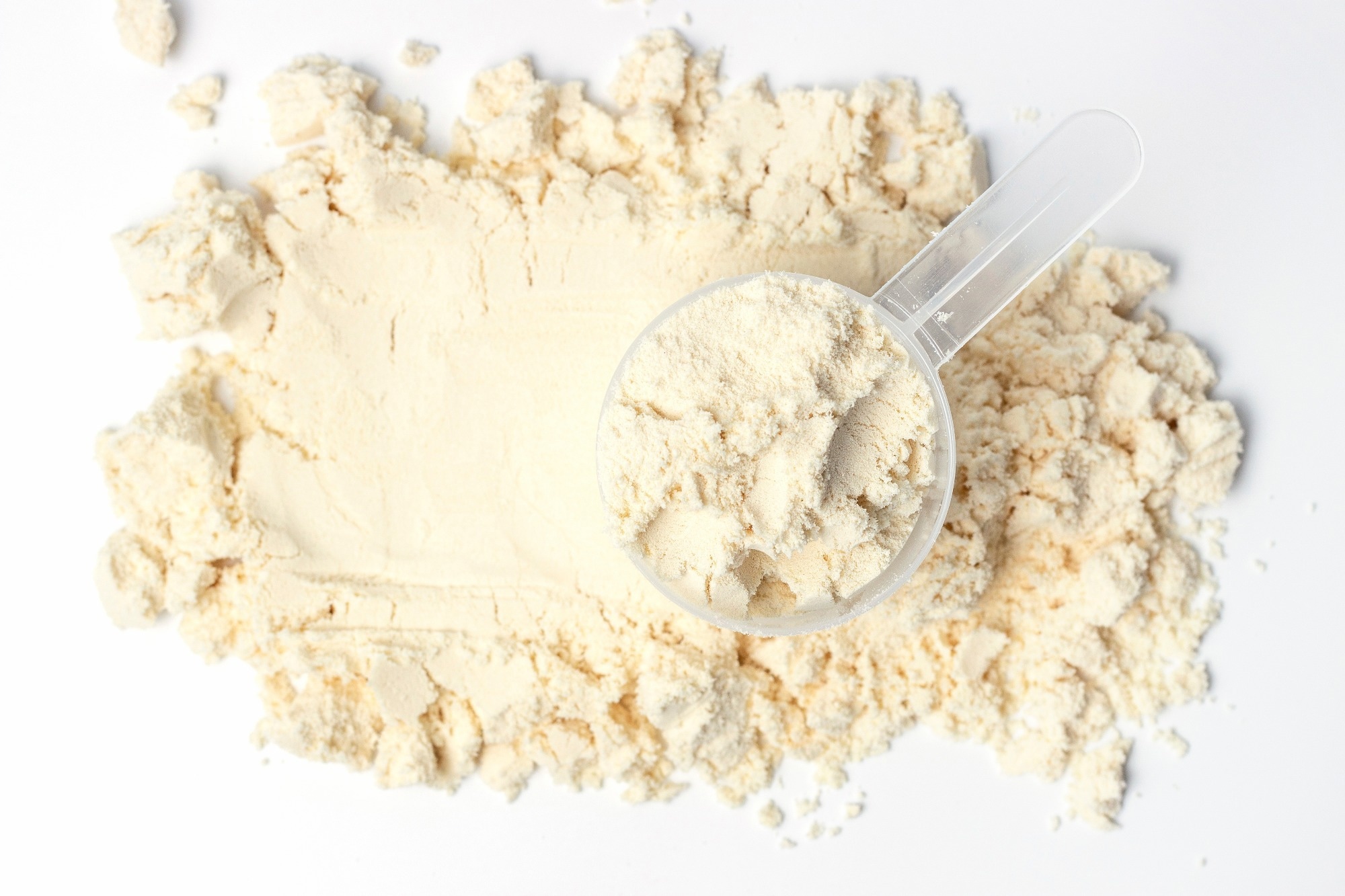
Whey permeate is a byproduct of manufacturing whey protein powder. It contains high amounts of minerals, phosphate, and lactose. Whey permeate is often used in chocolate manufacturing and baking due to its mild and sweet taste.
The key to whey permeate production optimization is the real-time control of production streams. To ensure high product quality and maximize product yield, it is crucial to monitor the production process using high-throughput analytical techniques.
Near-infrared spectroscopy (NIRS) is a fast and chemical-free analysis technique that can support such testing. NIR spectroscopy is capable of measuring the most important quality parameters (phosphate, pH, ash, moisture, lactose, and protein) at the same time in whey permeate. This technique does not require any sample preparation. The NIRS solution is easy to operate, fast, and can be used atline or offline in a quality control lab.
Experimental Equipment
A total of 158 samples of whey permeate were analyzed using a Metrohm NIR Analyzer that was equipped with a small cup accessory. All the measurements were performed using the reflection mode (1000–2250 nm). Metrohm software was used to acquire the data and develop the prediction model.
Result
The obtained NIR spectra (Figure 1) was used to create prediction models for the parameters of protein, phosphate, ash, pH, moisture, and lactose content. Spectral data was pre-processed, and wavelength selection was used to improve the models’ accuracy. All models were validated using an independent validation set with a sample size of 25 %. The quantification models were highly correlated with the laboratory data of > 0.80 (R2P), apart from lactose, which had a value of 0.70 (R2P).
Correlation diagrams and the respective figures of merit (FOM) are represented in Figures 2–7, which display the expected precision for routine analysis.

Figure 1. Selection of NIR spectra of whey permeate samples. Blue represents calibration samples, while green represents validation set samples. Data was obtained with a Metrohm NIR Analyzer. Image Credit: Metrohm Middle East FZC
Results of Protein Content

Figure 2. Correlation diagram and the respective figures of merit for the prediction of protein content in whey permeate using a Metrohm NIR Analyzer. The calibration dataset is shown in blue, and the external validation dataset is in green. Image Credit: Metrohm Middle East FZC
Source: Metrohm Middle East FZC
| R2 |
SEC (%) |
SECV (%) |
SEP (%) |
| 0.899 |
0.18 |
0.19 |
0.21 |
Results of Lactose Content

Figure 3. Correlation diagram and the respective figures of merit for the prediction of lactose content in whey permeate using a Metrohm NIR Analyzer. The calibration dataset is shown in blue, and the external validation dataset is in green. Image Credit: Metrohm Middle East FZC
Source: Metrohm Middle East FZC
| R2 |
SEC (%) |
SECV (%) |
SEP (%) |
| 0.689 |
1.22 |
1.44 |
1.41 |
Results of Moisture Content

Figure 4. Correlation diagram and the respective figures of merit for the prediction of moisture content in whey permeate using a Metrohm NIR Analyzer. The calibration dataset is shown in blue, and the external validation dataset is in green. Image Credit: Metrohm Middle East FZC
Source: Metrohm Middle East FZC
| R2 |
SEC (%) |
SECV (%) |
SEP (%) |
| 0.864 |
0.13 |
0.14 |
0.11 |
Results of Ash Content

Figure 5. Correlation diagram and the respective figures of merit for the prediction of ash content in whey permeate using a Metrohm NIR Analyzer. The calibration dataset is shown in blue, and the external validation dataset is in green. Image Credit: Metrohm Middle East FZC
Source: Metrohm Middle East FZC
| R2 |
SEC (%) |
SECV (%) |
SEP (%) |
| 0.813 |
0.09 |
0.10 |
0.11 |
Results of Phosphate Content

Figure 6. Correlation diagram and the respective figures of merit for the prediction of phosphate content in whey permeate using a Metrohm NIR Analyzer. The calibration dataset is shown in blue, and the external validation dataset is in green. Image Credit: Metrohm Middle East FZC
Source: Metrohm Middle East FZC
| R2 |
SEC (ppm) |
SECV (ppm) |
SEP (ppm) |
| 0.909 |
158 |
171 |
156 |
Results of pH Value

Figure 7. Correlation diagram and the respective figures of merit for the prediction of pH value in whey permeate using a Metrohm NIR Analyzer. The calibration dataset is qshown in blue, and the external validation dataset is in green. Image Credit: Metrohm Middle East FZC
Source: Metrohm Middle East FZC
| R2 |
SEC |
SECV |
SEP |
| 0.862 |
0.07 |
0.08 |
0.08 |
Conclusion
This article has shown the feasibility of using NIR spectroscopy for the quality control of whey permeate. Near-infrared spectroscopy is a fast and non-destructive analytical technique that can monitor the production process of dairy products. As well as whey permeate analysis, the production stream of whey protein can also be monitored using NIRS.
Table 1. Overview of ISO norms for the different parameters used for determining the reference values of the whey permeate samples. Source: Metrohm Middle East FZC
| Parameter |
Method |
| Lactose |
ISO 22662:2024 Milk and milk products - Determination of lactose content by high-performance liquid chromatography |
| Protein |
ISO 8968-1:2014 Milk and milk products - Determination of nitrogen content Kjeldahl method |
| Moisture |
ISO 5537:2023 Dried milk and dried milk products - Determination of moisture content with loss on drying |
| Ash |
ISO/DIS 9877 Milk and milk products - Determination of ash content by incineration |

This information has been sourced, reviewed and adapted from materials provided by Metrohm Middle East FZC.
For more information on this source, please visit Metrohm Middle East FZC.