Sponsored by InterpowerReviewed by Olivia FrostApr 10 2026
Clearance paperwork must be provided for an electrical product before it can be certified as safe for use. Product compliance begins with understanding where country-specific standards originate and which body certifies those standards and the goods that adhere to them.
An approval indicates that a product is suitable for its intended use. Most countries require product approvals at both national and international levels.
Reading and Understanding a Safety Approval Document
The following is an example of a VDE safety approval document, with explanations for each part. Most safety approval paperwork from other authorities will provide comparable information.
1) The manufacturer's name.
2) Type of goods.
3) Approval mark.
4) The standard(s) against which the product is certified.
5) The date issued; in certain cases, the date may have been amended.
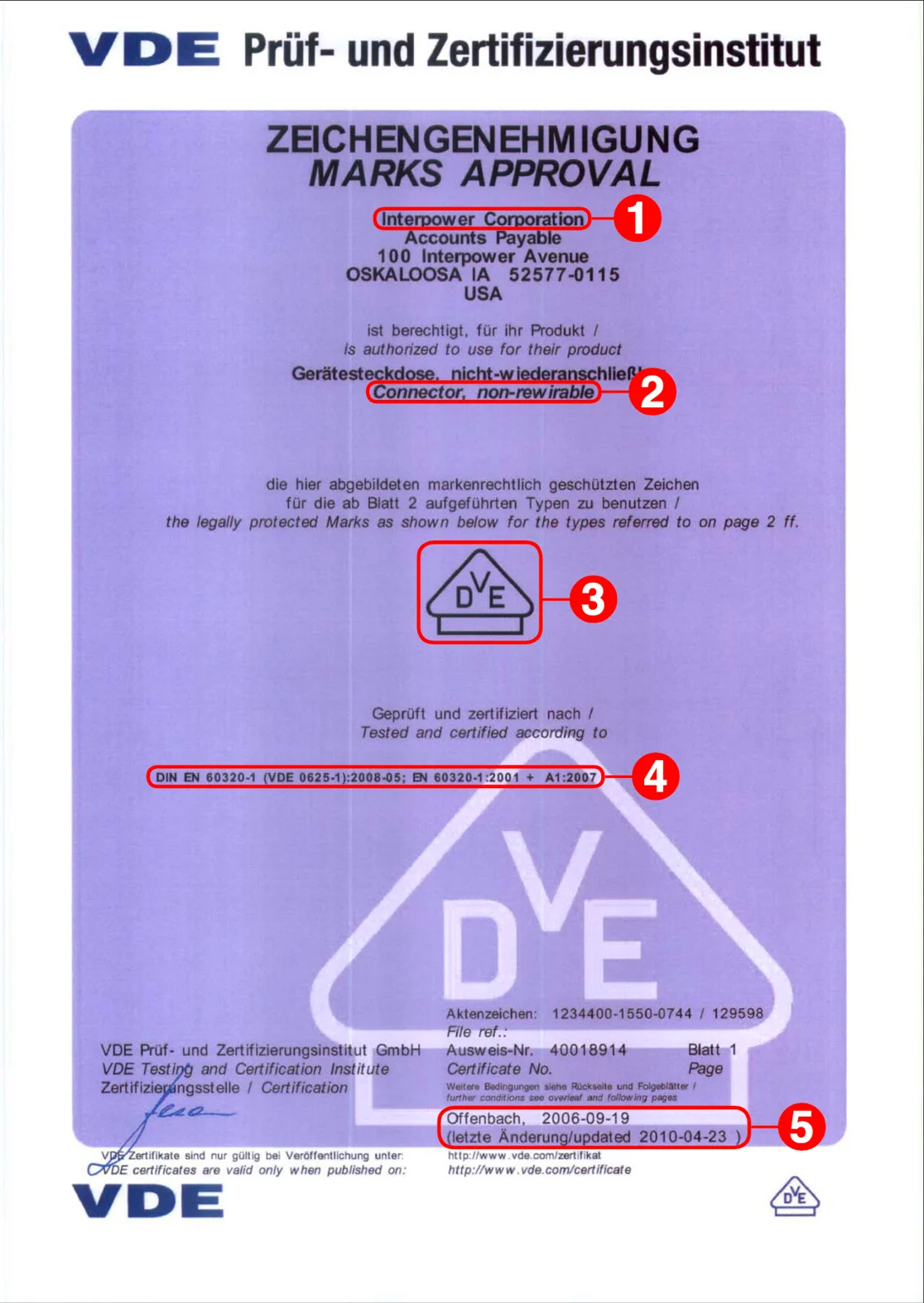
Image Credit: Interpower
6) The "Type" is the identification label found on the goods. In this scenario, there are two kinds of C13 connections. One is a 053, the other a 056. You would match the product to this document, and it would have the code 053 or 056.
7) Displays the ratings that would appear on the product.
8) If a product is manufactured in more than one location, the maker must specify which. In this scenario, the maker has determined two places.
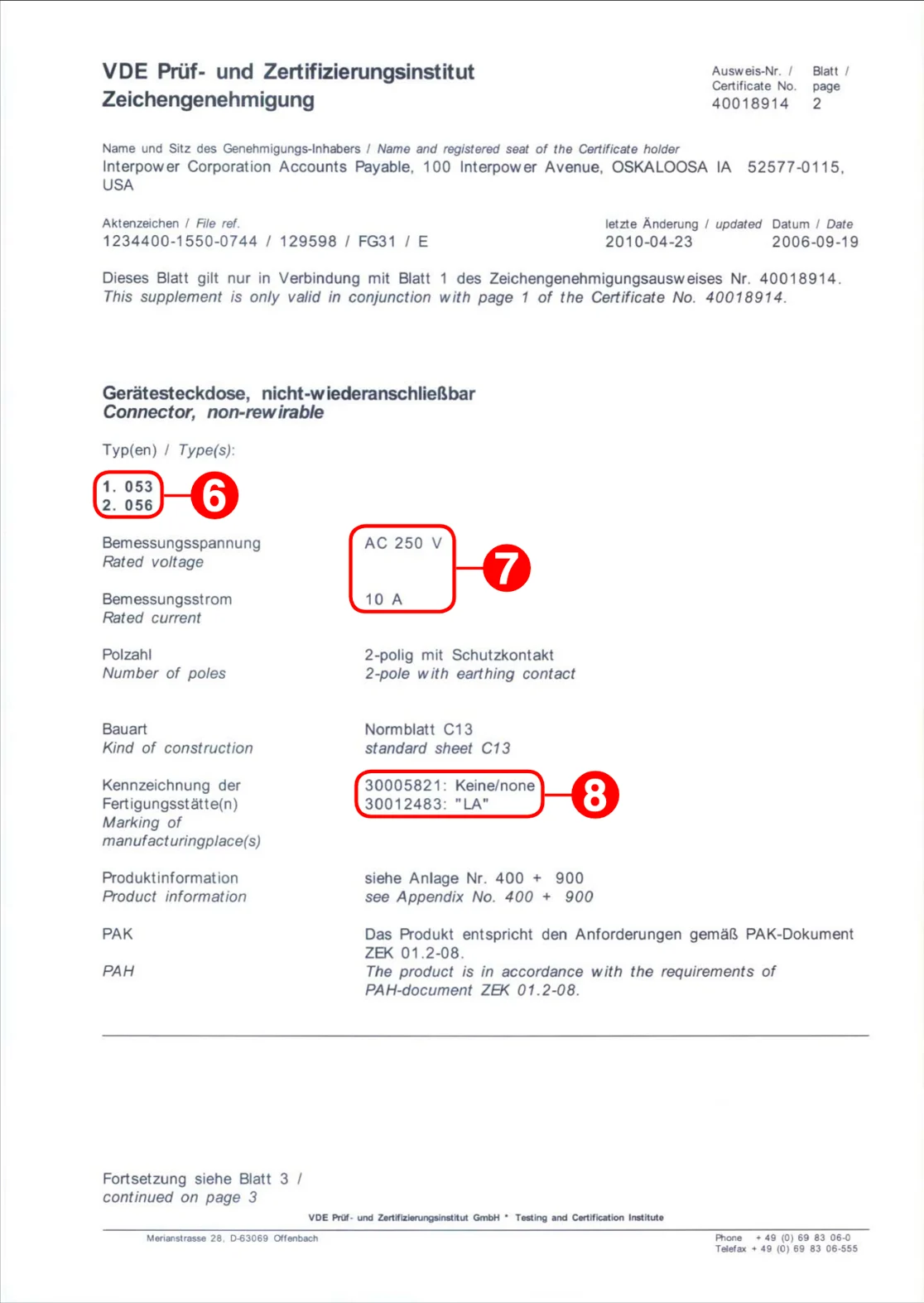
Image Credit: Interpower
Additional Resources
Interpower provides same-day shipping on all Interpower goods, with no minimum order or cash amount. Blanket orders, scheduled orders, and value-added services are all accessible. In addition, Interpower’s unique one week U.S. lead times on customized cord sets help customers stay on track.

This information has been sourced, reviewed, and adapted from materials provided by Interpower.
For more information on this source, please visit Interpower.