Sponsored by InterpowerReviewed by Olivia FrostApr 13 2026
Few things are simpler than plugging equipment into the mains – either directly through a wall socket or via an IEC 60320 inlet on an accessory power strip. In each case, the aim is the same: to deliver AC power at the voltage and current levels required by local standards.
That is, until you start exporting country-specific plugs with distinct designs, ratings, and various diameters of North American and foreign three-conductor wire that molds onto your plug at the strain relief.
The plugs must also be properly tagged with the testing agency logos, voltage and amperage, date of production, maker's mark, ground, line, and neutral markings, and other markings.
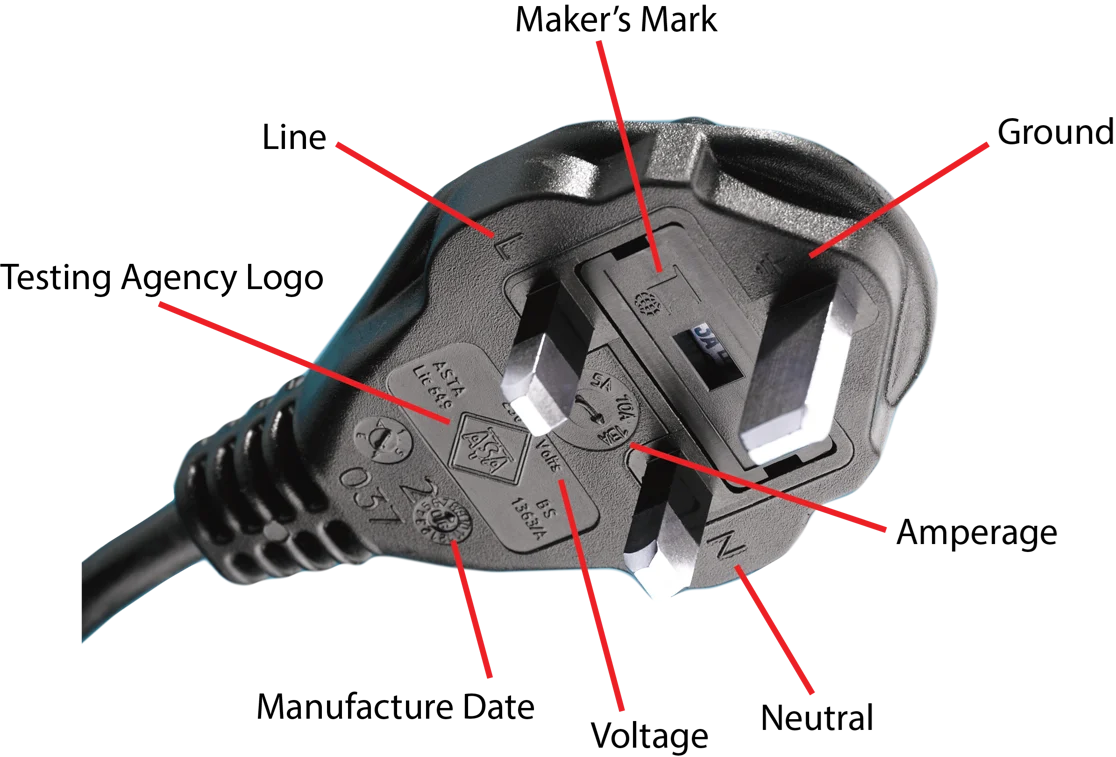
Image Credit: Interpower
Making Your Electrical Design Universal
The assumption is that your country-specific plug and the cable connected to it meet the rating requirements for your country's plug and cord set, as defined by a country-approved safety organization.
There are various agencies globally, including UL, VDE, and CSA. The UL 498 and UL 62 standards cover North American plugs molded on North American cable.
The UL 60320 standard specifies tolerances for IEC connectors and plug connectors. The "basics" include understanding that North American cable is measured in AWG, whereas foreign cable is measured in mm2.
Although it may appear complex initially, using IEC 60320 connections and plug connectors in electrical design can significantly simplify export requirements.
Once you have determined the correct plug and the country-specific requirements it must meet, you can start molding your country-specific plugs after researching the country-specific +/- tolerances in the established safety agency guidelines for testing and eventual certification. Your plug must stay within those tolerances as published in that country's standards.
As previously stated, larger authorities such as UL develop IEC standards (e.g., UL 60320). IEC 60320 connectors and plug connectors are frequently molded onto the opposite end of a country-specific power cable set to provide universal connection globally.
You are now ready to ship internationally, understanding that today's clients, who make orders by pressing tablet keys or phone screens, anticipate finished electrical items to be unboxed and quickly integrated into their electrical designs, rather than having the cord set adjusted.
“Manufacturers designing for global markets need to be aware of all the standards required of a cord set. We encourage people to reach out to other cord manufacturers at the start of any electrical product design to ask questions and know what is expected,” said Dan Ford, Interpower Technical Support Specialist. “It will often produce valuable insights that can save a lot of R&D cost.”
Determine the Correct Pattern
Voltage and amperage in mains electricity, and the codified electrical cable standards, will most likely vary by continent, if not by country. Frequency is significantly less important.
North American frequency (60 Hz) differs from the rest of the globe (50 Hz). Depending on where you are in Japan, you can hear 50 or 60 Hz frequencies.
North American and international cables differ in the colors of the ground, line, and neutral conductors; and, while most higher amperage plugs may have a grounding pin, some European plugs do not; for example, the France/Belgium CEE plug lacks a grounding pin, but the socket it plugs into has a grounding pin that fits that plug.
“Additionally,” Ford said, “plug selections may be determined by cable size requirements, and from plug and power cord set standards as well as requirements when used with specific connectors, as outlined by the cord set,” Ford said. “Cord set safety requirements can also affect the choice of plug as well as equipment design.”
Plugs are molded or rewirable. Molded plugs cannot be adjusted once they have been created. However, a rewirable plug may be dismantled by removing its screws and rewired to cable widths ranging from 14 to 18 AWG. Interpower provides both molded power cables and chord sets.
Common Plug Patterns Available at Interpower
Interpower supplies country-specific plugs engineered to meet every global safety agency requirement. Interpower's Guide to Worldwide Plug and Socket Patterns and Power Mains (Single-Phase) will help you select the appropriate plug pattern.

This information has been sourced, reviewed, and adapted from materials provided by Interpower.
For more information on this source, please visit Interpower.