NanoGenizer is a lab-scale, high-pressure homogenizer that uses interactive high-pressure microfluidic jet technology. It also features incredibly adaptable power and processing modules.
NanoGenizer is well-suited for processing rare and expensive samples because of its minimal dead volume design and continuous flow rate of up to 120 mL/minute.
The device has gained popularity in various nanotechnology applications due to its high shear rate, exceptional reproducibility, and assured scalability.
It provides practical solutions for a variety of nanomaterials, including nanocrystals, liposomes, lipid nanoparticles, nanoemulsions, cosmetic nanoencapsulation materials, graphene, and carbon nanotubes.
NanoGenizer will become a significant high-pressure homogenizer for laboratories producing high-end nanomaterials as more organizations understand its benefits.
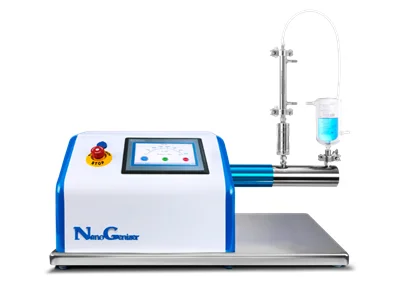
Figure 1. NanoGenizer microfluidic jet high pressure homogenizer. Image Credit: Genizer LLC
Core Technology: Interaction Chamber with Microfluidic Jet
NanoGenizer is divided into two parts: the power unit, which contains the power system, control system, and high-pressure pump system; and the processing unit, which comprises the microfluidic diamond interaction chamber, material intake and outflow, and heat exchanger.
The diamond interaction chamber is a reaction module with a uniquely designed fixed form that produces high-pressure, high-velocity micro-jets and analyzes samples.
After being compressed and driven by the intensifier, the sample's micro-jet may reach speeds of 1000 m/second, which is far faster than the speed of sound.
When the high-velocity, bullet-type micro-jet passes through the micro-channel’s diamond interaction chamber, it encounters a variety of complicated physical processes, including high-frequency shearing, high-energy impact, cavitation, and pressure drop. The material is subsequently homogenized and reduced to nanoscale size.
The diamond interaction chamber is the central region where high-velocity micro-jets, high shear, high-energy collisions, and other phenomena occur. Its internal Y- or Z-shaped diamond microchannels produce a constant impact, resulting in accurate and reproducible particle size distribution.
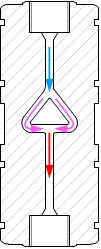
Figure 2. Schematic of the internal structure of the DIXC. Image Credit: Genizer LLC
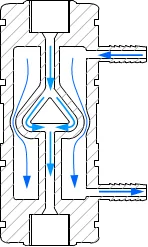
Figure 3. Single-slotted interaction chamber with cooling system. Image Credit: Genizer LLC
Features of the NanoGenizer High-Pressure Homogenizer
High Shear Rate
After being pressured by the power unit, the micro-jet of the liquid or solid-liquid hybrid sample can reach speeds of up to 1000 m/s within the diamond interaction chamber (DIXC).
DIXCs can be as small as 50 μm. As seen in Figure 4, NanoGenizer has the highest shear rate among similar technologies.
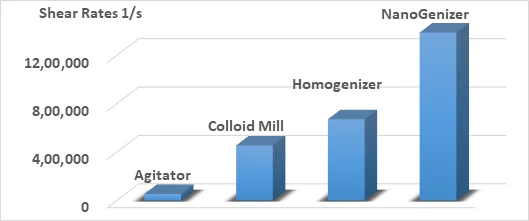
Figure 4. Shear rates of comparable homogenizing technologies. Image Credit: Genizer LLC
NanoGenizer's high-pressure homogenizer has a shearing force on the material that standard homogenizers or other homogenizing devices cannot match.
Fixed Internal Structure and Consistent Reaction Pressure
The inner geometry of the diamond interaction chamber remains constant (Figures 5 and 6) despite pressure fluctuations. When the sample passes through the DIXC, the applied pressure maintains a steady peak during each cycle (as seen by the blue curve in Figure 7).
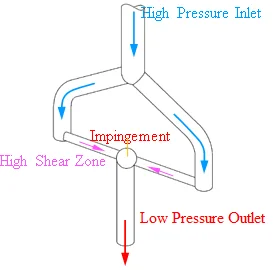
Figure 5. Single-slotted Y-type microfluidic diamond interaction chamber. Image Credit: Genizer LLC
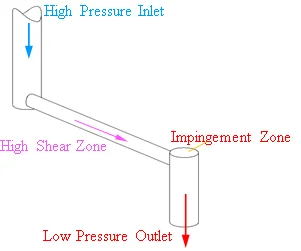
Figure 6. Single-slotted Z-type microfluidic diamond interaction chamber. Image Credit: Genizer LLC
In contrast, the typical homogenizing valve has a structure that may vary dynamically. The material's pressure fluctuates dynamically as it passes through the valve of a typical homogenizer, which runs at peak pressures for just a few seconds every cycle (see Figure 7).
The microfluidic diamond interaction chamber effectively decreases particle size in the treated material, resulting in a more uniform distribution than a typical homogenizing valve.
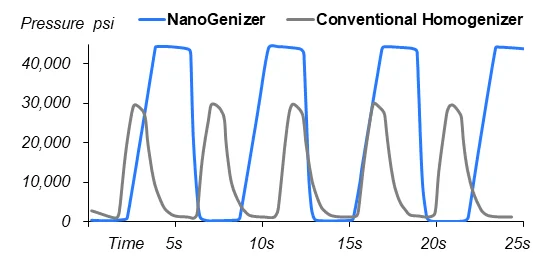
Figure 7. Pressure curve during the homogenization process. Image Credit: Genizer LLC
Interaction Effect
The Y-type DIXC's design increases the contact and collision between the materials. The relative instantaneous velocity of the two jets is doubled, resulting in an explosive effect.
The collision of the materials considerably decreases wear and shear in the interaction chamber, increasing its service life and avoiding the risk of stainless steel particles coming off.
The patented DIXC-RT with freezing capability preserves the samples' bioactivity (Figure 3).
Guaranteed Scalability
The single-slotted DIXC (shown in Figures 2 and 3) is ideal for lab-scale high-pressure homogenization systems.
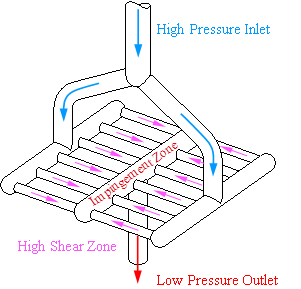
Figure 8. Multi-slotted Y-type microfluidic diamond interaction chamber. Image Credit: Genizer LLC
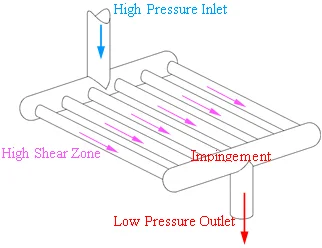
Figure 9. Multi-slotted Z-type microfluidic diamond interaction chamber. Image Credit: Genizer LLC
The multi-slotted DIXC (Figures 8 and 9) is made up of parallel copies of several diamond microchannels, which ensures that the treatment effect is uniform. The increased number of channels also allows for higher volumetric flow rates.
Genizer LLC is one of the world's only two providers of high-pressure homogenizers with these revolutionary microfluidic diamond interaction chambers.
In recent years, a growing number of homogenizer manufacturers have integrated Genizer's microfluidic diamond interaction chambers into their equipment.
Easy to Operate and Intelligent
NanoGenizer's highly adjustable and integrated control design makes it simple to install and use. Operators may complete basic tasks by pressing only three buttons on the touch screen: "pressure rate", "start", and "stop".
Customers find the equipment simple to operate, as they simply need to adjust the pressure on the screen and then push the start or stop button. There is no need to overtighten the valve or waste any samples while changing the pressure.
On the setup interface, users may adjust the sample volume, stroke cycle times, and automatic stop time to handle a small volume. When compared to other high-pressure devices, the NanoGenizer operates more elegantly and efficiently.
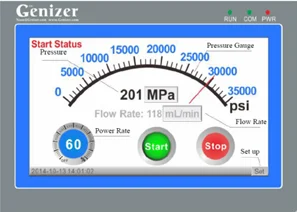
Figure 10. Operation interface of the NanoGenizer. Image Credit: Genizer LLC
Small Minimum Sample
NanoGenizer's highly modular design facilitates easy installation and maintenance. The dead volume is less than one milliliter, which is significantly lower than that of comparable high-pressure homogenizers, which generally exceed 10 mL. As a result, when a 10 mL sample is treated in standard homogenizers, it can be extremely difficult to retrieve the product from the outlet..
NanoGenizer's modular pipeline architecture, which automatically adjusts the volume, can achieve a minimum single processing volume of five millimeters, making it ideal for preparing and developing rare, expensive samples. The NanoGenizer has a constant flow rate of seven liters per hour, which is suited for small quantities.
Software and Hardware Options
- Temperature control includes a jacketed interaction chamber, intake cylinder, and 3D heat exchanger.
- Suspension preparation using a hollow magnetic stirrer
- Titanium cylinder option provides corrosion resistance.
- Precision sampling up to 0.1 mL (e.g., 10.0 mL, 10.1 mL, 10.2 mL) is achievable.
- Ports include a data logger, USB, and temperature/pressure sensors.
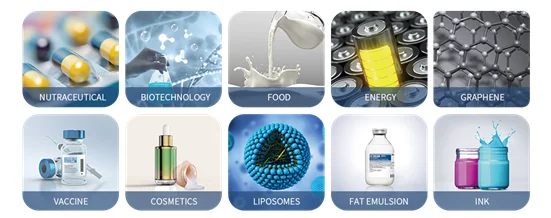
Figure 11. Applications of NanoGenizer for nanomaterials. Image Credit: Genizer LLC
Scientific researchers who have used NanoGenizer are often impressed by its high processing efficiency, ease of use, and intelligent control. NanoGenizer is now one of the world's most popular nanomaterial homogenizers.

This information has been sourced, reviewed and adapted from materials provided by Genizer LLC.
For more information on this source, please visit Genizer LLC.