In this interview, AZoMaterials speaks with Erica Cahoon, Director, Atomic Spectroscopy Portfolio; Gerlinde Wita, Global Market Manager Materials, Energy & Petrochem; and Mohit Runwal, VP Product Portfolio, about updates across three analytical platforms. They discuss the Avio 3000 ICP-OES and its cost-of-ownership and usability improvements, the Spotlight Aurora-I infrared microscopy system for contamination analysis including microplastics, and the Clarus Nova GC platform built to improve throughput and day-to-day workflows.
What is the Avio 3000, and what was the design goal for this platform?
Erica: The Avio 3000 is our third-generation ICP-OES. It’s a new, ground-up design developed for high-throughput laboratories with challenging samples. The Avio 3000 has three key highlights: number one, improved performance; number two, the lowest cost of ownership; and number three, simplicity for the user.
What performance improvements stand out most in the Avio 3000?
Erica: Starting with improved performance, the Avio 3000 has a patented backside-illuminated CMOS detector that was exclusively designed for ICP-OES and the Avio 3000. It gives us very fast analysis times, two to four times faster, and it also has an improved five to seven times signal-to-noise ratio for elements that are very difficult to detect, such as phosphorus, sulfur, thallium, and lead.
The second pillar of improved performance is HeliPlate plasma technology which comes with a brand-new RF generator. HeliPlate plasma technology enables researchers to run very challenging samples, high concentrations and high total dissolved solids, along with light or heavy organics, for a very long time, while still maintaining exceptional stability.
Cost of ownership is a major factor for ICP-OES users. Where does the Avio 3000 reduce operating costs?
Erica: The Avio 3000 doesn't need a chiller - it's completely air cooled. This means a lower cost at point of sale, lower electricity costs, and eliminates the need to run your HVAC system harder to remove the heat expelled by a chiller. It also reduces noise and maintenance.
On the RF generator side, the HeliPlate plasma technology provides the lowest cost of ownership. We all know that argon is the number one consumable for ICP, and with HeliPlate technology we’re able to run at flow rates up to approximately 50 % less than a typical system. This really increases the laboratory’s profitability.
Beyond hardware, what did you do to make the Avio 3000 simpler to run day to day?
Erica: Finally, there’s the simplicity and ease of use. We’ve developed simplified workflows and smart features in the software so users can easily start and stop an analysis and review their data. There are also alerts for when maintenance is needed.
What is the concept behind the Spotlight Aurora-I, and what problems is it built to solve?
Gerlinde: The concept of the Spotlight Aurora-I, and of our IR solutions in general, is that we have a very modular, flexible bench, which starts with a micro-ATR that is then connected to the scope.
The Spotlight Aurora-I is designed for infrared microscopy and imaging. It can help you detect small contamination particles such as microplastics, and also perform layer analysis.
Because it’s a modular system, customers have the opportunity to upgrade based on their needs. If they’re just working on the micro bench, that’s fine. And if they want to go further and look at contaminations, they can do that through macro-scale imaging as well.
For the Aurora-I, we have three detector positions, so you can choose whichever is most useful for your application.
When you talk about what’s new in the Aurora-I, which features tend to matter most in real lab workflows?
Gerlinde: The new features include multi-detector options: you have a choice of five or six different detectors to serve your needs.
There’s also the automated sample chip, where you place the sample and everything runs automatically, guided by the software.
Adaptive smart imaging is another key feature. If you have a sample with contamination only in a certain area, you don’t need to capture the whole sample, the system just looks for the contamination. That helps you detect small contaminants without scanning the entire sample, which reduces time and keeps the focus on the contamination itself.
On the camera side, there’s a dual camera design. You have the HD camera, which is very common, but also a wide-field camera that gives you a picture of the sample at one by one centimeter, providing a good overview. On top of that, there’s dark-field lighting, which provides more contrast of the sample.
Then there’s the end-to-end guided workflow. You put in the sample, and the system guides you through the entire analysis from beginning to end. Customers save time because they don’t have to think about what to do next - the system tells them what needs to be done.
Why does guided workflow make such a difference for customers right now?
Gerlinde: Customers today typically have to deal with various technologies, and the time available to learn a new technology or understand an instrument is quite restricted. With guided workflow, they can go straight to the instrument, power it on, and start analyzes right away. That saves time and resources.
From your perspective, what are the biggest challenges in GC labs today, and how is Clarus Nova aimed at them?
Mohit: I would say there are three big challenges. One is that everybody wants to do more in the same amount of time, or even less time, which means a higher need for throughput. The second is the ability to run different workflows and different applications on a single GC system. And third is the lack of skilled labor: the ability to train people quickly, get them hands-on, and have them productive from day one.
What we’re doing with our new Clarus Nova platform is trying to address all three of those challenges directly.
On the throughput side, we have a new DSI (Dual Simultaneous Injection) technique that takes in twice the samples, which helps increase throughput. In terms of configuration, we have a vast range of detectors, injectors, and expanded sample accessories, which keeps the system scalable and configurable - that addresses the second challenge. And it still maintains the robustness that is a key differentiator of the Clarus Nova GC, while preserving that configurability and flexibility.
The third point is our new SimplicityChrom software. We launched it a couple of years back and are doing further enhancements this year. It builds on the robustness of our older TotalChrom software with a layer of simplified, easy-to-use functionality, which helps address a lot of the training challenges our customers face.
How does Clarus Nova support laboratories that operate in regulated environments?
Mohit: We have validated and regulated methods and workflows, defined user-based workflows, and secured audit trails, all of which help us stay compliant across multiple applications and workflows.
About Erica Cahoon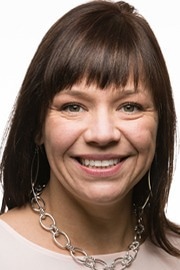
Erica Cahoon, PhD, is Portfolio Director, ICP-OES at PerkinElmer, where she leads the ICP product platform. She joined PerkinElmer in 2013 as a field application scientist focused on AA, ICP, and ICP-MS, before moving into product and portfolio management. Cahoon holds a PhD in analytical chemistry and has more than 19 years of experience in trace metal detection using a range of analytical instrumentation. Her work is centered on inorganic analysis and atomic spectroscopy, particularly ICP-OES.
About Gerlinde Wita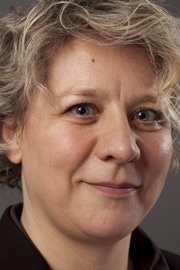
Gerlinde Wita is Global Market Manager for Materials, Energy & Petrochem at PerkinElmer. Wita has presented on advanced nanomaterials in battery-material development, battery-recycling analysis, and biofuels analysis in research and industry, reflecting her role in communicating analytical solutions for applied markets.
About Mohit Runwal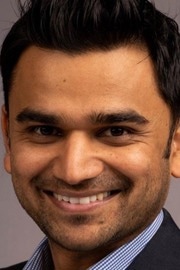
Mohit Runwal is VP, Product Portfolio at PerkinElmer. He leads the company’s product portfolio function, supporting its analytical and laboratory solutions business.
This information has been sourced, reviewed, and adapted from materials provided by PerkinElmer.
For more information on this source, please visit PerkinElmer.
Disclaimer: The views expressed here are those of the interviewee and do not necessarily represent the views of AZoM.com Limited (T/A) AZoNetwork, the owner and operator of this website. This disclaimer forms part of the Terms and Conditions of use of this website.