AZoMaterials spoke with Kevin Tucker of Southern Illinois University Edwardsville about environmental contaminants and mass spectrometry. He describes how triple-quadrupole LC-MS and MALDI-TOF mass spectrometry imaging can be used to measure pharmaceuticals in real-world samples and visualize how compounds such as statins can accumulate in earthworms through different uptake pathways. Tucker also explains why these compounds can pose risks to non-target species that aren’t captured by standard human-centered testing.
You started out in pre-med and ended up in analytical chemistry. What set you on that path, and what research experiences pushed you toward mass spectrometry and, eventually, environmental work?
I initially started out as a pre-med undergrad, which I think is fairly common. My dad was a pharmacist, so the interest in healthcare had always been there. I got through my junior year, and I had already shadowed a vascular surgeon and a cardiothoracic surgeon. I realized I no longer had any interest in pursuing medicine; that just was not the career for me. I didn’t like the work schedule, and at that point, the interaction with patients had become pretty impersonal, following patients for 15-minute bursts.
Image Credit: domnitsky/Shutterstock.com
So, I asked a few of my faculty advisors what they thought was next. They thought I should get a PhD, so I followed their advice. From the beginning, I knew the goal was to teach: my drive to impact people through science was strong.
My research journey really started with my first research experience in a biology lab. We were using a UV–vis spectroscopic kit and measuring protease activity in carnivorous pitcher plants. It was a great way to get started, and troubleshooting the method when it wouldn’t work and figuring out why the dye wasn’t changing color was really interesting to me.
Then I moved on to organic synthetic work. By the end of that summer, I found my passion: I began reviewing the published data and realized the original authors had not actually made the product I was trying to reproduce. They had misinterpreted their spectra.
This made me realize I didn't want to do analytical work. The importance of getting your data right and interpreting it correctly really hit me, and I was really good at that part of it. I didn’t really have a green thumb for organic chemistry, but I could do really well interpreting spectra and making sure people had their data correct. From there, I went on to physical chemistry and was doing really interesting measurements about spheres of hydration.
Then, I went on to graduate school. I was on the very starting edge of mass spectrometry imaging, and I was determined when I told people, "I promise you mass spectrometry imaging is going to have a huge role in healthcare and in disease states." Certainly, twenty years later, it does.
I eventually went through all of that to find my way toward environmental contaminants. I wanted to work at a primarily undergraduate institution (PUI) and mentor students in research that was attractive, approachable, understandable, and relatable to them.
Environmental research meets all those goals. With environmental work, you can talk to people about what you’re seeing and why it’s there, and maybe even make some forecasts: Should this be regulated? How might we mitigate some of this contamination?
It was really important to me that my students be able to relate to the work they were doing in real time, rather than waiting many years for those results.
Many people don’t realize pharmaceuticals and personal care products can become environmental contaminants. When did you realize how big the issue was?
I knew that pharmaceuticals and personal care products were an environmental issue, but my first insight into how significant it was came in 2015. There was a Katie Couric special that talked about antibiotic resistance, which is linked to the overuse of antibiotics in agriculture. Living in Illinois at the time, it really struck a chord with me.
If we’re trying to have better health in the country, but antibiotics are persisting in the environment long enough to generate antibiotic-resistant bacteria, and then we’re observing increases in the number of human infections - up to and including being resistant to all antibiotic classes at that time - that could make for interesting research.
I started just looking at antibiotics: where they come from and what their transport looks like. I then considered wastewater and compared the upstream and downstream of the effluent, focusing specifically on the antibiotics.
Moving forward, I had students who were interested in a variety of pharmaceutical products, so I encouraged them to pursue their own pharmaceutical interests rather than relying solely on my personal interest in antibiotics. We’ve branched out and researched things, including statins, antidepressants, anti-anxiety medications, nanoparticles, and PPCPs.
I really strive to have projects that the students are connected to and personally invested in, so their wanting to know more about a particular pharmaceutical class or a personal care product is really important to me.
Why can pharmaceuticals be especially problematic pollutants compared with other chemicals we regulate?
Pharmaceuticals, in particular, are designed and tested on humans, so you’re not really finding out what the effect might be on the different species that are in the environment, those non-target effects.
You also aren’t figuring out whether it might accumulate in any of those non-target species, and then have trophic effects as it moves up through other species that are consuming it. These bioaccumulations can happen at different levels of the trophic ecosystem.
We’re looking at the potential for very low environmental concentrations that increase due to bioconcentration. Many things in the environment, whether plants or animals, are later consumed by humans. I don’t think the pharmaceutical level that’s accumulating in them is enough to endanger us, but it certainly may be enough to endanger them or alter their metabolism.
There are certainly examples of that in the literature. You see it with BPA, where you have changes in the sex of frogs and fish, and with antidepressants and anti-anxiety medications that can change the behavioral patterns of different aquatic organisms.
None of this is considered before we prescribe or create medications, however. All FDA requirements involve human testing, and sometimes other mammalian or rodent testing that are very close to human metabolic effects.
For the work you presented at Pittcon, what mass spectrometry approaches and sample prep methods are you relying on most?
One of the big things that we strive for is good method development. Also, good sample preparation is required before any analysis. Our sample preparation methods range from solid-phase extraction to QuEChERS to liquid–liquid extraction. The work I presented at Pittcon included several of those.
The big workhorse in the lab is a triple quadrupole LC-MS. We also perform imaging using a MALDI-TOF. The work we’re doing is primarily off of those two instruments. We also have a GC-MS triple quadrupole, and some of the other work being presented by my students has been done on the GC triple quad.
As we move further with our investigations of aquatic toxicology, we’re going to be using the GC-MS triple quadrupole more to look at the metabolome and see what we can assess about metabolic changes within the organisms. We’re just not quite there yet. Currently, the GC-MS triple quadrupole is being used to assess pesticide residues related to agricultural applications in our area.
What did those tools let you see in the data, both in your wastewater work and in your earthworm model?
Some of the key findings concerned sunscreens and antibiotics, specifically during COVID times. Based on samples from the United States and Mexico, we found that antibiotic use increased as we went into COVID.
The other project I introduced focused on identifying a terrestrial model organism to assess biosolid applications in agricultural fields. The one we’d been exploring was Eisenia hortensis, which is a common earthworm. Earthworms are present in agricultural fields anyway, so it made a lot of sense to target those as a potential bioindicator.
We were looking specifically at statins and their effects on Eisenia hortensis. Statins are one of the most highly prescribed medications in the world, especially in the United States. We wanted to see if the statins would bioaccumulate within the earthworms. They do accumulate, but there is a plateau in how high the level gets.
Then we were able to show that, depending on the structure of the statin, it actually appears differently in the mass spectrometry imaging experiment. Some statins appear to be absorbed only through the intestinal tract, whereas others seem to be absorbed more universally, dermally as well as through the intestinal tract. It was interesting to see that different statins might be absorbed differently, even in something as simple as an earthworm.
What makes soil and earthworm studies such a challenging system to model in the lab?
There are lots of challenges: dirt is the most challenging matrix I have ever tried to work with, and it was no less challenging with earthworms.
Some of the key challenges are keeping the different soil beds at approximately the same moisture level to deliver consistent findings, feeding worms in a way that will not affect the experiment, and reproducing that over long periods of time.
Once you have the earthworm and you’re done with the exposure portion, the challenges are minimal. A QuEChERS workup works really nicely to separate the lipid components from your more aqueous-friendly components, and you’re off to the races with employing LC-MS.
I think the sample preparation is relatively straightforward, but the modeling of an agricultural field takes some forethought and planning to keep it relevant to the system you’re trying to reproduce in the lab setting.
You mentioned triple-quadrupole LC-MS as your lab’s workhorse. What makes it a good fit, and where are its limits?
Working at a PUI, I recognize the limitations of my instrumentation. LC-MS with a triple quad is well-suited for quantitation and targeted analysis and performs exceedingly well. Depending on the analyte, you can get limits of detection in the sub-ppb range, so you have a really nice tool for targeted quantitative analysis.
However, for something like discovery analysis, it’s next to useless because you don’t have that high-resolution capability. The questions we pose in my lab have to be answerable by the instruments we have available.
Those triple quads really do great quantitative work. For everything we do, we have to know what targets we’re going to look at. We can optimize and tune that instrument very well to look at those targets, and on the back end of that, we’re able to get really beautiful data: good limits of detection, good figures of merit, and very nice publishable data at the end of projects. But we do have to confine those projects to targeted analysis, not the untargeted analysis that’s become very popular.
Collaboration seems central to getting the right samples and context. How do you think about building those partnerships?
I don’t think any problems in science are going to be solved independently anymore. Science is a collaborative endeavor.
I collaborate with people at other universities in Illinois and at universities in Mexico because we analyze COVID-related samples from Cancún. I also collaborate with universities in Southeast Asia because many of them don’t have access to the equipment I do, and they’d like to receive the data I’m producing. They’re still doing targeted analysis, and I’m happy to help them with that.
It also creates great projects for my students to work on. While a lot of projects do happen relatively locally to my university, collaborations enable us to have a global footprint. We’re not there to collect the sample, but we can help other people obtain data that they would never have had. Then we can work with them to better understand the conditions in their country and appreciate how different that might be from our own environment.
You run a large undergraduate lab group. What does mentorship look like for you, beyond the science?
My lab is, even though it’s a PUI, relatively big. I had 12 students my first year on campus, and I’ve had approximately 20 students every semester since then.
Mentorship doesn’t stop at the door or at the edge of the university. My students know that I’m there for them, whether they’re still in the lab or whether they graduated five years ago. Mentoring relationships aren’t meant to be just for the couple of years that I might have someone in a lab setting. Lifelong mentoring is a real thing.
I was very fortunate to have Doctors Larry and Guillermo at Rollins College. They really showed me what it looked like to be a personal mentor. Recently, I ran into Jonathan Sweedler, who was my PhD advisor, and he’s still around at conferences, mentoring and supporting me in any way that he can. That longevity of mentorship matters.
You’ve been coming to Pittcon for years. What keeps you coming back, and what do you hope to take home from the meeting?
My first Pittcon was in 2006, the year Jonathan Sweedler won an award; I believe it was the Pittcon Award. I’ve been here almost every year since.
Pittcon is a wonderful conference with great breadth. I’m an analytical chemist, but I’m also a mass spectrometrist. If I’m looking for a very specific conference, I’m going to go to a mass spectrometry conference, but if I want to learn about other techniques that might help me, Pittcon is where it’s at.
Pittcon fosters collaborations with people who have different approaches to the same questions, and I gain insights I’m not familiar with, because it’s not my area of specialty in analysis. Of course, it also connects me with old friends: people I went to graduate school with and people I’ve known in the environmental analytical field for the better part of a decade.
It’s a really important place for people to connect, collaborate, and find new ideas, or remember old ideas that have been put on a back burner. Maybe this year is the year you hear a talk, and you go, “Oh, I bet that would work.”
You never know what you’re going to hear, but you do know you’re going to leave Pittcon with some new ideas that are going to take you back to the lab. Hopefully, you remember to write them down, because there are too many to keep in your head.
Pharmaceuticals in the Environment: Mass Spectrometry & Hidden Contaminants with Kevin Tucker
About Kevin Tucker
Kevin Tucker is an Associate Professor of Chemistry at Southern Illinois University Edwardsville. He is an environmental analytical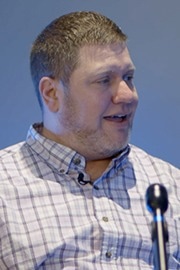 chemist specializing in novel applications of mass spectrometry, with research focused on developing analytical techniques to better understand complex environmental systems, detect emerging contaminants, and help monitor and mitigate pollution.
His work includes the detection of pharmaceutical and personal care products in waterways and soil systems, and he has also served as an associate editor for the Analytical Sciences Digital Library and on the editorial board of Current Opinion in Environmental Science and Health. Tucker previously held research and teaching roles at the University of Illinois at Urbana-Champaign and Parkland College.

This information has been sourced, reviewed, and adapted from materials provided by Pittcon.
For more information on this source, please visit Pittcon.
Disclaimer: The views expressed here are those of the interviewee and do not necessarily represent the views of AZoM.com Limited (T/A) AZoNetwork, the owner and operator of this website. This disclaimer forms part of the Terms and Conditions of use of this website.