Sponsored by MKS NewportReviewed by Olivia FrostJul 14 2026
3D printing technologies hold potential for transformative developments in design, prototyping, and production in a wide variety of environments. These include building construction, automobile production, medical device and prosthetics manufacturing, and consumer goods.1
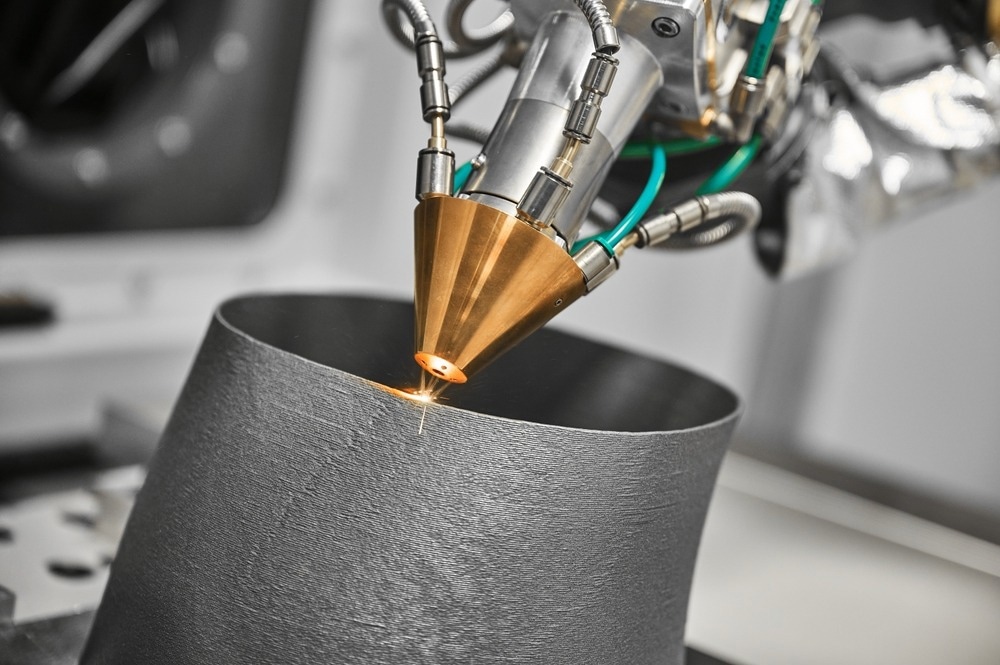
Image Credit: Nordroden/Shutterstock.com
3D printing technologies employ various techniques to manufacture complex artifacts through layer-by-layer construction.
Laser-based additive manufacturing (LAM) is one production approach within the category of 3D printing technologies. LAM contains a portfolio of manufacturing techniques, such as selective laser sintering (SLS), selective laser melting (SLM), and laser metal deposition (LMD).1,2
These techniques leverage a high-powered laser as an energy source to sinter, melt, or deposit additive material during artifact fabrication. Usually, LAM fabrication manufactures artifacts by building up the material structure on a point-by-point, line-by-line, and layer-by-layer basis.
The implementation of 3D printing technologies, specifically LAM techniques, for both small- and large-scale production can potentially offer unique advantages over traditional production techniques.
These advantages include process simplicity, environmental sustainability, access to complex structures that are difficult to manufacture by traditional means, and local, low-volume, on-demand fabrication of vital component parts and products.
Rapid prototyping using 3D printing is significantly faster and more economical than traditional machining strategies.
Although the potential benefits of 3D printing are widely recognized, manufacturing artifacts with these techniques is often restricted to smaller, niche products or parts in larger assemblies, due to limitations in the technology. 3D-printed artifacts are limited in terms of available material selection.
Not all plastics and metals can be used in this technology. Laser additive fabrication of metal parts, in particular, is restricted by the high energies required when using a CW laser to melt specific metals.
As a 3D laser printer moves a laser spot across the metal powder bed, it focuses laser energy between 200 W and 1000 W on a single spot with an 80–100 micron diameter, fusing the metal powder in that spot to the layer below. Scanning the laser spot over the metal powder bed in a pre-defined pattern generates fused lines and areas of metal.
Most 3D printing platforms are incapable of producing small parts with fine characteristics at high precision, resolution, and accuracy. At the other end of the scale, LAM production is often limited to structures with build volumes of less than a cube with roughly 40 cm sides.
Finished components produced by 3D printing may exhibit deficiencies in surface finish and other quality measures that must be addressed after production. 3D printing is also time-intensive compared to more standard manufacturing techniques.
A mass-production technology may take minutes or less to fabricate a single artifact, whereas 3D printing can require up to a couple of hours to produce the same item, depending on the balance between size, structural complexity, and any surface-finish requirements.
Finally, the production costs for 3D-printed components remain a concern. Laser additive fabrication techniques can cost between $1–2/cm3 for artifact construction.
As a result, 3D printing techniques have primarily been used for the fabrication of small, high-value products in sectors including medical, energy, and aerospace, where the rapid prototyping capability and simplicity of on-demand production of complex structures offset the relatively slow fabrication rate and high cost.
Boosting Speed and Minimizing Expenses in LAM
Seurat Technologies has introduced an innovative methodology for LAM of metals that offers solutions for some of the critical limitations in 3D printing. Labeled “area printing,” this novel methodology was originally developed by scientists at Lawrence Livermore National Laboratory (LLNL).3,4,5
Area printing offers lower costs and substantially higher manufacturing speed for 3D-printed metal artifacts compared with point-by-point and line-by-line LAM techniques.
Using a method analogous to that of the Pointillist artists of the late 19th century (hence the company name, Seurat), area printing employs a robust laser to generate a pulsed IR beam containing more than 2.3 million pixels that microwelds the defined geometrical region of a thin metal powder layer to the layer below.
Prohibitive energy specifications, such as those encountered when CW lasers are employed in this technique, are avoided by using a pulsed IR laser that delivers a single, very short, very intense pulse of IR energy in a shaped beam. This single laser pulse contains enough energy to print a full area of metal at once, as compared with the single, focused spot achievable with CW laser-based techniques.
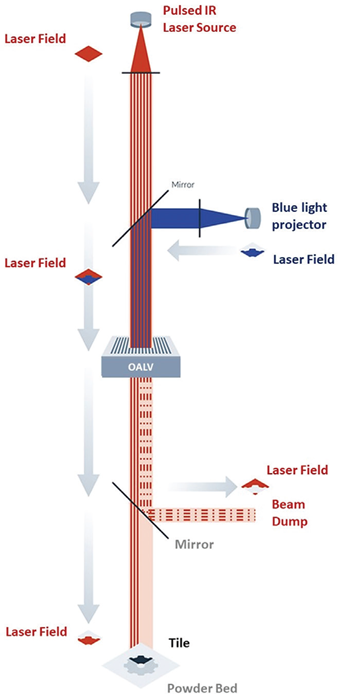
Figure 1. Seurat’s Area Printing Technology. Image Credit: MKS
To print a geometrically defined area of metal, the pulsed IR beam is first shaped into a homogeneous square IR field (top-field image to the left of the beam in Figure 1) and then patterned to generate the desired field geometry.
The homogeneous square field is patterned by overlaying the pulsed IR beam with aligned, patterned low-intensity blue laser light generated by a standard laser projector (the second field image down, on the left in Figure 1).
An optically addressable light valve (OALV) is subsequently used to polarize the IR laser beam horizontally, where the blue and IR pixels overlap, and vertically, where the IR and blue light do not overlap.
After splitting the vertically and horizontally polarized sections of the pulsed IR field, only the horizontally polarized beam section can impinge on the metal powder bed, fusing the defined area in the uppermost layer of metal powder.
By employing Seurat’s area printing technology, a laser pulse energy of 10 to 60 Joules per tile can be applied to a patterned region within a 5 to 15 mm square tile. The 2.3 million pixels within the tile’s square field yield exceptionally high resolution that surpasses what is achievable in alternative laser-powder bed fusion printers.
The 20–40 Hz IR pulse frequency delivers a substantial advance in processing speed for the 3D printing operation.
In addition, the blue light projector allows control over the laser power of each pixel, providing graded material characteristics unattainable with any other laser additive fabrication technique.
Figure 2 compares Seurat area printing with other LAM methods for stainless steel additive production. Area printing achieves or exceeds both the high build rates of wire arc deposition and the resolution and precision of the powder bed fusion methods.
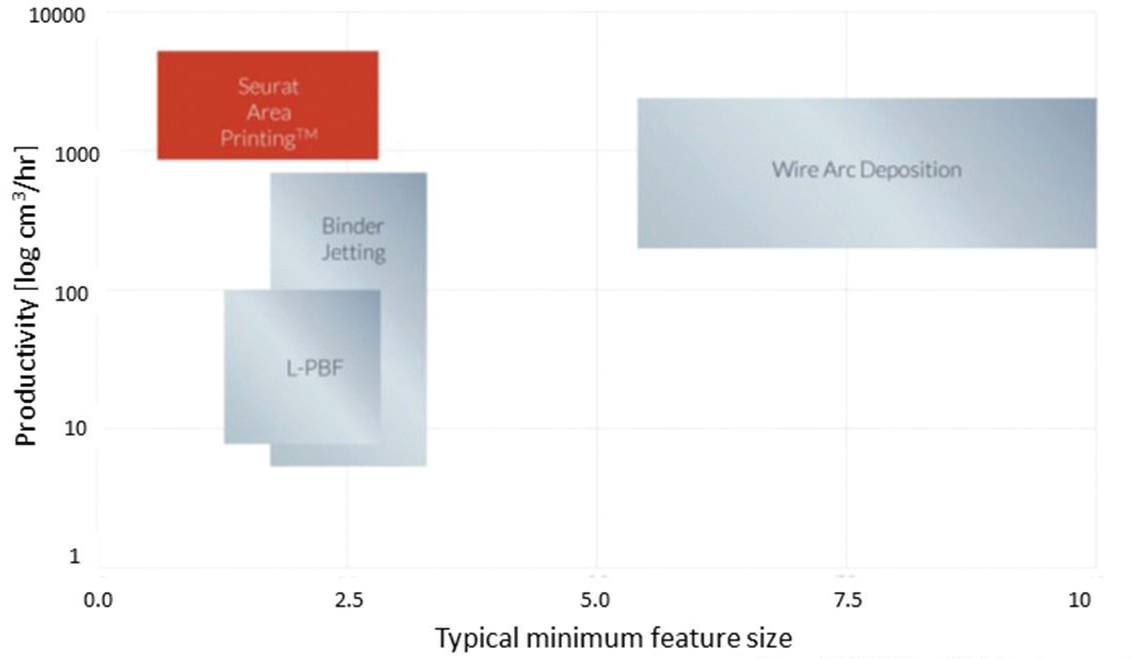
Figure 2. A comparison of productivity and feature size for different LAM techniques (stainless steel). Image Credit: AMPOWER Report 2020, Seurat assessment
Optical Components: Quality is Crucial
Effective application of Seurat area printers depends on the stability, reliability, accuracy, and precision of the different system components.
Seurat thoroughly reviewed relevant equipment suppliers and selected MKS as the best supplier for the inert-atmosphere control and maintenance system, and MKS' Newport brand for various optical components in the optics transport system of the area printer.
MKS’s pressure sensing and gas flow controls were selected for use in area printing units by Seurat engineers thanks to a proven track record of affordability, dependability, precision, and accuracy, as well as MKS’s comprehensive experience helping clients integrate these components into their applications.
MKS gas sensing parts in Seurat area printers include Baratron capacitance manometer absolute and differential pressure sensors, as well as MicroPirani pressure transducers.
Gas flow control in area printers uses MKS’ elastomer-sealed G-Series Mass Flow Controllers, which enable precise gas flow control ranging from 5 to 50,000 sccm (.005 to 50 SLM). Figure 3 illustrates the various MKS parts employed for gas sensing and flow control in Seurat’s area printing units.
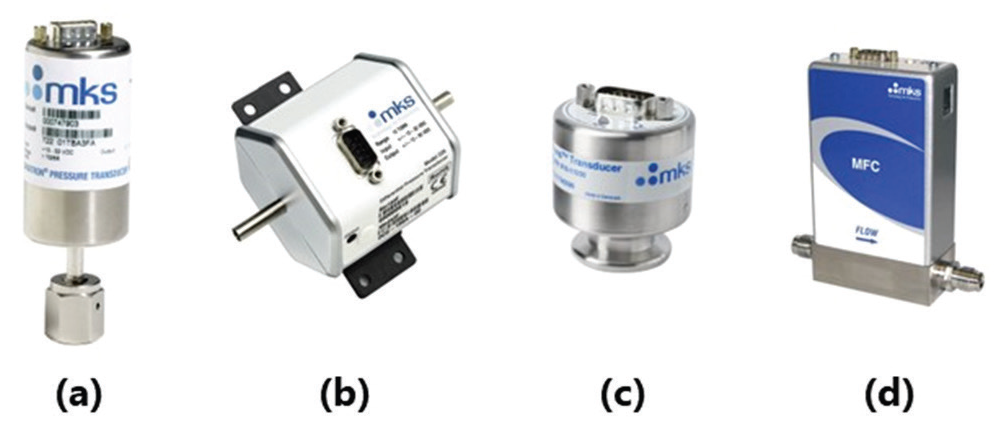
Figure 3. MKS gas pressure sensing and flow control components: (a) Baratron capacitance manometer; (b) Baratron differential pressure sensor; (c) MicroPirani pressure transducer; (d) MKS G-Series mass flow controller. Image Credit: MKS
MKS' Newport brand provides crucial optical parts within Seurat area printers. Vibrational and geometric stability are essential to any optical application and begin with the support platforms used for the numerous optical components.
MKS supplied cutting-edge optical benches and tailored vertical honeycomb breadboards with microlocks to hold the equipment required to position the laser and optical transport systems, specifically engineered according to Seurat’s requirements.
When installed on these breadboards, MKS Newport optics transport parts provide the stability necessary to achieve the high resolution intrinsic to the area printing technique. MKS provides Seurat with actuators and actuator controllers for positioning the mirrors in the optics transport system with stable accuracy, precision, and repeatability.
These actuators deliver single- or multi-axis control with sophisticated Backlash or Hysteresis compensation in an extremely compact form factor. MKS provides Seurat with special interferometer-verified Ultima mirror mounts designed for supporting the large-scale mirrors. Featuring axial three-point optical mounting, these mounts are specifically engineered to reduce wavefront distortion.
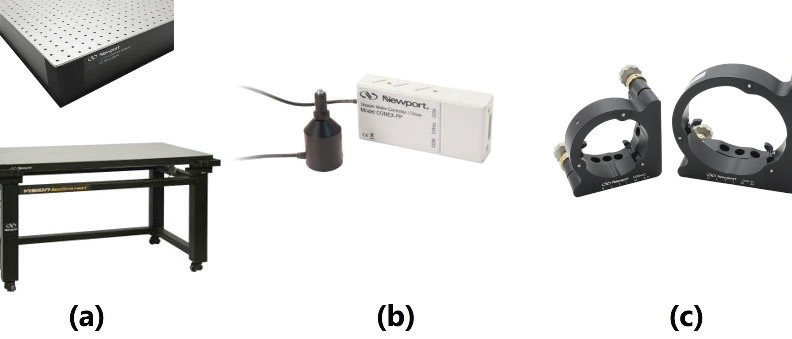
Figure 4. MKS Newport optical components employed in Seurat Area Printers. (a) optical breadboards; (b) mirror actuators; (c) low wavefront distortion mirrors. Image Credit: MKS
Conclusion
Seurat’s area printing technology enables novel productivity and resolution abilities for laser-based additive fabrication. This technology depends critically on the quality, stability, accuracy, and precision of the many parts within an area printer.
MKS and the Newport brand supply Seurat with high-quality system components necessary for optimal operation of their area printers at reduced cost and lower cost of ownership compared to competing systems.
Acknowledgments
Produced from materials originally authored by Beda Espinoza, MKS.

This information has been sourced, reviewed, and adapted from materials provided by MKS.
For more information on this source, please visit MKS Newport.