Worldwide climate change driven by the greenhouse effect remains a critical environmental challenge. Carbon dioxide (CO2) is a greenhouse gas emitted in large amounts, primarily through the burning of fossil fuels. To minimize CO2 emissions into the atmosphere, the concept of carbon capture, utilization, and storage (CCUS) was developed.
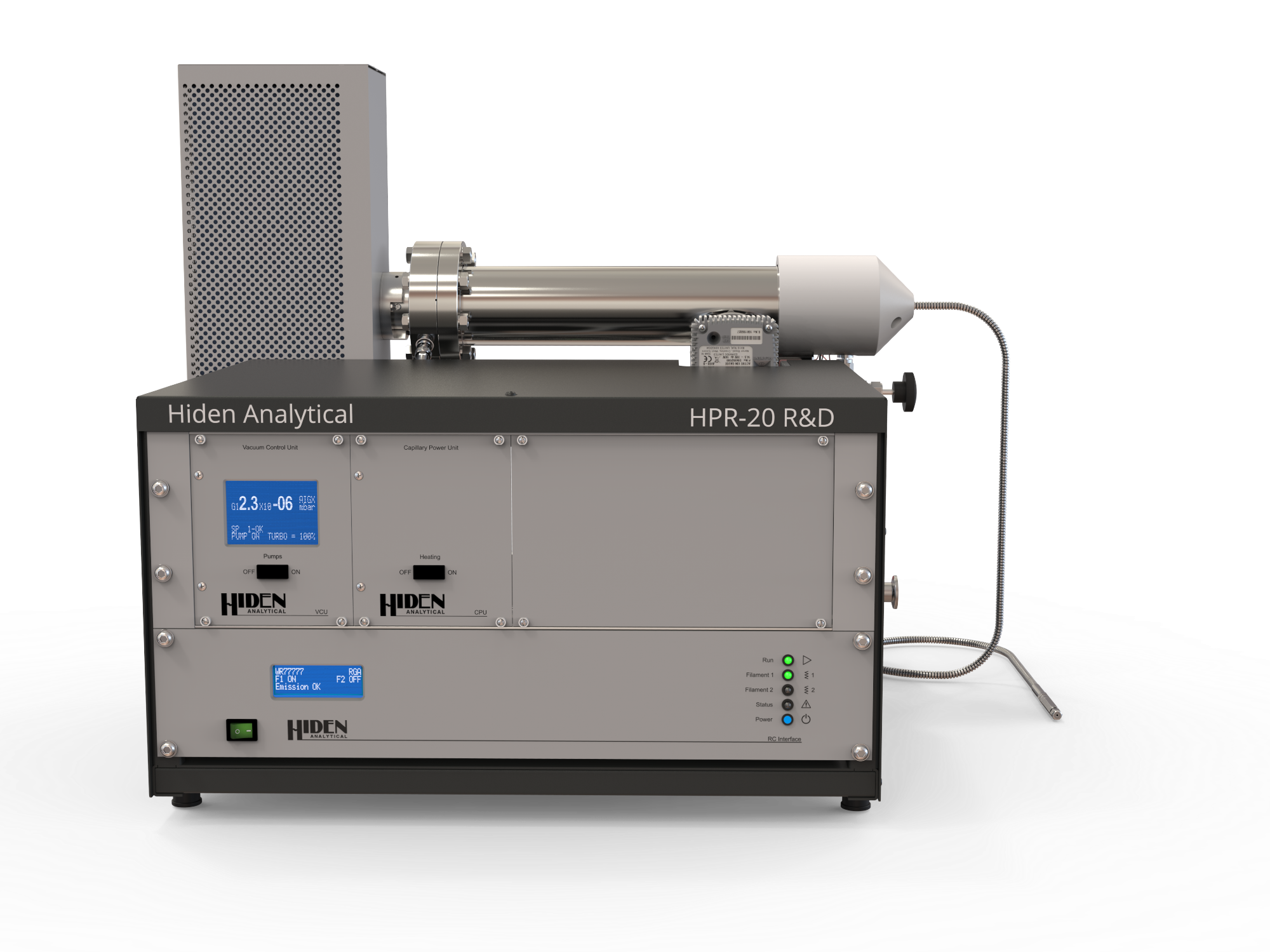
Figure 1. HPR-20 R&D, Hiden Analytical. Image Credit: Hiden Analytical
The primary purpose of CCUS is to capture CO2 so it can be used or stored. One technique used for CO2 capture is cyclic adsorption. In this method, pressure swing adsorption (PSA) is used to capture CO2 from flue gas.
The primary component of the PSA apparatus was a stainless-steel column featuring a 26 mm internal diameter, a 30 mm external diameter, and a length of 500 mm. The column was filled with commercial zeolite 13X (Hurtgral, Poland).
In column three, thermocouples were installed for temperature measurement along the bed axis. The flue gas was formed by mixing the streams from CO2 (purity 99.995%) and N2 (purity 99.999%) pressure gas cylinders.
Mass flow controllers (MFCs) from Aalborg, USA, were used to regulate the flow rates. The CO2 stream flowed through the thermostated saturator, which was filled with distilled water.
The PSA cycle is composed of four stages: pressurization, adsorption, blowdown, and regeneration.
During the pressurization stage, a pure N2 gas stream was fed to the column to raise the pressure from ambient to three or five bar. Subsequently, during the adsorption stage, a gas mixture comprising varying ratios of CO2 (10–20%), N2, and H2O (at a relative humidity (RH) of 50%) was introduced into the column.
This stage was conducted until the bed achieved full CO2 saturation. During the adsorption stage, the compound concentrations were measured at the column outlet using the HPR-20 R&D (MS) quadrupole mass spectrometer (Hiden Analytical, UK). In the next stage (blowdown), the column pressure was decreased to ambient.
During the final stage, a small stream of pure nitrogen was fed into the adsorption column to regenerate the zeolite 13X. MS measured compound concentration at the column outlet, and six PSA cycles were performed during the measurement.
A mathematical model of the PSA process for CO2 capture on zeolite 13X was developed, composed of partial differential equations (PDEs) and algebraic equations. The model was solved in MATLAB by applying the numerical method of lines for defined boundary conditions.
To verify the model, the computed breakthrough curves were compared with the experimental breakthrough curves recorded by MS. The simulated data demonstrated a good fit to experimental data.
Acknowledgments
Produced from materials originally authored by Tomasz Aleksandrzak, PhD, West Pomeranian University of Technology.
References and Further Reading
- Tomasz Aleksandrzak, Kamila Zabielska and Elzbieta Gabrus (2024). Modeling and experimental studies of carbon dioxide separation on zeolite fixed bed by cyclic pressure swing adsorption. Polish Journal of Chemical Technology, 26(1), pp.8–15. DOI: 10.2478/pjct-2024-0002. https://reference-global.com/article/10.2478/pjct-2024-0002.

This information has been sourced, reviewed, and adapted from materials provided by Hiden Analytical.
For more information on this source, please visit Hiden Analytical.