A recent publication in the Journal of Physics: Condensed Matter provided an in-depth study on the thermal stability and phase transformation of β-tungsten (β-W) films. The research was motivated by increasing interest in β-W for spintronic devices, owing to its large spin Hall effect and compatibility with magnetic random-access memory applications.
Despite these attractive characteristics, the stability of β-W under thermal treatment remains a significant challenge for device production and dependability.
To address this issue, systematic experimental and theoretical research was carried out using multiple complementary characterization methods, such as X-ray diffraction (XRD), X-ray photoelectron spectroscopy (XPS), secondary ion mass spectrometry (SIMS), and thermal desorption spectroscopy (TDS), together with density functional theory (DFT) and ab initio molecular dynamics simulations.
The primary objective of this study was to determine how oxygen influences both the stabilization of the metastable β phase and the phase transition to the α phase using TDS.
The TDS measurements were conducted in a Hiden Analytical ultra-high-vacuum chamber (approximately 10-9 Torr) using a high-precision triple-filter quadrupole mass spectrometer. The temperature was measured using a PID control module capable of reaching 1000 °C with a heating ramp of 1 °C/minute.
The evolution of desorbed atomic and molecular species was monitored by tracking specific mass-to-charge ratios corresponding to oxygen (m/z = 16), oxygen molecules (m/z = 32), tungsten-related fragments, and silicon signals originating from the substrate interface. This instrumental setup provided comprehensive data on the temperature-dependent desorption processes occurring in the films.
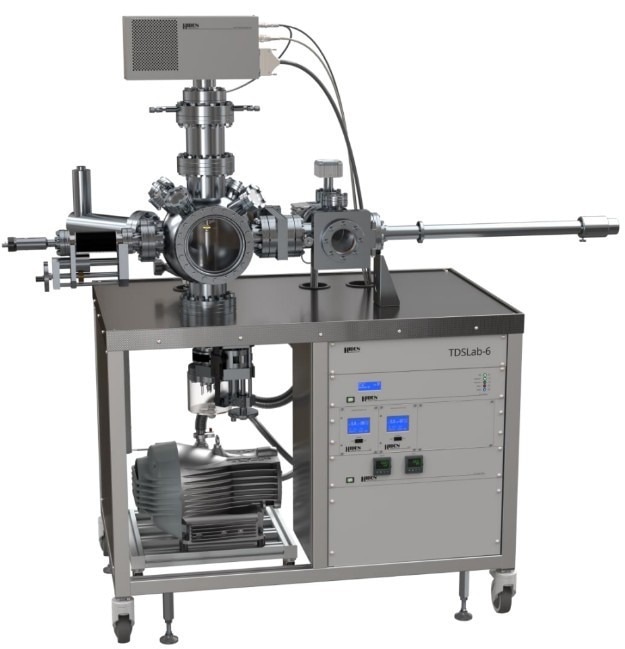
Figure 1. TDSLab-6, Hiden Analytical. Image Credit: Hiden Analytical
According to the TDS findings, oxygen desorption occurs in several phases during heating. Low-temperature desorption refers to the removal of weakly adsorbed oxygen species from the film surface. A more prominent desorption peak appears in the intermediate temperature range, signifying the release of oxygen incorporated within the film structure.
This process correlates closely with structural alterations identified by XRD and compositional variations measured by XPS and SIMS. A substantial reduction in oxygen content from approximately 12 at.% to just a few atomic percent was observed as the temperature increased to about 500 °C. This provided direct evidence that oxygen desorption drives β-to-α phase transformation.
In addition, atomic-scale evaluations based on DFT and ab initio molecular dynamics computations demonstrated that the α phase becomes energetically favorable at relatively low oxygen concentrations (up to about 10 at.%).
This agrees well with the experimental observation that β-to-α phase transformation is driven by oxygen desorption. An in-depth understanding of the thermal stability of such β-W films is thus crucial for real-world device applications.
Acknowledgments
Produced from materials originally authored by Prof. Aloke Kanjilal, Department of Physics, Shiv Nadar Institution of Eminence.
References and Further Reading
- Patajoshi, S., et al. (2026). Temperature dependent oxygen depletion in tungsten: a quantitative analysis of β to α phase transition. Journal of Physics: Condensed Matter, 38(8), p.085701. DOI: 10.1088/1361-648x/ae45e3. https://iopscience.iop.org/article/10.1088/1361-648X/ae45e3.

This information has been sourced, reviewed, and adapted from materials provided by Hiden Analytical.
For more information on this source, please visit Hiden Analytical.