Increasing the generation of glycerol as a waste product from biodiesel manufacturing necessitates its use in diverse applications, especially in industrial chemical production. However, many studies on this process focus on using noble metals as catalysts; this focus should shift toward affordable, abundant elements to ensure sustainability.
For this reason, this research uses activated carbon from coconut shells to support a bimetallic copper-nickel catalyst for the conversion of glycerol into value-added products. The catalyst was synthesized via wet impregnation and characterized for its surface morphology, functional groups, and surface area.
During the reaction, a gas bag was used to collect the gas-phase products. Sample analysis was conducted via a Hiden HPR-20 mass spectrometer (Hiden, UK). Mass spectrometry peak deconvolution was carried out using NIST MS Search 2.0 software on the fragmentation peaks, as illustrated in Figure 1.
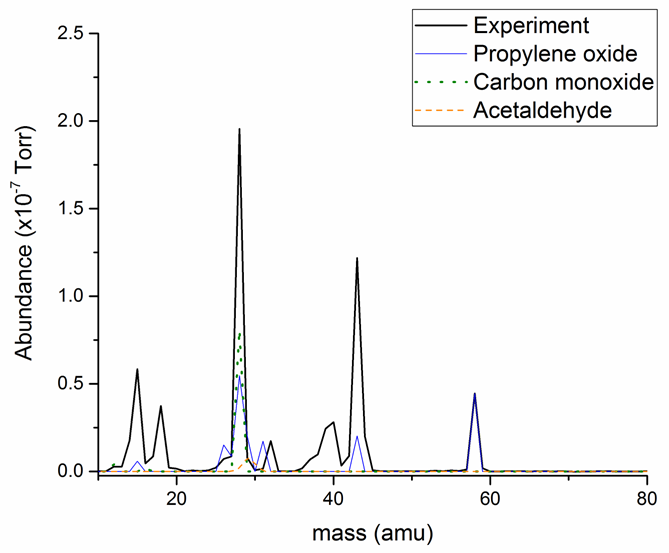
Figure 1. Deconvolution of MS spectrum of gaseous products at 20 wt% initial glycerol concentration, 20 bar and 200 °C. Image Credit: Hiden Analytical
The evaluation showed that at an initial glycerol concentration of 20 wt% and under operating conditions of 20 bar and 200 °C, acetic acid, propylene oxide, carbon monoxide, and acetaldehyde were identified as products. This outcome supports the proposal of a potential mechanism that considers the aqueous-phase reforming of glycerol and the dehydration process.
In summary, glycerol can be converted into important chemicals under mild conditions using an affordable catalyst.
Acknowledgments
Produced from materials originally authored by Dr Ibrahim bin Yakub, Universiti Malaysia Sarawak (UNIMAS).
References and Further Reading
- Ibrahim Yakub, et al. (2024). Aqueous-phase Reforming of Glycerol using Cu-Ni Bimetal Catalyst Supported over Coconut Shell Activated Carbon. Journal of Advanced Research in Fluid Mechanics and Thermal Sciences, 115(1), pp.193–205. DOI: 10.37934/arfmts.115.1.193205. https://semarakilmu.com.my/journals/index.php/fluid_mechanics_thermal_sciences/article/view/7539.

This information has been sourced, reviewed, and adapted from materials provided by Hiden Analytical.
For more information on this source, please visit Hiden Analytical.