Sponsored by LabmanReviewed by Maria OsipovaJul 21 2026
Beckers Group UK increased test repeatability, decreased quality risks, and gained greater visibility into factory performance after deploying Labman's TIDAS system.

Image Credit: Labman
Challenge
Beckers discovered variations in its fineness-of-grind testing procedure caused by subjective interpretations of Hegman gauge readings across departments. Variations among operators reduced repeatability, making it more difficult to detect dispersion issues early and maintain consistent quality throughout the production process.
Solution
Beckers collaborated with Labman to implement TIDAS, an automated grind gauge system that improved the consistency and standardization of testing. The system replaced subjective manual assessments with objective, repeatable measurements while also adding automated data capturing and increased process visibility.
Results
Beckers enhanced grind testing repeatability after using TIDAS, with seven technicians replicating the same result within 3 µm during training exercises. The system improved quality control, enabled earlier detection of production issues, and supplied useful real-time data to support long-term process changes.
A global pioneer in coil coatings and industrial paints, Beckers is known for its quality, innovation, and commitment to continual improvement.
The company operates in 18 countries and serves customers in around 60 markets globally, combining more than 160 years of experience with a strong focus on advancing high-performance coatings technology.

Image Credit: Labman
At Beckers Group UK, keeping consistency throughout the manufacturing and quality control processes is critical. One area identified for improvement was the fineness-of-grind test, also known as the Hegman test, a vital technique used in the coatings industry to evaluate particle dispersion quality.
Traditionally, the test has relied mainly on visual interpretation by operators using a grind gauge. While commonly used in the industry, the method can be influenced by human subjectivity, with findings varying depending on who does the test.
Following an inquiry into a grind-check issue during the milling stage of production, the Beckers team concluded that repeatability was a problem. They were subjected to unnecessary reprocessing because quality control activities were overly cautious.
On the other end of the scale, they had pulled a batch off the mill, ready for production, only to discover that the quality was not up to par.
This resulted in quality-control nonconformities and necessitated reprocessing, delaying other tasks on the milling schedule and consuming unnecessary energy, which contradicted the company's sustainability aims.
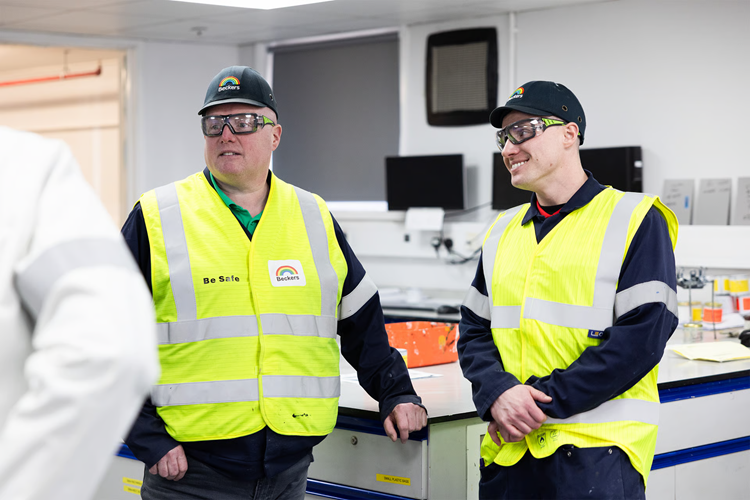
Image Credit: Labman
The fineness-of-grind test is susceptible to subjective readings when analyzing the gauge. We were seeing variation up to 20 microns across different operators in different departments
Jamie Parsonage, Business Process Improvement Specialist, Beckers
The investigation highlighted the need for a more objective and standardized approach to grind measuring, capable of enhancing reproducibility. It was crucial that accurate data was collected during the milling step of the operation.
Finding the Right Solution
When assessing automation technologies, Beckers chose Labman's TIDAS system as the best fit for its needs. The choice was based on both existing industry experience with the technology and TIDAS' rising reputation as a recognized standard in the coatings field.
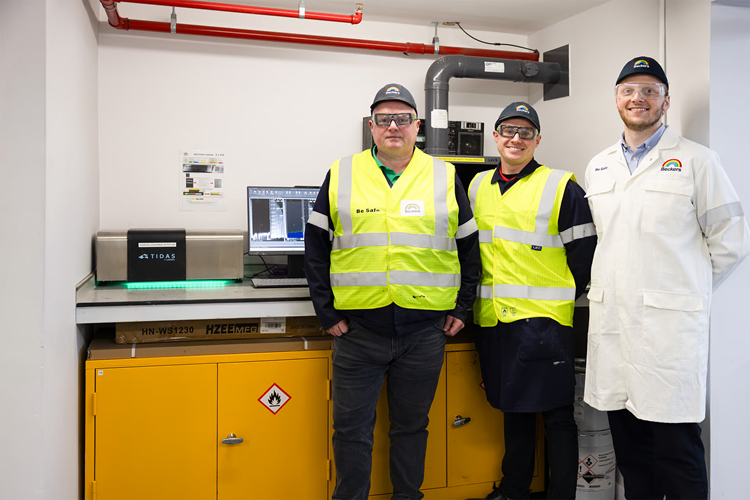
Image Credit: Labman
TIDAS enabled an automated and highly reproducible technique for fineness-of-grind testing. The system's ability to eliminate subjectivity from manual interpretation increased trust in the consistency of outcomes.
The equipment has removed subjectivity and made the test a lot more repeatable, it has also enabled some in-process checks to be carried out by production operators without the need for QC technician confirmation.
Peter Gateley, Quality Manager, Beckers Group
The benefits have been seen by both the production and quality control teams, and the technology is being used on a regular basis at critical phases of the manufacturing process.
Unlocking the Value of Real-Time Data
In addition to boosting repeatability, TIDAS has changed the way Beckers collects and analyzes quality-control data.
Prior to deployment, the company had a limited amount of quantitative data to analyze grind quality trends. The automated system integrates into operations, generating and storing live measurement data for enhanced visibility throughout the production process.
Peter Gateley believes the equipment has significantly improved the QC lab’s ability to capture real-time data by gathering important information on the grind quality of products produced on-site and making it easy to retrieve results and assess trends.
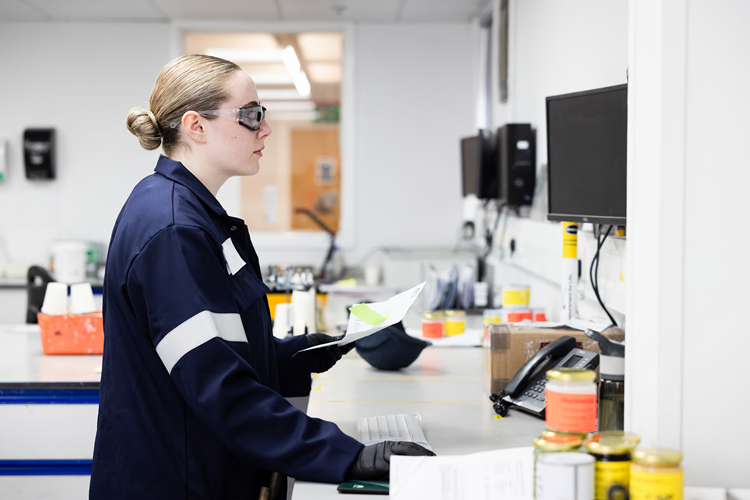
Image Credit: Labman
Although the system has only been online for a few months, Beckers is already seeing the long-term benefits of increased data capabilities.
A recent training exercise demonstrated the consistency of the automated process extremely well. Seven technicians used TIDAS to evaluate the same material and achieved consistent results within 3 µm, surpassing the accuracy of standard manual testing methods.
Beckers' improved process control allows for earlier and more effective identification of manufacturing issues.
We have recently noticed improvements in a product range historically prone to poor dispersion and intermittent bits issues. TIDAS is giving us a quantitative result to work from, providing more control over grind-check readings and making it easier to identify potential issues earlier in production.
Peter Gateley, Quality Manager, Beckers Group
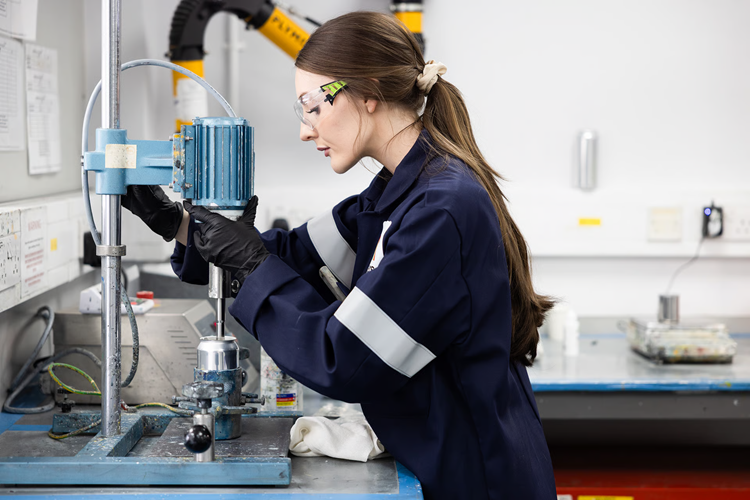
Image Credit: Labman
A Strong Collaborative Partnership
Beckers emphasized the importance of Labman's help during the project, in addition to the system's technological benefits.
The technical sales representatives have been extremely helpful, professional, and supportive throughout. They instantly understood our needs from the outset.
Jamie Parsonage, Business Process Improvement Specialist, Beckers
The Labman team's continual responsiveness has also contributed to a great implementation experience, with support extending after installation and commissioning.
Looking ahead, Beckers sees more chances to work with Labman to investigate additional automation and standardization opportunities in its laboratory and manufacturing processes.
Image Credit: Labman
As manufacturers shift to data-driven quality control, the collaboration between Beckers Group UK and Labman highlights how automation can increase repeatability, reinforce process control, and enable more consistent product quality in modern production environments.

This information has been sourced, reviewed, and adapted from materials provided by Labman.
For more information on this source, please visit Labman.