Sponsored by LabmanReviewed by Maria OsipovaApr 14 2026
What really is the best powder dosing method? Combining curiosity and a touch of healthy competition, Labman recently set up an experiment to compare three common powder dosing methods.
A group of volunteers stepped in to test three methods for performing the same task: dispensing 25 vials to a target quantity of 5 mg ± 0.2 mg.
Their experiment provided a realistic, practical demonstration of how these approaches perform under laboratory circumstances, including interruptions, common operator behaviors, and occasional inefficiencies.
The results speak for themselves.
Method 1: Manual Dispensing Utilizing an Analytical Balance
Emily adopted a completely manual method, meticulously weighing and documenting each step using a conventional analytical balance. The entire process took 1 hour and 56 minutes, demanding constant, direct involvement.
As anticipated, 19 minutes were consumed by typical laboratory diversions – colleagues, brief breaks, and the inherent stop-and-start nature of manual tasks. The repetitive character of this activity also elevates the risk of Repetitive Strain Injury (RSI), particularly during prolonged or repeated cycles.
From a data management standpoint, this technique introduces considerable jeopardy. Manual recording of findings, often facilitated by makeshift solutions such as plastic-covered keypads, results in low data integrity and a clear susceptibility to human error. While uncomplicated, this method is both time-intensive and heavily reliant on operator consistency.
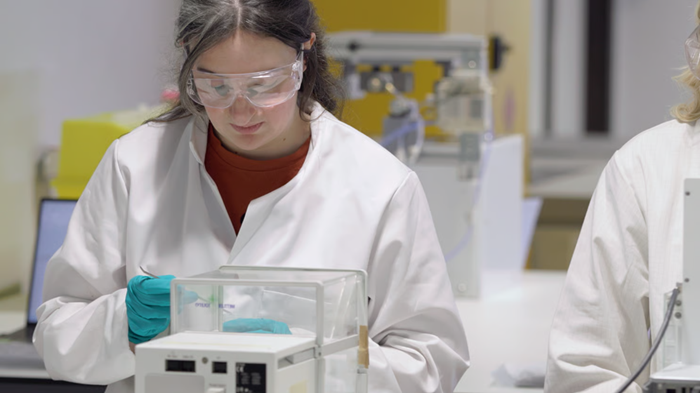
Image Credit: Labman
Method 2: Partially Automated Dispensing with an XPR Balance
Neave’s method incorporated a degree of automation, using an XPR balance to assist with dispensing. Although this reduced active operational time to approximately 30 minutes, it occurred in brief intervals – frequent interactions lasting under a minute each.
Notwithstanding the decrease in hands-on engagement, the overall procedure increased to 2 hours and 7 minutes, making it the longest of the three techniques. Furthermore, 28 minutes were lost due to disturbances and inefficiencies, underscoring how fragmented operations can affect productivity.
The RSI risk diminishes to a low-to-medium level, but the necessity for ongoing user engagement prevents complete ergonomic relief. Data integrity sees a minor enhancement, as USB transfer is feasible. However, in practice, manual setup and intervention are frequently still required, leaving the operation partially exposed to human error.
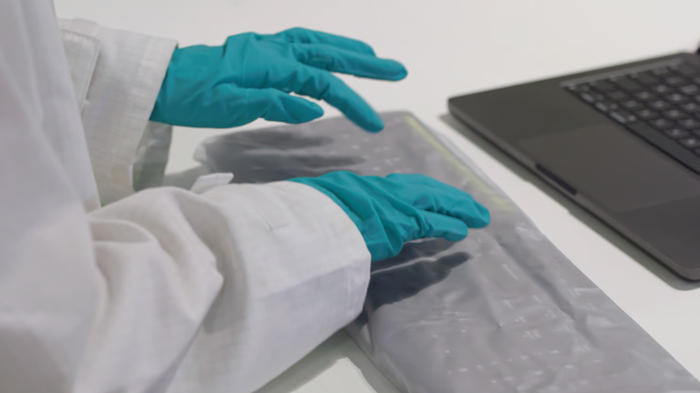
Image Credit: Labman
Method 3: Fully Automated Dispensing via the Labman MultiDose®
Sahil’s responsibility was arguably the most straightforward: initiating the run on MultiDose and allowing the system to manage the process. The entire workflow concluded in 1 hour and 45 minutes, establishing it as the swiftest method evaluated, with a mere 7 minutes dedicated to setup.
Once operational, the system required no further intervention, resulting in zero time lost due to interruptions. This fully autonomous operation eliminates RSI risk entirely, along with the inefficiencies inherent in stop-start human-driven operations.
Crucially, data integrity is high, with automated data handling eliminating the necessity for manual transcription. The process is uniform, traceable, and considerably less prone to mistakes, ensuring Accurate Results
And perhaps the most practical benefit: MultiDose does not require breaks. It can operate autonomously, including overnight, empowering laboratories to extend operational capacity well beyond conventional working hours.
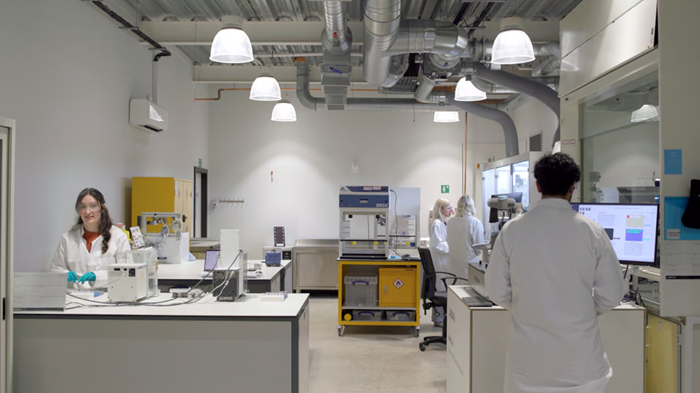
Image Credit: Labman
Return on Investment (ROI) and Practical Implications
There are many external variables when testing in the real world, but this general comparison found four key markers of improvement:
- Improved throughput, especially with overnight operation, increases overall lab capacity
- Significantly reduced hands-on time allows skilled staff to focus on higher-value work
- Elimination of repetitive strain contributes to a safer working environment
- Higher data integrity reduces errors, rework, and compliance risks
Final Thoughts
This was a simple study - perhaps not the most scientifically rigorous - but there's strength to this simplicity. It reflects how these methods perform in real lab conditions, where interruptions happen, workflows aren’t perfect, and time is limited.
While manual and semi-automated approaches can get the job done, the clear winner of this friendly competition was the MultiDose, with its fully automated delivery creating superior efficiency, reliability, and return on investment.

This information has been sourced, reviewed, and adapted from materials provided by Labman.
For more information on this source, please visit Labman.