Dimethyl carbonate (DMC) is a major compound found in lithium-ion battery electrolytes. In these solvent formulations, purity is directly correlated with performance, safety, and lifetime. Even trace-level impurities can accelerate the degradation of solid electrolyte interfaces, promote lithium-ion consumption, or trigger gas formation. Each of these processes can negatively affect both efficiency and safety.
As battery materials continue to advance, analytical approaches must offer high sensitivity alongside reliable, accurate identification of material composition. A recent LECO study showed that using two GC-MS platforms in parallel enables a more comprehensive characterization of DMC impurities than either platform alone.
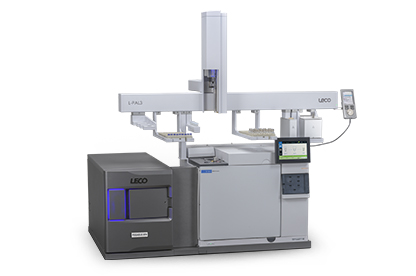
Pegasus BTX. Image Credit: LECO Corporation
Why Impurity Characterization in DMC is Challenging
The analysis of battery-grade solvents requires the ability to identify contaminants across an extensive concentration range, starting from dominant byproducts to trace-level species. In DMC, impurities may take the form of oxygenated compounds, hydrocarbons, and nitriles, the majority of which derive from handling or synthesis processes.
These compounds can co-elute or be present at levels that can evade typical detection thresholds, making it difficult to acquire a complete analysis using a single analytical technique. Moreover, electron ionization (EI) spectra do not always deliver a clear molecular ion, making it increasingly difficult to validate which compounds are present.
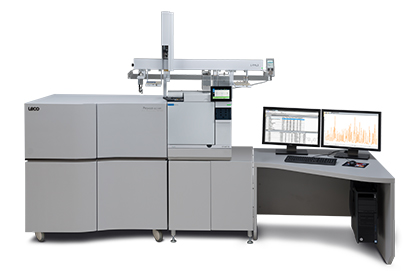
Pegasus GC-HRT. Image Credit: LECO Corporation
A Complementary Analytical Strategy: Sensitivity and Confidence
LECO’s recent study put forward a combined workflow using the following analytical techniques:
- Pegasus BTX (GC-TOFMS) for high-sensitivity detection
- Pegasus HRT (high-resolution GC-MS) for accurate mass confirmation
The Pegasus BTX facilitates impurity detection below parts-per-billion levels, ensuring the capture of low-abundance analytes.
After running detection protocols, the Pegasus HRT offered high-resolution, precision mass data in both EI and positive chemical ionization (PCI) modes. PCI was shown to be of considerable value when EI spectra do not exhibit a distinct molecular ion, as it allows validation through common adduct species, including protonated molecular ions [M+H]+.
Moreover, it is not necessary to make hardware changes to access both ionization modes, meaning the workflow enables efficient, multi-dimensional confirmation of analyte identity.
Observations
By taking a combined approach, various classes of impurities were detected in the DMC sample. These included:
- Alcohols, carbonates, and ethers
- Hydrocarbons and aromatic species
- Oxygenated reaction byproducts
- Supplementary low-level analytes detected with high library match scores
Crucially, the high sensitivity of the Pegasus BTX meant the researchers were able to determine an extensive set of low-concentration compounds, while the Pegasus HRT boosted researchers' confidence in compound identification via accurate mass measurements and verification of molecular formulas.
The study also shed light on those cases where co-eluting compounds were effectively deconvoluted, enabling the identification of individual components even without complete chromatographic separation.
Why This Matters for Battery Materials Analysis
This work highlights a key principle for the characterization of advanced materials: the detection and identification present significant challenges that generally require integrated solutions.
- Detection alone remains insufficient without confident identification
- High-resolution confirmation is limited if low-level species are not initially detected
Therefore, laboratories can gain an enhanced understanding of a solvent’s purity, the production processes, and any potential performance risks in battery systems by combining the capabilities of complementary analytical strategies.
Explore the Complete Study
This short overview details only a portion of the key findings. The full study provides:
- Chromatographic and spectral data examples
- Comprehensive acquisition parameters and workflows
- Examples that demonstrate EI/PCI complementarity and accurate mass confirmation
- Verified impurity lists with retention times and similarity scores
To gain deeper insights into how complementary GC-MS techniques can boost confidence in battery solvent analysis, download the full application note below.

This information has been sourced, reviewed and adapted from materials provided by LECO Corporation.
For more information on this source, please visit LECO Corporation.