Needle coke is a valuable carbon material marked by a highly oriented crystalline structure, giving it superb resistance to thermal shock, electrical conductivity, and a very low thermal expansion coefficient.
These features make it a crucial raw material for lithium-ion battery (LiB) anodes in the quickly advancing new energy sector, along with ultra-high power (UHP) graphite electrodes for electric arc furnaces (EAF) utilized in steel and iron metallurgy.
Its exceptional performance is highly connected to its inherent microscopic anisotropy, while the particle morphology (needle-like structure) and macroscopic particle size distribution (gradation) perform a key role in producing its functional benefits.
Particle size distribution (PSD) has a direct impact on the mechanical strength and packing density of end-products. The high aspect ratio of the material is also critical to its performance because particles with decreased aspect ratios compromise the quality of downstream products and hinder crystalline alignment.
Conventional quality control techniques like sieving can offer gradation profiles, but are unable to render crucial morphological features, for example, true particle length or particle needle-degree.
Static image analysis provides a degree of shape data, but is restricted by poor statistical reliability, prolonged throughput, small sample volumes, and low correspondence with sieve-based results, severely limiting its utility in process enhancement and control.
BeVision D3 solves these challenges by utilizing dynamic image analysis to gather high-resolution morphology and particle size data simultaneously.
This technique facilitates high-throughput identification of tens of thousands of particles in one test, offering statistically representative aspect-ratio and PSD characterization that provide more accurate process improvement and evaluation.
Instruments and Methods
The morphological features and PSD of needle coke samples were characterized using the BeVision D3 dynamic image particle size and shape analyzer coupled with the BV-F10 free fall dispersion unit. For comparison, sieve analysis was performed utilizing a vibrating sieve analyzer fitted with Tyler standard sieves.
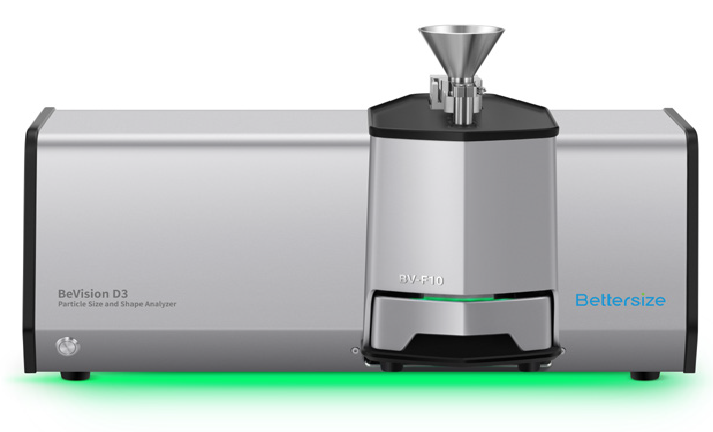
Image Credit: Bettersize Instruments Ltd.
Table 1. BeVision D3 Test Configuration. Source: Bettersize Instruments Ltd.
| Dispersion method |
Free fall |
| Imaging |
5-megapixel CMOS |
| Feeding control |
Automatic |
| Number of particles measured |
102,000 pcs |
| Test duration |
13 mins |
Results and Discussion
Particle Size Analysis
The minimum chord length (XCmin) was used to characterize the particle width, and the maximum Feret diameter (XFmax) was used to measure the needle coke’s particle length. Every sample was characterized three times in a row to assess the repeatability of PSD. Figure 1 shows the corresponding width and length distributions.
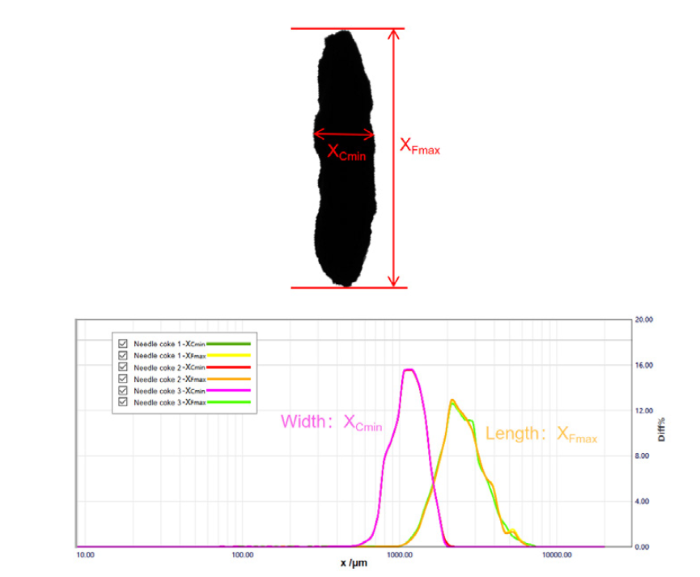
Figure 1. Length (XFmax) and Width (XCmin) distributions of the needle coke. Image Credit: Bettersize Instruments Ltd.
Table 2. Repeatability of three PSD Measurements. Source: Bettersize Instruments Ltd.
|
Average |
Standard deviation |
Repeatability |
| XFmax (Q = 10%) |
1667.39 µm |
13.28 µm |
0.80% |
| XFmax (Q = 50%) |
2457.21 µm |
8.29 µm |
0.34% |
| XFmax (Q = 90%) |
3811.84 µm |
20.57 µm |
0.54% |
| Xcmin (Q = 10%) |
831.24 µm |
0.24 µm |
0.03% |
| Xcmin (Q = 50%) |
1159.88 µm |
0.83 µm |
0.07% |
| Xcmin (Q = 90%) |
1547.66 µm |
3.50 µm |
0.23% |
In this evaluation, X(Q = n%) indicates the particle width or length under which n percent of all measured particles fall, comparable to conventional percentile metrics like D10, D50, and D90. For instance, an XFmax(Q = 10%) value of 1667.39 μm shows that 10% of particles have a maximum Feret diameter equal to or less than 1667.39 μm.
In sum, the sample of needle coke displays a width distribution of approximately 500 to 2000 μm and a length distribution spanning from roughly 1000 to 7000 μm. The three recurrent calculations have superb consistency, with repeatability deviations of less than 1%.
Sieve Correlation
A sieve correlation feature is included in the BeVision software, which outputs PSD results fully proportional to conventional sieving data. Figure 2 contrasts the particle width distribution determined from sieve-based characterization with the BeVision D3’s histogram results.
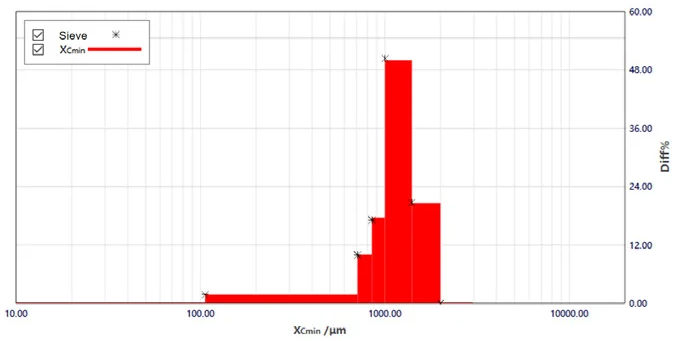
Figure 2. BeVision D3 Particle width distribution XCmin and ( ) sieve histogram. Image Credit: Bettersize Instruments Ltd.
Table 3. BeVision D3 Test Configuration. Source: Bettersize Instruments Ltd.
| Mesh |
Size (µm) |
Percentage (%) |
| 10 |
2000 |
0.02 |
| 14 |
1400 |
20.73 |
| 18 |
1000 |
50.36 |
| 20 |
850 |
17.14 |
| 25 |
710 |
9.96 |
| 140 |
106 |
1.79 |
| Pan |
0 |
0 |
Table 4. BeVision D3 results. Source: Bettersize Instruments Ltd.
| Xcmin /μm |
Diff /% |
| 2000.00 |
0.02 |
| 1400.00 |
20.60 |
| 1000.00 |
49.97 |
| 850.00 |
17.63 |
| 710.00 |
9.98 |
| 106.00 |
1.77 |
| 0.00 |
0.03 |
A results comparison shows strong consensus between the BeVision D3’s analysis of particle size classes and those found utilizing the sieve analyzer.
As the BeVision D3 can yield PSD outputs equivalent to sieve analysis, users dependent on traditional sieving techniques can effortlessly change to the BeVision D3 with no need to alter current QC thresholds or specifications.
Particle Shape Analysis
The length-to-width ratio (L/W ratio) is a key morphological measurement for determining the extent of needle-like structure in needle coke particles.
As shown in Figure 3, the length of the particle divided by its width makes up the L/W ratio, according to the minimum bounding rectangle of the projected image of the particle. A longer, needle-like particle is characterized by a larger L/W ratio.
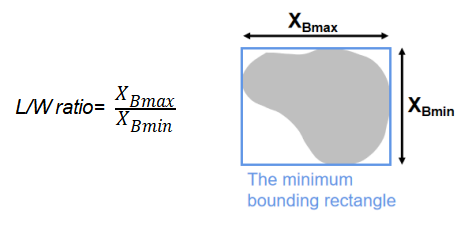
Figure 3. Definition of L/W ratio. Image Credit: Bettersize Instruments Ltd.
Highly anisotropic and premium quality material with a well-developed, fibrous or needle-like microstructure is characterized by needle coke particles with an L/W ratio higher than three.
Critical for preserving correct alignment during graphitization, these particles display lengthened geometry and undamaged structural characteristics. The upper performance limit of the raw material is directly affected by their abundance.
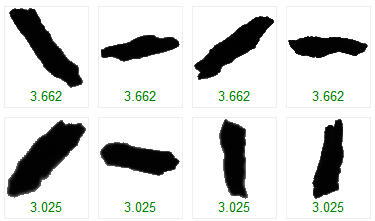
Figure 4. Examples of needle-like particles. Image Credit: Bettersize Instruments Ltd.
Blocky particles are those with an L/W ratio of three or less. These more equiaxed, shorter particles fail to properly orient throughout extrusion molding, harming thermal, mechanical, and electrical characteristics and impacting microstructural order in the end product.
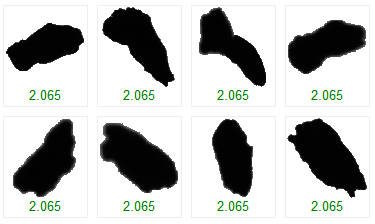
Figure 5. Examples of blocky particles. Image Credit: Bettersize Instruments Ltd.
Table 5. Number-weighted proportion of adhered beads. Source: Bettersize Instruments Ltd.
| . |
. |
| Q(L/W ratio ≤ 3,000) |
18.35% |
| Q(L/W ratio > 3,000) |
81.65% |
Figure 5 displays examples of blocky particles. Table 5 outlines the volume-weighted proportions of blocky and needle-like particles. In this application, Q represents the fraction of particles whose shape or size parameters are greater than or less than a particular value.
Conclusion
Within a 13-minute test interval, the BeVision D3 effectively characterized more than 100,000 particles of needle coke.
In contrast to conventional sieve analysis, which normally takes around 30 minutes for sample preparation, analysis, and sieve cleaning after measurement, the BeVision D3 provides significantly improved measurement efficiency with much lower maintenance needs.
By utilizing dynamic image analysis technology, the BeVision D3 characterizes particle shape, length, and width at the same time in a standalone run.
When employing the built-in sieve-correlation feature, BeVision D3’s PSD results closely correlate with those captured through traditional sieving, enabling QC laboratories to easily shift from standard techniques to dynamic imaging with no need to alter pre-existing quality specifications.
This shift lowers the cost of labor and enhances workflow efficiency. The BeVision D3 also delivers comprehensive per-particle data records and complete particle image retention, helping R&D teams to perform detailed morphological and structural examinations.
This complete dataset facilitates process enhancement, raw material assessment, and product performance optimization across both research and production applications.
Acknowledgments
Produced from materials originally authored by Echo Cao and Weichen Gan from Bettersize Instruments Ltd.

This information has been sourced, reviewed and adapted from materials provided by Bettersize Instruments.
For more information on this source, please visit Bettersize Instruments.