Precise characterization of lithium iron phosphate (LFP) particle size distribution (PSD) is essential for increasing the performance of batteries. This investigation examines the problems faced during LFP PSD analysis and presents a customized method using ultrasonication with pre-dispersion.
A sequence of tests determined that the ideal pre-dispersion configuration includes ultrasonication at 510 W for one minute. This technique provides a stable PSD with a 10.27 μm D100 value and demonstrates outstanding repeatability, adhering to ISO 13320 criteria.
This method helps engineers and researchers to enhance the performance of LFP batteries and facilitate the expansion of sustainable energy options.
Introduction
The expansion of sustainable, high-performance energy solutions is central to the developing electric vehicle (EV) revolution. Despite this, challenges in range continue to be a key issue.
While lithium-ion batteries are a potential solution, lithium iron phosphate (LFP) batteries, praised for their excellent cost-effectiveness and safety, have a disadvantage: lower gravimetric energy density versus comparable options, like lithium nickel cobalt aluminum oxides (NCA) or lithium nickel manganese cobalt oxide (NMC).
This corresponds to longer charging times and reduced driving ranges, limiting the general use of LFP batteries in EVs. Accurately customizing the particle size of LFP battery materials may be the key to this challenge.
LFP particle size inside the battery significantly affects battery performance. Analyzing the operational workings of LFP batteries illustrates the important function that particle size has in the following aspects:
- In relation to their volume, smaller LFP cathode particles have a bigger surface area. When a surface area is larger, it enables a higher amount of lithium ions to take part in an interaction with the cathode particles. This enables the battery to hold more energy without adding to the size of the battery because more lithium ions can be released and stored.
- When LFP particles are smaller, they arrange in a finer porous structure between them, enabling the cathode structure to be penetrated easily by electrolytes. This promotes efficient ionic transport and helps the battery to discharge and charge faster.
With a finer LFP cathode material size, development engineers and researchers can achieve faster charging rates, prolonged range, and improved energy density, while maintaining the intrinsic safety and economic viability that make LFP batteries so valuable to the EV sector.
This process is not as basic as correlating a finer particle size to improved battery performance. Smaller LFP particles decrease the lifespan of a battery as they are more liable to mechanical degradation throughout cycling (discharging and charging).
The battery’s total energy density can also be decreased by a relatively higher void space between LFP particles due to the porous structure of smaller particles, which allows electrolyte to permeate more easily.
Determining the ideal particle size is critical to maximize volumetric energy density and balance the advantages of high surface area with the requirement for prolonged lifespan. This improvement is based on the intended application of the battery and the particular physical properties of the cathode material.
The ideal remedy could involve a mixed particle size distribution (PSD) to overcome the performance issue of single-sized LFP particles. By intentionally mixing particles of different sizes, an equilibrium between the benefits provided by each specific size fraction can be simply attained.
Larger particles support the increase of structural stability and packing density while smaller particles provide the correct surface area for the interaction of lithium ions.
For enhanced battery performance, accurately quantifying and investigating the complex PSDs of LFP materials is becoming critical for providers of LFP lithium batteries, whether it involves multimodally distributed mixtures or single-sized LFP materials.
Measurement Design
Ideal PSD control poses key concerns. In contrast to conventional methods such as sieving, laser diffraction particle size analyzers provide an accurate and robust tool to precisely measure the complicated particle size distribution inside LFP electrode materials.
This progressive method uses the fundamentals of light diffraction to characterize particle size over a wide variety of sizes, giving users extremely reproducible and precise data.
Bettersize Instruments provides the Bettersizer 2600 for accurate PSD calculations in the sector to meet the needs of high-performance LFP lithium batteries. This tool improves the laser diffraction technique, correctly analyzing particle size across a range of 0.02–2600 μm.
From wet slurry to dry powder, its original optical design enables flexibility for different sample states with fast shifting between feeding and dispersion units.
In this investigation, synthesized LFP particles of micron size were captured as samples in a dry powder state. Due to their insolubility, water was used to disperse the LFP samples.
To optimize the reliability of the data, a BT-802 large-volume automatic dispersion unit was utilized with the Bettersizer 2600 main unit to carry out the PSD analysis. The stirring speed was set to 1800 rpm to avoid sedimentation as LFP particles have a larger density than water.
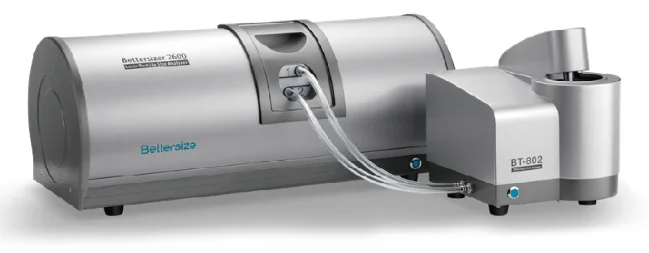
Bettersizer 2600 with BT-802. Image Credit: Bettersize Instruments
Upholding Measurement Integrity: Addressing Obscuration Trends and Abnormal PSD
To ensure the PSD results are reliable, a range of tests are performed with the same sampling technique and the same LFP sample, but with alternative circulation and stirring times.
As displayed in Figure 1, with the longer time of circulating and stirring the sample suspension, the PSD result demonstrated a propensity to reduce as the obscuration value increased.
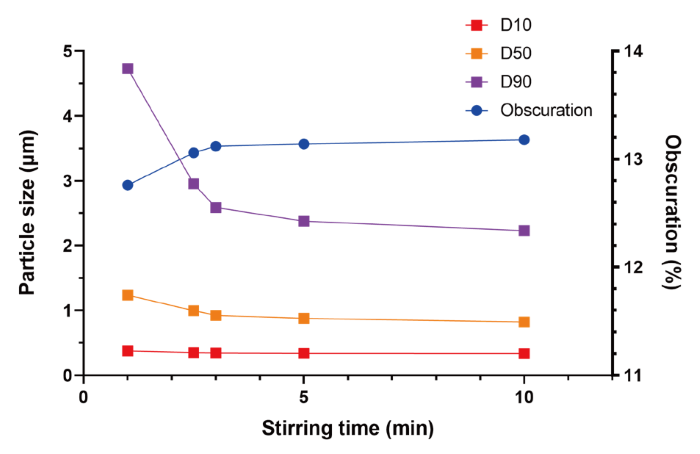
Figure 1. Abnormal PSD and obscuration trends. Image Credit: Bettersize Instruments
For many applications, a common trend of extended stirring leading to a consistent obscuration value and a stable PSD is more likely to occur. In this case, the LFP samples behaved counterintuitively where obscuration increased with longer stirring, while the PSD decreased. As shown in Figure 2, the reported trend in LFP samples indicates a more complicated situation where the ‘differentiation’ of PSD denotes a dual process.
Dispersion: Even after 10 minutes of stirring, a primary particle population is disintegrating into smaller groups. This results in a moderate reduction in the average size of particles, indicating that the stirring forces are unable to completely divide the aggregates.
Agglomeration: The higher obscuration is accompanied by a smaller quantity of particles that are agglomerating into larger ones.
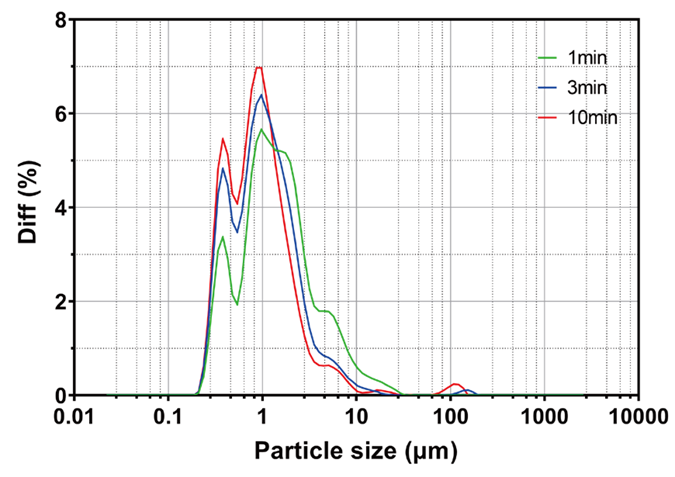
Figure 2. The PSD "differentiation" phenomenon. Image Credit: Bettersize Instruments
This evidently paradoxical event signifies an unstable state within the sample suspension, also called unsaturated dispersion, which underscores the challenges of conventional stirring dispersion techniques for LFP samples.
The shearing forces produced by the stirring procedure are unable to subdue the intrinsic cohesive forces keeping the LFP particles together, resulting in unfinished dispersion and the reported ‘differentiation’ mechanism.
Using Customized Pre-Treatment to Solve Unsaturated Dispersion
To overcome the challenge produced by unsaturated dispersion, stronger dispersion energy is required to facilitate quicker dispersion of agglomerated particles. A two-stage dispersion protocol can be applied, combining an external pre-dispersion step with inline dispersion during measurement.
In this example, LFP dry powders were combined with deionized water to create a thicker suspension, and the pre-disperse stage was performed on this mixture.
Utilizing Ultrasonic Energy for Successful Dispersion
Ultrasonication is shown to be a successful pre-dispersion stage to solve the challenges of conventional stirring techniques. This method employs high-frequency sound waves to produce powerful shear forces, successfully dividing agglomerated LFP particles and facilitating a suspension that is more uniform.
Before the PSD measurements, the concentrated pre-dispersed suspension was ultrasonicated and then transferred into the BT-802 dispersion unit for dilution and circulation. To produce a stable suspension, each measurement was performed quickly after the addition of samples in the BT-802.
Determining the Ideal Strategy for Pre-Dispersion
This analysis focused on a sequence of measurements to understand different ultrasonication duration and power combinations. The results (Table 1) give a clear answer that adequate dispersion energy is fundamental to reach a stable PSD. This energy can be provided using either prolonged treatment time or extra ultrasonication power.
Table 1. Typical PSD values under different ultrasonication power and duration combinations.
| Power (W) |
Typical Value (µm) |
30 seconds |
1 minute |
3 minutes |
5 minutes |
| 270 W |
D10 |
0.328 |
0.327 |
0.324 |
0.325 |
| D50 |
0.817 |
0.773 |
0.758 |
0.762 |
| D90 |
4.740 |
2.426 |
2.323 |
2.242 |
| 360 W |
D10 |
0.330 |
0.327 |
0.326 |
0.324 |
| D50 |
0.813 |
0.757 |
0.746 |
0.752 |
| D90 |
3.039 |
2.970 |
2.354 |
2.344 |
| 420 W |
D10 |
0.324 |
0.324 |
0.324 |
0.324 |
| D50 |
0.731 |
0.728 |
0.729 |
0.724 |
| D90 |
1.830 |
1.790 |
1.755 |
1.753 |
| 510 W |
D10 |
0.325 |
0.326 |
0.324 |
0.324 |
| D50 |
0.724 |
0.722 |
0.721 |
0.719 |
| D90 |
1.726 |
1.706 |
1.703 |
1.705 |
| 570 W |
D10 |
0.325 |
0.325 |
0.325 |
0.325 |
| D50 |
0.719 |
0.715 |
0.718 |
0.719 |
| D90 |
1.693 |
1.707 |
1.708 |
1.704 |
Striking a Balance: 510 W and One Minute for Optimal Results
510 W for one minute can be quickly noted as the ideal pre-dispersion configuration for the LFP sample being evaluated, maintaining a balance between efficiency and power. This setting dispersed the particles correctly, resulting in a stable PSD and a 10.27 μm D100 value.
Validation through Repeatability Testing
Six consecutive measurements were performed to maintain the reliability of this pre-dispersion technique. As shown in Figure 3, the results have superb repeatability. The standard deviations for D10, D50, and D90 values were exceptionally low (0.12%, 0.05%, and 0.09%, respectively), providing total adherence to ISO 13320 standards.
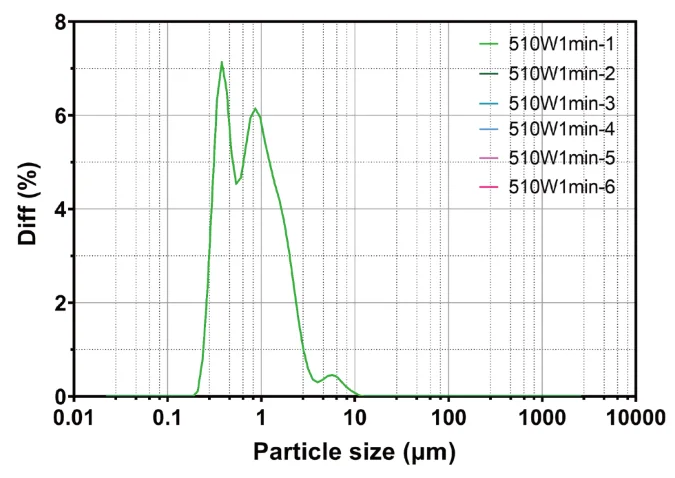
Figure 3. Repeatability test of PSD measurement procedure. Image Credit: Bettersize Instruments
Conclusion
Accurate LFP particle size distribution control has a central function in the performance of batteries. As showcased by the Bettersizer 2600, laser diffraction analysis provides a beneficial method for evaluating PSD in the lithium battery sector.
When LFP materials have distinct dispersion issues, it becomes critical to deploy an enhanced pre-dispersion technique, for example, the ultrasonication method outlined in this study.
This investigation outlines the success of this technique, demonstrating its ability to undertake repeatable, stable, and reliable PSD measurements, ultimately helping engineers and researchers to increase the performance of LFP batteries.
Acknowledgments
Produced from materials originally authored by Weichen Gan from Bettersize Instruments Ltd.

This information has been sourced, reviewed and adapted from materials provided by Bettersize Instruments.
For more information on this source, please visit Bettersize Instruments.