In this interview with AZoMaterials, industry experts Adam Ladak and Olivia Madamba from Thermo Scientific explore how gas purity monitoring helps protect semiconductor processes, product quality, and emissions control.
Why is gas analysis so important in semiconductor manufacturing?
Adam Ladak: Semiconductor manufacturing involves hundreds of highly complex process steps and uses a wide range of materials, chemicals, and process gases.
These gases are not simply supporting materials. Rather, they participate directly in critical processes such as oxidation, deposition, etching, ion implantation, and chamber cleaning. As a result, even trace levels of impurities can affect process stability, reduce yield, or contribute to defects in the final device.
For that reason, continuous monitoring and control of high-purity gases is extremely important. The objective is to understand what is entering the process, identify contamination quickly, and help maintain stable manufacturing conditions and consistent product quality.
What is the difference between bulk gases and specialty gases in semiconductor processes?
Adam Ladak: The gases used in semiconductor manufacturing can generally be divided into two categories: bulk and specialty gases.
Bulk gases are produced in large quantities, often by air separation units, and distributed through centralized storage and delivery systems. Typical examples include nitrogen, oxygen, hydrogen, argon, and helium.
Trace impurities such as oxygen, moisture, hydrocarbons, or other contaminants can affect process performance. Therefore, it is essential to maintain the purity of bulk gases that are used throughout manufacturing.
Specialty gases are ultra-high-purity process gases used directly in critical operations such as etching, deposition, implantation, and cleaning. Examples include silane, ammonia, nitrogen trifluoride, sulfur hexafluoride, boron trichloride, chlorine, hydrogen chloride, hydrogen fluoride, and tungsten hexafluoride.
Since specialty gases are directly involved in process reactions, very small changes in purity can influence device performance and process stability.
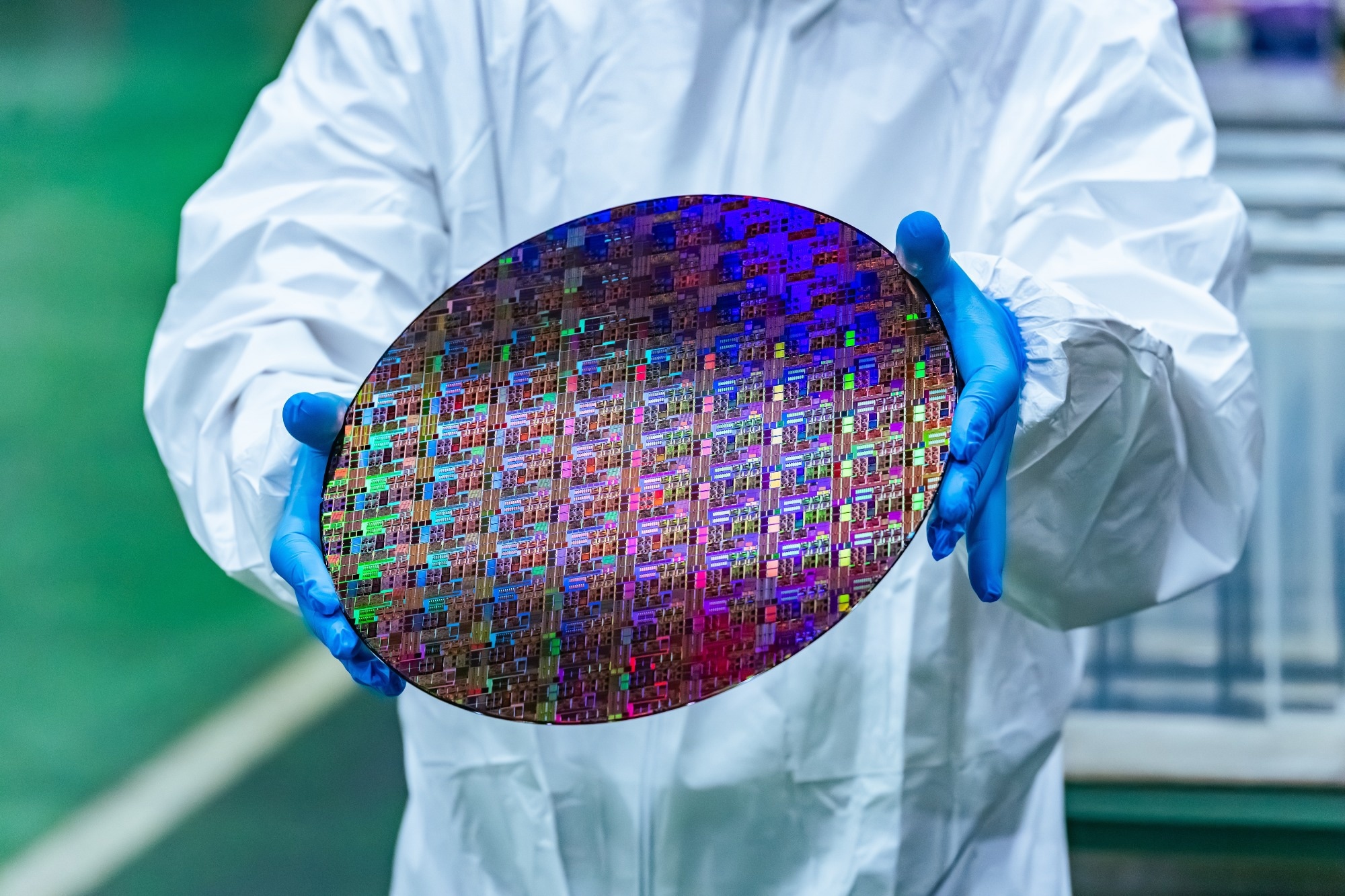
Image Credit: metamorworks/Shutterstock.com
Why does impurity monitoring need to reach such low concentration levels?
Adam Ladak: The semiconductor industry operates with extremely high-purity gases, so the contaminants we are interested in can be present at very low concentrations.
For bulk gases, it may be necessary to measure impurities at parts-per-trillion (ppt) levels. Even though those concentrations sound very small, contamination can still become significant when the gas is used repeatedly across sensitive process steps.
Real-time monitoring also helps identify problems that would otherwise be difficult to diagnose. In one example, methane concentrations in argon changed depending on how gas was withdrawn from a cryogenic vessel. In another case, methane levels dropped dramatically after a gas handling system was repaired.
Those measurements show why it is useful to monitor continuously rather than relying only on occasional spot checks. You can see fluctuations, verify whether maintenance has solved a problem, and detect contamination before it affects manufacturing.
How does the APIX use atmospheric pressure ionization mass spectrometry to detect ultra-trace impurities?
Adam Ladak: The APIX is based on atmospheric pressure ionization mass spectrometry, or API-MS, and is used for quality control of ultra-high-purity bulk gases.
The ionization process uses a corona discharge to create a high electrical field and ionize the matrix gas. A secondary ionization process, or charge transfer, then transfers charge from the matrix gas to the trace impurities.
It is a relatively soft and efficient ionization technique that helps increase sensitivity to very low-level components. After ionization, the ions pass into a quadrupole mass detector, where they are separated according to their mass-to-charge ratio. A secondary electron multiplier then amplifies the signal.
One of the main advantages is that the gas can be sampled directly at atmospheric pressure without the same preconditioning or pressure reduction required by some other techniques. This direct sampling and efficient charge transfer help the APIX reach ppt detection levels.
How can systems like APIX help troubleshoot gas contamination problems?
Adam Ladak: Continuous monitoring is particularly useful because it can help identify the source of a problem rather than simply confirming that contamination exists.
One example involved high-purity nitrogen passing through two filters before entering the process. The specification required impurities to remain below 5 parts per billion (ppb).
When the nitrogen passed through filter A alone, the measured levels of oxygen, CO2, water, and methane remained below the required limit. When filter B was brought into the system, impurity concentrations increased sharply.
Further investigation showed that an O-ring on the flange of filter B had not been seated correctly, allowing a small air leak into the gas line.
By using the APIX to monitor those impurities in real time, the change could be detected quickly and traced back to the source. That kind of information can help prevent gas contamination from reaching sensitive semiconductor processes.
Where does FTIR fit into semiconductor gas analysis?
Olivia Madamba: Fourier transform infrared (FTIR) spectroscopy provides a different but complementary approach to gas analysis.
Fundamentally, FTIR is an absorption technique. A broadband infrared source emits multiple infrared wavelengths through the gas sample simultaneously. Gas molecules absorb specific wavelengths according to their molecular structure and vibrational modes.
That absorption pattern creates a characteristic infrared fingerprint, which allows us to identify the gases present. The strength of the absorption features can then be used to determine the concentration of each gas.
Because FTIR collects a broad infrared spectrum at once, it can measure multiple gases simultaneously. This capability is particularly valuable in semiconductor process and exhaust streams, where several gases and reaction products may be present together.
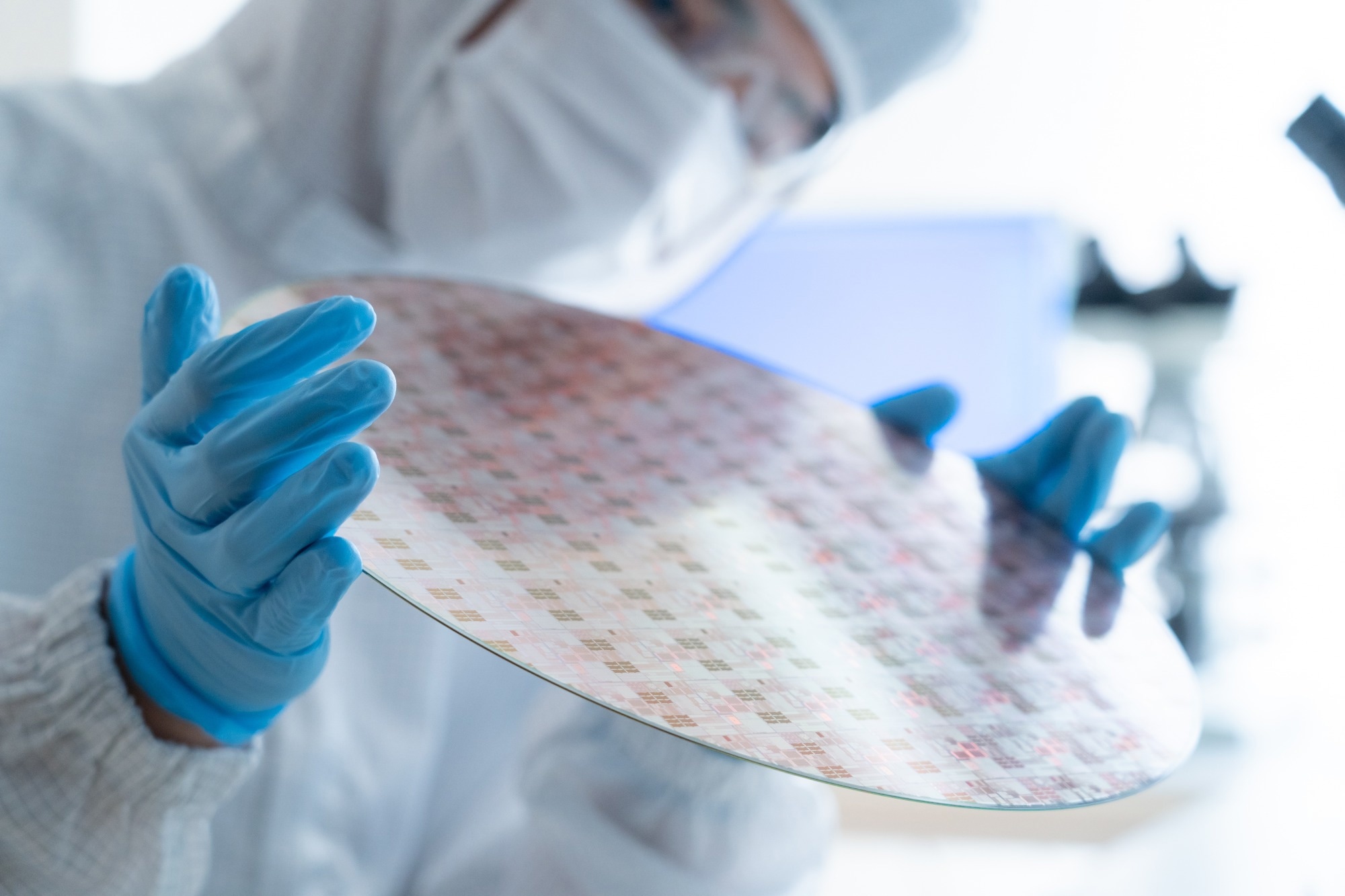
Image Credit: gentlelight/Shutterstock.com
How can the MAX-iR be used to evaluate greenhouse gas emissions and abatement performance?
Olivia Madamba: The MAX-iR uses FTIR gas analysis to measure multiple compounds within semiconductor process and exhaust streams.
Semiconductor manufacturing can involve fluorinated gases such as CF4, NF3, SF6, and other fluorocarbons, either as process gases or as byproducts. Before those gases reach the facility exhaust, abatement systems are used to destroy or remove as much fluorinated material as possible.
To understand how well that system is working, we calculate the destruction and removal efficiency, or DRE, for each gas species.
You cannot simply compare gas concentration before and after the abatement unit because the total gas flow may change significantly. Instead, we determine the inlet and outlet flow, measure gas concentrations on both sides, and use those values to calculate species-specific destruction efficiency.
What can multi-component FTIR analysis reveal that a single-gas measurement might miss?
Olivia Madamba: One of the most important findings from abatement studies is that destruction efficiency can vary significantly from one fluorinated compound to another.
In one example, C4F6 showed more than 98% destruction efficiency, whereas CF4 showed only around 17%. That means the performance of an abatement system cannot necessarily be represented accurately by a single efficiency value.
Because FTIR measures a broad spectrum, we can evaluate each fluorinated species individually and also see other components present in the exhaust.
That same full-spectrum information can also help investigate unexpected compounds. If an absorption feature appears that was not included in the original analysis method, spectral matching tools can compare it against reference libraries and suggest potential identities.
In one plasma-process example, that approach helped identify C2F4 (tetrafluoroethylene) as an unexpected reaction product.
How can the MAX-iR support both process gas purity and emissions monitoring?
Olivia Madamba: As well as exhaust monitoring, the MAX-iR can also be used to measure trace impurities directly in process gases.
One example is nitrous oxide (N2O), which is used in oxidation and thin-film deposition processes. In that application, the N2O matrix was measured while simultaneously quantifying six trace impurities: carbon monoxide, carbon dioxide, nitric oxide, nitrogen dioxide, water, and ammonia.
The advantage is that all six impurities can be measured from the same broadband spectrum rather than requiring a separate technique for each component.
The method uses selective spectral regions for each gas to maintain sensitivity while minimizing interference from the N2O matrix and from other impurities.
Under the reported conditions, detection limits across those six compounds were in the low-ppb range, demonstrating that the MAX-iR can support both multi-component monitoring and quantitative impurity analysis in a complex process gas.
Overall, how do different gas analysis techniques support semiconductor process control?
Adam Ladak: Different analytical techniques address different parts of the problem.
For ultra-high-purity bulk gases, the priority may be detecting impurities at extremely low concentrations, sometimes down to ppt. That kind of sensitivity can help identify contamination before it enters a critical semiconductor process.
Olivia Madamba: In other applications, such as process exhaust, abatement monitoring, or multi-component gas mixtures, the ability to measure a broad range of compounds simultaneously becomes equally important.
FTIR provides both qualitative and quantitative information from a single spectrum and can support process gas impurity measurements, greenhouse gas monitoring, and the identification of unexpected reaction products.
Together, these approaches provide manufacturers with more information about gas purity, process chemistry, and emissions. The overall goal is to support process stability, protect product quality, improve troubleshooting, and provide more reliable monitoring throughout semiconductor manufacturing.
Interested in this topic? Watch the full webinar here
About Adam Ladak 
Adam Ladak is the senior product manager for process monitoring at Thermo Fisher, based in the UK. Adam started his career working in a contracting testing lab analyzing sports supplements and horse feed for prohibited substances. He has over 25 years of experience in the analytical testing industry and has worked for leading instrument manufacturers in various roles from an application specialist, a global marketing role focused on food and environmental testing and a senior product manager for process monitoring. Adam is passionate about utilizing our instrumentation to meet the customer needs and solve real world problems.
About Olivia Madamba 
Olivia Madamba is an Applications Engineer with Thermo Fisher Scientific, Environmental and Process Monitoring. She has a BS in Chemical Engineering from Worcester Polytechnic Institute, with a concentration in Environmental Engineering. Olivia is an expert in OE-FTIR gas analysis solutions and specializes in both continuous emissions monitoring and ambient air quality monitoring applications.

This information has been sourced, reviewed, and adapted from materials provided by Thermo Fisher Scientific – Environmental and Process Monitoring Instruments.
For more information on this source, please visit Thermo Fisher Scientific – Environmental and Process Monitoring Instruments.
Disclaimer: The views expressed here are those of the interviewee and do not necessarily represent the views of AZoM.com Limited (T/A) AZoNetwork, the owner and operator of this website. This disclaimer forms part of the Terms and Conditions of use of this website.