The Optrode M2 is the latest photometric sensor from Metrohm, designed for fast, reliable titrations in any lab. With eight selectable wavelengths indicated by LEDs on the electrode shaft, it is compatible with a wide range of indicators and applications. Photometric titration with the Optrode M2 is the preferred solution when a potentiometric determination of the equivalence point is not possible, a simple, fast, and affordable solution is needed (compared to more expensive methods such as AAS or ICP-AES), or a standard method specifies photometric determination.
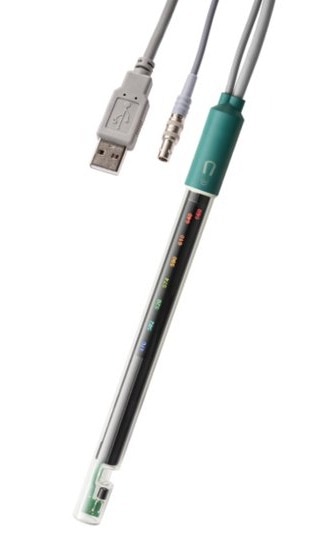 Image Credit: Metrohm Middle East FZC
The robust glass shaft of the Optrode M2 is easy to clean. It is 100 % solvent resistant and therefore ensures safe use even in corrosive or nonaqueous media. Switching between wavelengths is fast and simple: The user has to simply touch the magnet symbol on the electrode’s head with supplied magnetic stirring bar, and the next wavelength is set already.
Both new OMNIS Titrators and existing Metrohm titration systems can be used with the Optrode M2. Power is supplied directly via the USB port of a Metrohm instrument (Eco Titrator, Titrino plus, Ti-Touch, Titrando, USB sample changer). In the case of models without a USB port, power can also be supplied via an optional USB power adapter.
Typical applications include:
- Photometric titrations according to USP and EP (non-aqueous)
- Determination of the carboxyl end groups (non-aqueous)
- TAN/TBN according to ASTM D974 (non-aqueous)
- Water hardness (total hardness and Ca/Mg) according to ASTM D8192-23
Optrode M2
6.1125.000
Optical sensor for photometric titrations offering 8 different wavelengths. The wavelength can be switched using the software (tiamo 2.5 or higher) or with a magnet. The glass shaft is completely solvent-resistant and easy to clean. For example, this space-saving sensor is suitable for:Non-aqueous titrations in accordance with USP or EP; Determinations of carboxyl end groups; TAN/TBN in accordance with ASTM D974; Sulfate determination; Fe, Al, Ca in cement; Water hardness; Chondroitin sulfate in accordance with USP; The sensor is not suitable for determinations of concentrations via measurement of color intensity (colorimetry).