SUPERPAN is a research project involving BIRKA COMPOSITES, AIMPLAS and IDEKO to develop lighter, stronger and more sustainable panels for the transport sector.
The initiative aims to reduce the weight of transport structures to improve efficiency, lower energy consumption and advance towards a more sustainable model.
The project is pursuing new materials and manufacturing processes that facilitate recycling and help reduce the sector’s environmental impact.
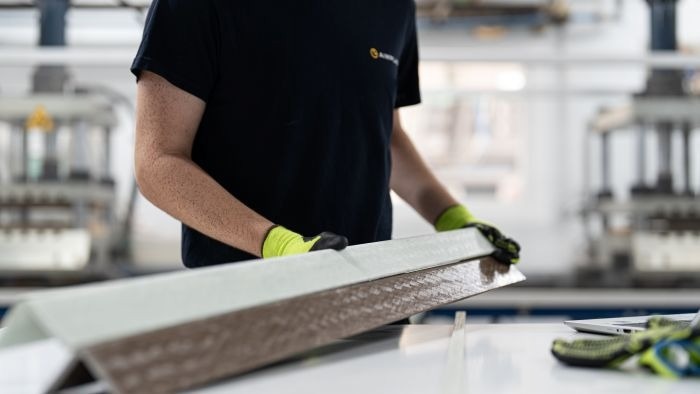 Image Credit: AIMPLAS
Reducing weight, improving energy efficiency, changing composite- production processes and advancing towards more sustainable materials have become some of the transport sector’s main challenges. SUPERPAN was created in this context to drive the development of a new generation of ultralight panels with greater recycling potential, designed for use in transport structures.
The initiative, led by BIRKA COMPOSITES with the participation of the Plastics Technology Centre, AIMPLAS, and the technology center IDEKO, aims to develop a new generation of multidirectionally reinforced panels for use in structural transport components. It combines innovation in materials with advanced manufacturing processes to obtain more efficient and sustainable solutions.
Vehicle weight is a decisive factor in reducing energy consumption and emissions. In this context, composite materials have become a strategic alternative because they offer high strength and lower weight than traditional materials such as metals.
However, current manufacturing processes still have limitations, including complexity, high cost and dependence on manual operations. SUPERPAN was created specifically to address these challenges by developing solutions that are more efficient, automated and adapted to the sector’s emerging needs.
“The aim is to advance towards more efficient materials that reduce the weight of structures without compromising safety or performance,” says Manuel Guerrero of BIRKA.
More Sustainable Materials with Greater Recycling Potential
One of the project’s main advances is its focus on materials that are easier to recycle at the end of their useful life. At present, many components used in transport are difficult to recover, creating an environmental challenge.
SUPERPAN proposes an alternative based on thermoplastic matrices, which improve the recyclability of composite materials and support the development of solutions aligned with circular-economy principles. Materials are designed and selected from a global perspective that considers the component’s entire service life and adapts established manufacturing processes that currently use thermosetting resins.
The project is also working to reduce energy consumption during manufacturing processes, further strengthening its positive sustainability impact. Juan José Gordillo, a researcher in Sustainable Mobility at AIMPLAS, notes that “incorporating recyclable materials and more efficient processes is a key step towards a more sustainable transport industry.”
Innovation in Manufacturing Processes
SUPERPAN also introduces significant advances in production processes. The project integrates automated manufacturing technologies such as dual pullbraiding (DPB), a technology patented by BIRKA, and ultraviolet (UV)-assisted curing of prepregs. These technologies improve process efficiency, reduce costs and decrease the variability associated with manual processes. Controllers are also integrated into the manufacturing line to collect process data. This automation enables products to be manufactured with greater quality control and fewer defects, while increasing productivity and scalability.
Collaboration to Drive Innovation
The project is led by BIRKA COMPOSITES and includes the participation of AIMPLAS and IDEKO, two technology centers specializing in materials and advanced manufacturing.
AIMPLAS contributes its expertise in polymer materials, recyclability, characterization and validation, as well as in the development of advanced manufacturing processes, while IDEKO contributes its knowledge of automated manufacturing technologies and industrial digitalization.
This collaboration makes it possible to address the project from a comprehensive perspective, combining scientific, technological and industrial knowledge to facilitate the transfer of results to the market. “Collaboration between companies and technology centers is essential for developing solutions that can be successfully transferred to the industrial environment,” emphasizes Francisco Javier Vallejo of IDEKO.
SUPERPAN is part of the 2023 Public-Private Partnership program, funded by the Spanish State Research Agency (AEI) and co-funded by the European Union.
Through this initiative, the project contributes to the development of a more efficient, sustainable transport industry that is ready to meet the challenges of the future.