H.E.L Group, a specialist in scientific instrumentation for chemical research, process development and safety testing, announces the TSu+, a bench-top process safety platform combining thermal and pressure hazard screening with open-cell vent characterization to support safer chemical process development.
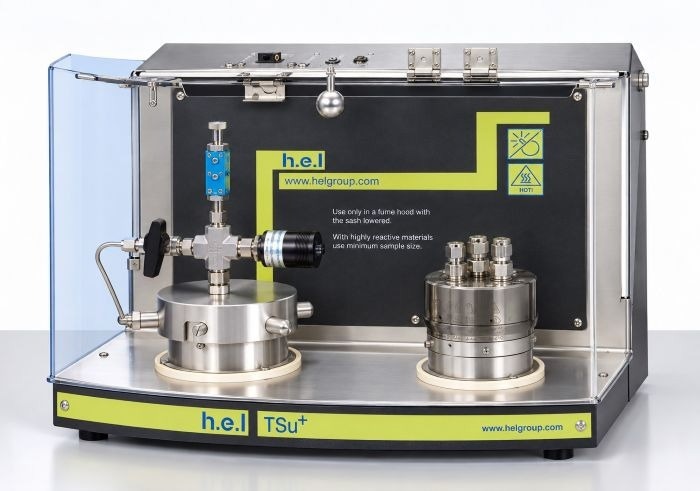 Image Credit: H.E.L Group
Assessing chemical hazards early is essential when developing reactions for industrial production. Although thermal screening can identify potentially dangerous decomposition, temperature measurements alone do not explain the associated pressure risks or how reacting materials may behave during emergency venting.
TSu+ combines H.E.L’s established Thermal Screening Unit with a dedicated open-cell vent characterization station. The screening unit uses small, representative samples to measure temperature and pressure during controlled heating, helping researchers identify decomposition onset, self-heating behavior and gas-related pressure hazards. The additional station enables researchers to investigate pressure generation and discharge behavior, including whether venting involves gas/vapor only discharge or two-phase discharge, including foam and liquid carryover.
By bringing these two complementary tests together, TSu+ enables laboratories to obtain an earlier understanding of thermal and venting hazards without moving immediately to more extensive testing. These results help guide further safety testing and inform pressure relief system design, although additional testing and engineering analysis remain necessary for final relief-system sizing.
Dr Jasbir Singh, Managing Director, H.E.L Group, commented: “TSu+ is an important addition to our process safety range, giving researchers a way to investigate both thermal hazards and venting behavior in one instrument, helping them identify where further safety testing is needed.”
Building on the established TSu platform, TSu+ is intended for chemical and pharmaceutical laboratories investigating thermal stability, decomposition and pressure-related hazards during process development. Its combination of screening and vent characterization provides information to guide further testing and support safer scale-up decisions.
Key Technical Specifications
The thermal screening station accommodates sample volumes typically between 0.5 and 10 mL and operates at temperatures up to 500 °C and pressures upto 100 bar. The vent characterization station operates at temperatures up to 250 °C.