
This webinar addresses a critical challenge in advanced semiconductor manufacturing: how to identify airborne molecular contaminants (AMCs) in real time across all chemical classes and at ultra-low levels.
As semiconductor nodes approach single-digit nanometers, airborne molecular contamination becomes a major concern, affecting yield and process stability.
Traditional monitoring methods often rely on delayed lab analysis or narrowly focused sensors, making it difficult to meet the needs for sensitivity, speed, and broad chemical coverage in current fabs.
This webinar will introduce TOFWERK's comprehensive AMC monitoring platform: AMC Solutions.
These modern instruments, which use chemical ionization time-of-flight mass spectrometry (CI-TOFMS), can detect pptv in real time and in single digits across all main AMC classes, including acids, bases, condensable organics, hydrocarbons, and new pollutants like PFAS.
The webinar will look at how this technology shifts contamination control from reactive to proactive, providing actionable information right when and where it is needed.
Webinar Highlights
This on-demand webinar will discuss:
- How CI-TOFMS works: A practical overview of CI-TOFMS, including ionization, reagent ions, polarity switching, and high-resolution mass analysis
- Performance and detection capabilities: Performance and detection capabilities include sensitivity (pptv-ppqv), reaction times, compound coverage, and quantification methods
- Practical considerations: Practical aspects include sample configurations (manifold or point-of-use), line losses, humidity effects, and calibration methods
- TOFWERK’s AMC Solutions: These include the TOFWERK AMC Monitor, which enables real-time monitoring across various fab environments
- Application examples: Real-world applications include monitoring, point-of-use (POU) deployment, FOUP screening, and detection of emerging pollutants, including PFAS and off-gassing materials.
Presenter
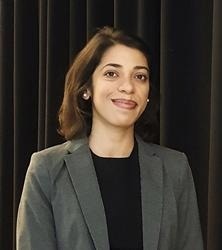
Dr. Priyanka Bansal is an Application Scientist at TOFWERK in Thun, Switzerland. She holds a Ph.D. in Chemistry and Chemical Engineering from the Swiss Federal Institute of Technology Lausanne (EPFL), where she worked on creating novel analytical methods for biomolecule analysis employing advanced spectrometry and spectroscopy techniques.
She is currently focused on the application development and execution of chemical ionization time-of-flight mass spectrometry (CI-TOF-MS) technology in several industries, particularly airborne molecular contamination (AMC) monitoring systems for semiconductor companies.