A recent study saw the Thermo Scientific™ K-Alpha™ X-ray Photoelectron Spectrometer (XPS) System employed in an investigation into a tarnished aluminum component. X-ray photoelectron spectroscopy (XPS) enabled the identification and quantification of chemical differences between optically distinct areas on the sample under investigation.
As automotive engineering increasingly relies on lightweight metals such as aluminum, the integrity of these materials has become central to both performance and safety. Whether used in body panels, structural supports, EV battery housings, braking components, or thermal systems, metallic surfaces must endure harsh environments without compromising function. Diagnosing the earliest signs of corrosion or surface degradation is therefore a critical part of ensuring long-term reliability - and this is where modern X-ray photoelectron spectroscopy (XPS) offers remarkable advantages.
Today’s XPS systems are designed for rapid, intuitive operation, making it possible to uncover chemical-state information at the top few nanometers of a metal surface with impressive speed. Modern systems enable operators to load a component onto a sample platter, select points of interest directly through live camera views, and immediately begin surface analysis without needing advanced spectroscopy expertise. Even intricate workflows - such as analysing survey scans, choosing high-resolution spectral scans, and performing full peak deconvolution - can be executed through streamlined software tools. This level of accessibility allows automotive engineers to focus on solving material problems rather than managing instrument complexity.
XPS sample analysis can be a complex process that requires highly skilled operators able to correctly load samples, acquire data, and interpret results. The K-Alpha surface analysis system allows researchers to leverage this powerful analytical technique via a unique combination of intuitive software and user-friendly hardware design, without compromising performance or information content.
The Thermo Scientific Avantage software is used to control the K-Alpha system, managing all aspects of sample analysis. Sample loading, navigation, and analysis alignment are quick and easy thanks to safe sample transfer protocols and a point-and-shoot user interface via live camera views.
Method
In a recent evaluation of a tarnished aluminum component, the XPS workflow revealed how chemical differences across regions with different appearances correlated directly with surface condition. After mounting the sample and selecting points on the metal through a visual interface, the system captured wide-range survey spectra capable of identifying all detectable surface elements. These surveys are critical in automotive investigations because unexpected contaminants - such as residues from lubricants, cutting fluids, road salts, or particulate deposition - often initiate performance issues. Once the initial spectra were processed, automated processing tools identified and measured peaks to produce an elemental quantification table, providing a clear comparison between the visually distinct surface regions.
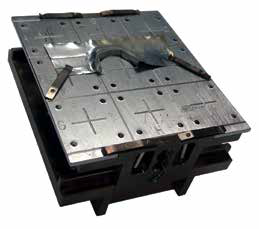
Figure 1. Picture of the aluminum sample mounted on the K-Alpha sample block. Image Credit: Thermo Fisher Scientific – Electron Microscopy Solutions
The results were striking. The shiny and grey areas shared nearly identical chemistries, differing only slightly in their carbon and oxygen levels, which can arise from minor environmental exposure or handling. The brown region, however, exhibited more than 10% Fe2O3 along with an elevated amount of ZnO - clear indicators of localized corrosion or contamination. Because these compounds formed at the surface, they attenuated the aluminum signal beneath, allowing the software to calculate the oxide layer’s thickness using a simple two-layer model. The iron oxide film was measured at approximately 1.5 nm, a subtle but significant alteration capable of affecting performance if found on critical automotive components.
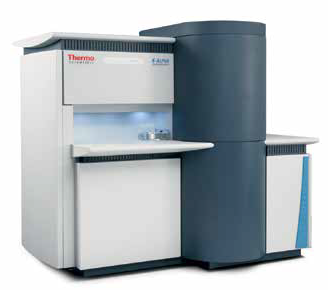
Thermo Scientific K-Alpha XPS. Image Credit: Thermo Fisher Scientific – Electron Microscopy Solutions
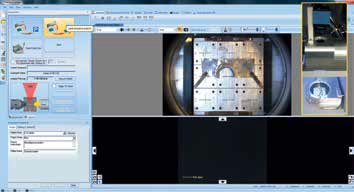
Figure 2. Screenshot of the platter image acquisition, with inlay of the platter view camera configuration. Image Credit: Thermo Fisher Scientific – Electron Microscopy Solutions
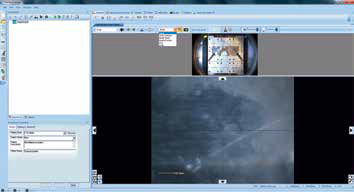
Figure 3. Screenshot of inserting a “Point”. Image Credit: Thermo Fisher Scientific – Electron Microscopy Solutions
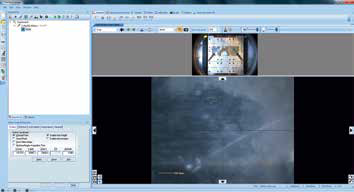
Figure 4. Screenshot after inserting a “Point”. Image Credit: Thermo Fisher Scientific – Electron Microscopy Solutions
This type of insight is invaluable across the automotive value chain. Surface chemistry controls how metals interact with coatings, adhesives, lubricants, and electrical interfaces. A thin oxide variation can influence paint adhesion on body panels, bonding strength in EV battery enclosures, or conductivity in harness connectors. In the context of corrosion, even slight increases in iron or zinc oxide can point to galvanic interactions, cross-contamination during production, or environmental stressors that require remediation. With XPS providing a direct chemical explanation, engineers can recommend targeted improvements to cleaning steps, surface preparation protocols, material pairings, or environmental protections.
Another advantage of this modern XPS workflow is its capacity for multi-point, automated analysis. Engineers can map several regions across a large or complex component - such as an aluminum casting, bracket, or connector plate - allowing patterns of degradation or contamination to be identified quickly. The instrument can also compile the processed data into ready-to-use reports, supporting both internal investigations and communication with suppliers. For a manufacturing sector driven by tight timelines and high reliability requirements, this combination of speed and precision enhances decision-making during both development and failure analysis.
Conclusion
Table 1 features a comparison of the chemical state quantification for all three analysis points.
Table 1. Full chemical state quantification for all three analysis points. Source: Thermo Fisher Scientific – Electron Microscopy Solutions
| Name |
Shiny Area At. % |
Grey Area At. % |
Brown Area At. % |
| Al2p Al2O3 |
20.11 |
21.38 |
8.64 |
| Si2p SiO2 |
0.36 |
0.23 |
0.60 |
| S2p sulfate |
0.60 |
0.40 |
0.23 |
| Cl2p organic |
0.25 |
0.32 |
0.46 |
| C1s C-C/C-H |
17.78 |
9.51 |
11.88 |
| C1s C-O |
11.43 |
13.36 |
10.31 |
| C1s C=O |
3.01 |
2.70 |
2.63 |
| N1s organic |
0.75 |
0.55 |
0.59 |
| O1s |
45.10 |
51.08 |
53.57 |
| Fe2p Fe2O3 |
0.27 |
0.18 |
10.14 |
| Zn2p3/2 ZnO |
0.16 |
0.18 |
0.82 |
| Na1s |
0.18 |
0.12 |
0.14 |
Ultimately, advanced XPS surface analysis is helping automotive companies achieve a deeper understanding of material behavior at the microscopic level. By exposing subtle chemical shifts that precede mechanical failure or corrosion, the technique supports the development of more durable components, improves quality assurance processes, and contributes to longer-lasting vehicles - an increasingly important goal as electrification, lightweighting, and performance demands continue to redefine the industry.
Summary
The examples presented here highlight the use of the K-Alpha XPS system in the rapid, simple, and reliable analysis of points of interest on the surface of a sample thanks to its user-friendly experiment setup interface and integrated data-processing tools.
Acknowledgments
Produced from materials originally authored by Chris Baily and Tim Nunney from Thermo Scientific.
Download Thermo Scientific's Automotive eBook

This information has been sourced, reviewed and adapted from materials provided by Thermo Fisher Scientific – Electron Microscopy Solutions.
For more information on this source, please visit Thermo Fisher Scientific – Electron Microscopy Solutions.