As global concerns about water quality grow, protecting this vital resource becomes increasingly important. Water quality has a wide-ranging impact on our lives, including food systems, the environment, and personal health.
Unfortunately, issues such as population growth, intensive farming practices, and industrial waste have affected the cleanliness of our water sources.2 To address these issues, Hamamatsu Photonics has recently developed improved UV spectrometers that provide novel solutions for water quality control.
Water quality monitoring is most noticeable in two areas: environmental monitoring and drinking water quality monitoring.
Environmental Monitoring
When a body of water becomes overly enriched in nutrients such as nitrogen and phosphorus due to human activity, the resulting decrease in oxygen levels kills aquatic life. This presents a challenge to conservation efforts and our food supply.1,2
Monitoring wastewater quality serves two purposes: detecting pollution early and ensuring compliance with treatment facility requirements.7
Hospitals and pharmaceutical facilities, for example, produce significant amounts of concentrated antibiotic effluent, which must be treated and tested before it is released into the environment.1,14
Drinking Water Monitoring
Water utilities are committed to meeting drinking-water standards, which are often based on the World Health Organization's drinking water quality criteria.
Water quality monitoring and treatment are two critical components of water quality management systems that detect risks and events that may jeopardize its quality and provide operational control to ensure safe, reliable drinking water as preventive measures.3
Conventional Methods for Water Analysis
When monitoring water quality, a routine sampling program is commonly used, which involves collecting and transporting water samples to a laboratory for analysis.
This technique, however, only partially explains water quality over time and may fail to capture short-term variations. Furthermore, laboratory feedback is sometimes delayed, making it difficult to respond swiftly to potential water accidents.4
Currently, methods for monitoring water quality criteria include chemical, biological, and physical approaches.5 Titration analysis and electrochemical analysis are the two most used chemical procedures for determining pollutant concentrations in the laboratory.
These approaches necessitate significant amounts of expensive equipment and reagents, which can lead to secondary contamination.
Biological approaches use enrichment analysis and biosensor technologies, but have poorer accuracy and sensitivity than other procedures. Chemical and biological procedures also do not produce real-time findings.6
UV-Vis Spectroscopy for Online Water Monitoring
Physical approaches, on the other hand, rely on spectral remote sensing technology in the ultraviolet and visible wavelengths. In fact, UV-Vis spectrophotometry is based on the relationship between a substance's absorption of specific wavelengths of light and its concentration.8
Because of software particle adjustment, spectrophotometry does not require sample filtering, is reagent-free, and enables real-time observations of water quality. This method has become increasingly popular for quick water-quality testing in recent years.6
Color, nitrate, Depleted Oxygen Content (DOC), Total Oxygen Content (TOC), and the spectral absorption coefficient SAC254 (also known as UV254) are common characteristics that can be assessed with UV-Vis spectrophotometers.
In recent years, additional parameters have been added to water quality monitoring utilizing online UV-Vis spectrophotometers,8 such as dissolved organic matter,9 chemical oxygen demand (COD) in water bodies,10 and disinfectant in drinking water.11
Single-Wavelength and Multiwavelength Detectors
There are two primary types of spectral sensors used in water analysis: single wavelength (SW) sensors and spectrophotometers.
SW sensors typically comprise a bandpass-filtered single photodetector (Silicon Photodiode or Avalanche Photodiode) and a light source that shines at the desired wavelength and is absorbed by the substance to be detected.
Spectrophotometers employ a broadband light source, a diffractive grating that divides light into wavelength components, and delivers the light to a linear-array photodetector.
Online SW UV-Vis equipment can calculate the concentration of a given water parameter (usually UV254, nitrate, or nitrite) from a single wavelength absorbance measurement.12
In contrast, UV-Vis spectrophotometers measure the absorbance at specific wavelengths. These sensors provide spectral fingerprints that are used to calculate concentrations of water-quality parameters using the instrument's built-in algorithms.13
In general, when comparing the performance of full-spectrum and SW sensors, the latter can record parameter variations over time but may not accurately compensate for particle effects, particularly when compared with typical laboratory techniques and tests.
In contrast, spectrophotometers give better particle correction and may be adjusted to specific locations with greater accuracy. They are better suited for precise applications, such as real-time monitoring of water and treatment processes.13
Introducing Hamamatsu’s Latest Compact UV Spectrometers for Real-Time Water Quality Monitoring
Hamamatsu Photonics presents its new, unique UV-Vis spectrometer, designed to meet the demands of current water quality monitoring. This cutting-edge solution effortlessly combines advanced technology with practicality, delivering precise, efficient real-time analysis.
Key Features and Advantages
Ideal Wavelength Range
Hamamatsu’s UV-Vis spectrometers are exceptionally sensitive across a wavelength range of 190 to 400 nm. This broad coverage enables an accurate assessment of essential water quality parameters, providing a thorough understanding of water composition.
Unmatched Compact Design
Hamamatsu’s spectrum sensors' distinctive compact form factor makes them ideal for smooth integration into miniature and handheld equipment. In addition, these sensors may be easily integrated directly into water pipelines, demonstrating their versatility and ease of deployment.
Exceptional Dynamic Range
Hamamatsu's UV spectrometers have an exceptional dynamic range, providing accurate measurements even in dynamic environments. This outstanding feature makes them ideal for reliable operation in outdoor environments where variations are unavoidable.
Enhanced Signal-to-Noise Ratio (SNR)
Hamamatsu's new UV spectrometer can attain an astounding SNR of up to 20,000. This extraordinary feature enables early detection of even the most subtle changes in water quality, enabling proactive warnings and prompt corrective actions.
Precise Stray Light Suppression
Hamamatsu's UV spectrometers are much more accurate since crosstalk between different wavelength readings is thoroughly controlled. This design element guarantees that measurements are reliable and consistent, which is crucial for meaningful analysis.
The UV-Vis Spectrometer Series: Tailored to Your Needs
Hamamatsu Photonics provides a range of compact UV-Vis spectrometers that are precisely designed to meet the needs of different applications. The C16767MA Mini-spectrometer head is Hamamatsu’s most recent product.
New C16767MA Mini-Spectrometer Head
The spectral head model provides the most compact yet powerful device for scenarios that demand portability and efficiency. Its streamlined design encapsulates advanced capabilities in a small form factor, making it ideal for direct installation in water pipes or complex monitoring systems.
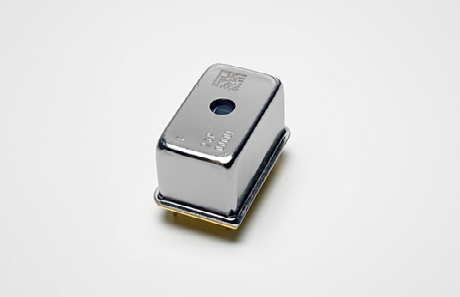
Image Credit: Hamamatsu Photonics Europe
C16767MA Fingertip Size
- Size: 20.1 × 12.5 × 10.1 mm
- Weight: 5 g
- Spectral response range: 190 to 440 nm
- High sensitivity
- Spectral resolution: 5.5 nm (Typ.)
- Stray light suppression: -25 dB
- Supports synchronized integration (electronic shutter function)
- For integration into mobile measurement equipment
- The wavelength conversion factor is listed on the final inspection sheet
Navigating the Future of Water Quality with UV Technology
Hamamatsu's cutting-edge UV spectrometers offer an important solution to the world's rising water-quality challenges. These spectrometers address a wide range of challenges, from nutrient imbalances that endanger aquatic ecosystems and food sources to ensuring compliance with strict drinking water requirements.
Unlike traditional methods that require delayed responses, Hamamatsu's compact UV spectrometers use real-time UV spectroscopy to measure water quality, with sensitivity from 190 to 400 nm, seamless integration, unrivaled dynamic range, improved signal-to-noise ratios for early detection, and precise measurements via stray-light suppression.
The new Hamamatsu small UV spectrometer series is more than just instrumentation; it represents a commitment to improving water-quality management and ensuring the cleanliness of our vital water supplies.
References
- Chapin, F.S., Matson, P.A. and Vitousek, P.M. (2011). Principles of Terrestrial Ecosystem Ecology. (online) New York, NY: Springer New York. DOI: 10.1007/978-1-4419-9504-9. https://link.springer.com/book/10.1007/978-1-4419-9504-9.
- Chaminé, H.I. (2015). Water resources meet sustainability: new trends in environmental hydrogeology and groundwater engineering. Environmental Earth Sciences, 73(6), pp.2513–2520. DOI: 10.1007/s12665-014-3986-y. https://link.springer.com/article/10.1007/s12665-014-3986-y
- Shi, Z., et al. (2022). Applications of Online UV-Vis Spectrophotometer for Drinking Water Quality Monitoring and Process Control: A Review. Sensors, 22(8), p.2987. DOI: 10.3390/s22082987. https://www.mdpi.com/1424-8220/22/8/2987.
- Banna, M.H., et al. (2014). Online Drinking Water Quality Monitoring: Review on Available and Emerging Technologies. Critical Reviews in Environmental Science and Technology, 44(12), pp.1370–1421. DOI: 10.1080/10643389.2013.781936. https://www.tandfonline.com/doi/abs/10.1080/10643389.2013.781936.
- Briciu, A.-E., Graur, A. and Oprea, D.I. (2020). Water Quality Index of Suceava River in Suceava City Metropolitan Area. Water, 12(8), p.2111. DOI: 10.3390/w12082111. https://www.mdpi.com/2073-4441/12/8/2111.
- Pashkova, G.V. and Revenko, A.G. (2015). A Review of Application of Total Reflection X-ray Fluorescence Spectrometry to Water Analysis. Applied Spectroscopy Reviews, 50(6), pp.443–472. DOI: 10.1080/05704928.2015.1010205. https://www.tandfonline.com/doi/abs/10.1080/05704928.2015.1010205.
- Carstea, E.M., et al. (2016). Fluorescence spectroscopy for wastewater monitoring: A review. Water Research, 95, pp.205–219. DOI: 10.1016/j.watres.2016.03.021. https://linkinghub.elsevier.com/retrieve/pii/S0043135416301488.
- Guo, Y., et al. (2020). Advances on Water Quality Detection by UV-Vis Spectroscopy. Applied Sciences, (online) 10(19), p.6874. DOI: 10.3390/app10196874. https://www.mdpi.com/2076-3417/10/19/6874?utm_source=researchgate.net&utm_medium=article.
- Li, P. and Hur, J. (2017). Utilization of UV-Vis spectroscopy and related data analyses for dissolved organic matter (DOM) studies: A review. Critical Reviews in Environmental Science and Technology, 47(3), pp.131–154. DOI: 10.1080/10643389.2017.1309186. https://www.tandfonline.com/doi/full/10.1080/10643389.2017.1309186.
- Liu, F., et al. (2016). A Review on Optical Measurement Method of Chemical Oxygen Demand in Water Bodies. IFIP Advances in Information and Communication Technology, pp.619–636. DOI: 10.1007/978-3-319-48357-3_60. https://link.springer.com/chapter/10.1007/978-3-319-48357-3_60.
- Hossain, S., et al. (2020). Spectrophotometric Online Detection of Drinking Water Disinfectant: A Machine Learning Approach. Sensors, 20(22), p.6671. DOI: 10.3390/s20226671. https://www.mdpi.com/1424-8220/20/22/6671.
- van, Günter Langergraber and Weingartner, A. (2006). On-line and in situ UV/vis spectroscopy for multi-parameter measurements: A brief review. Spectroscopy Europe, (online) 18(4), pp.S3–S4. Available at: https://www.researchgate.net/publication/289737282_On-line_and_in_situ_UVvis_spectroscopy_for_multi-parameter_measurements_A_brief_review.
- Shi, Z., et al. (2020). Alternative particle compensation techniques for online water quality monitoring using UV–Vis spectrophotometer. Chemometrics and Intelligent Laboratory Systems, 204, p.104074. DOI: 10.1016/j.chemolab.2020.104074. https://www.sciencedirect.com/science/article/abs/pii/S0169743919303934?via%3Dihub.
- Li, F., et al. (2022). Detection Limits of Antibiotics in Wastewater by Real-Time UV–VIS Spectrometry at Different Optical Path Length. Processes, (online) 10(12), p.2614. DOI: 10.3390/pr10122614. https://www.mdpi.com/2227-9717/10/12/2614?utm_source=researchgate.net&utm_medium=article.
- Hamamatsu Photonics. (2025). Products | Hamamatsu Photonics. (online) Available at: https://www.hamamatsu.com/eu/en/product/.

This information has been sourced, reviewed and adapted from materials provided by Hamamatsu Photonics Europe.
For more information on this source, please visit Hamamatsu Photonics Europe.