From thick electrodes to AI-guided designs, researchers show how 3D printing could turn battery manufacturing from a flat, process-limited system into a design-driven platform for next-generation energy storage.
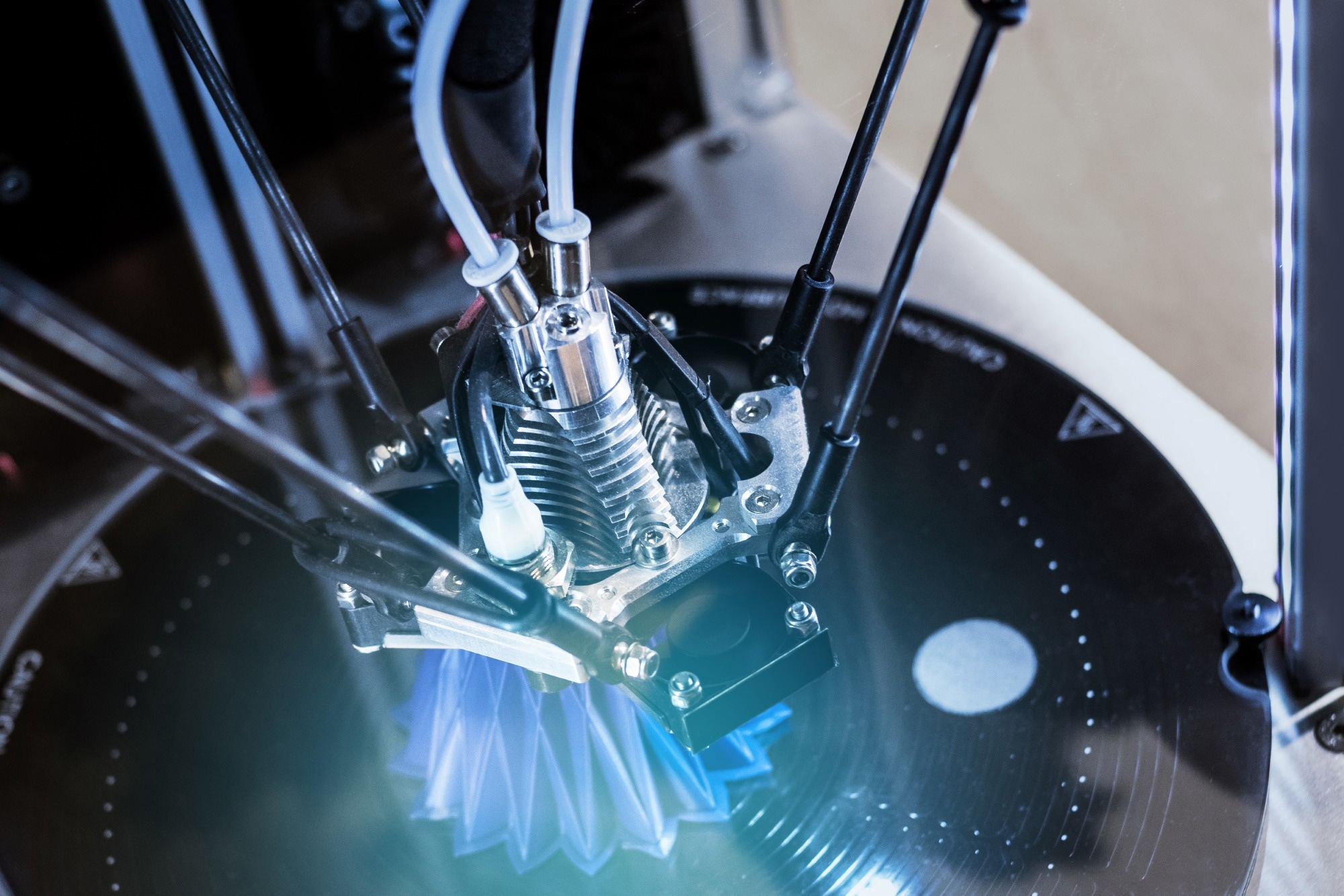
3D printing in lithium battery manufacturing: Opportunities, challenges, and perspectives. Image Credit: BLACKDAY / Shutterstock
The global energy sector is rapidly shifting toward advanced electrochemical storage, with the lithium battery market projected to grow from USD 44.5 billion in 2025 to USD 135.1 billion by 2031. A review published in the journal Materials Science and Engineering: R: Reports comprehensively examined how three-dimensional (3D) printing is transforming the next generation of energy storage manufacturing. The authors analyzed how additive manufacturing can overcome the limitations of conventional fabrication by controlling electrode porosity, solid-electrolyte interfaces, and current-collector architectures.
The review highlighted evidence that digitally designed microstructures can improve practical storage capacity while reducing transport limitations. Additionally, the study highlighted the use of Artificial Intelligence (AI) and closed-loop approaches that could support future optimization of material properties and manufacturing conditions during production, thereby supporting the development of more compact and safer battery systems.

Projected target years for different countries to achieve net-zero emissions under the 2 °C and 1.5 °C scenarios, including CO2 emissions, CO2 emissions from fossil fuels and cement (energy and industrial processes), and total greenhouse gas emissions
Limitations of Conventional Battery Manufacturing
The transition toward clean energy storage depends heavily on improving the performance of active materials in lithium-based batteries. Conventional lithium-ion battery manufacturing primarily employs two-dimensional (2D) methods, such as roll-to-roll slot-die slurry coating, drying, winding, and stacking, which impose geometric constraints on electrode design.
When electrode thickness exceeds 300 micrometers to increase energy density, solvent evaporation during drying can cause binder migration and mechanical cracking, thereby reducing active material utilization. To overcome these limitations, scientists are exploring 3D printing as an alternative. Additive manufacturing enables controlled internal porosity and multiscale architectures that improve ion transport even at higher material loadings.
Digital Layered Manufacturing and Computational Controls
This review examined several additive manufacturing methods based on feedstock properties and printing mechanisms. It evaluated material extrusion techniques such as Direct Ink Writing (DIW) and Fused Deposition Modeling (FDM), as well as light-based photopolymerization methods such as Stereolithography (SLA), Digital Light Processing (DLP), and Two-Photon Polymerization. Metal powder bed technologies, such as Laser Powder Bed Fusion (LPBF), were also studied for the production of current collectors and structural frameworks.
The review emphasized the role of software and data-driven systems in optimizing material processing. Instead of relying only on conventional methods, the authors discussed Machine Learning (ML) models, including Gaussian Process Regression and Gradient Boosting Decision Trees, to predict interactions between binders, conductive additives, and active materials. Generative approaches, such as deep learning networks, were combined with optimization techniques to simulate 3D structures and support automated design before fabrication. Additionally, specialized slicing software was employed to control voxel-level deposition of functional composites on curved and irregular surfaces.
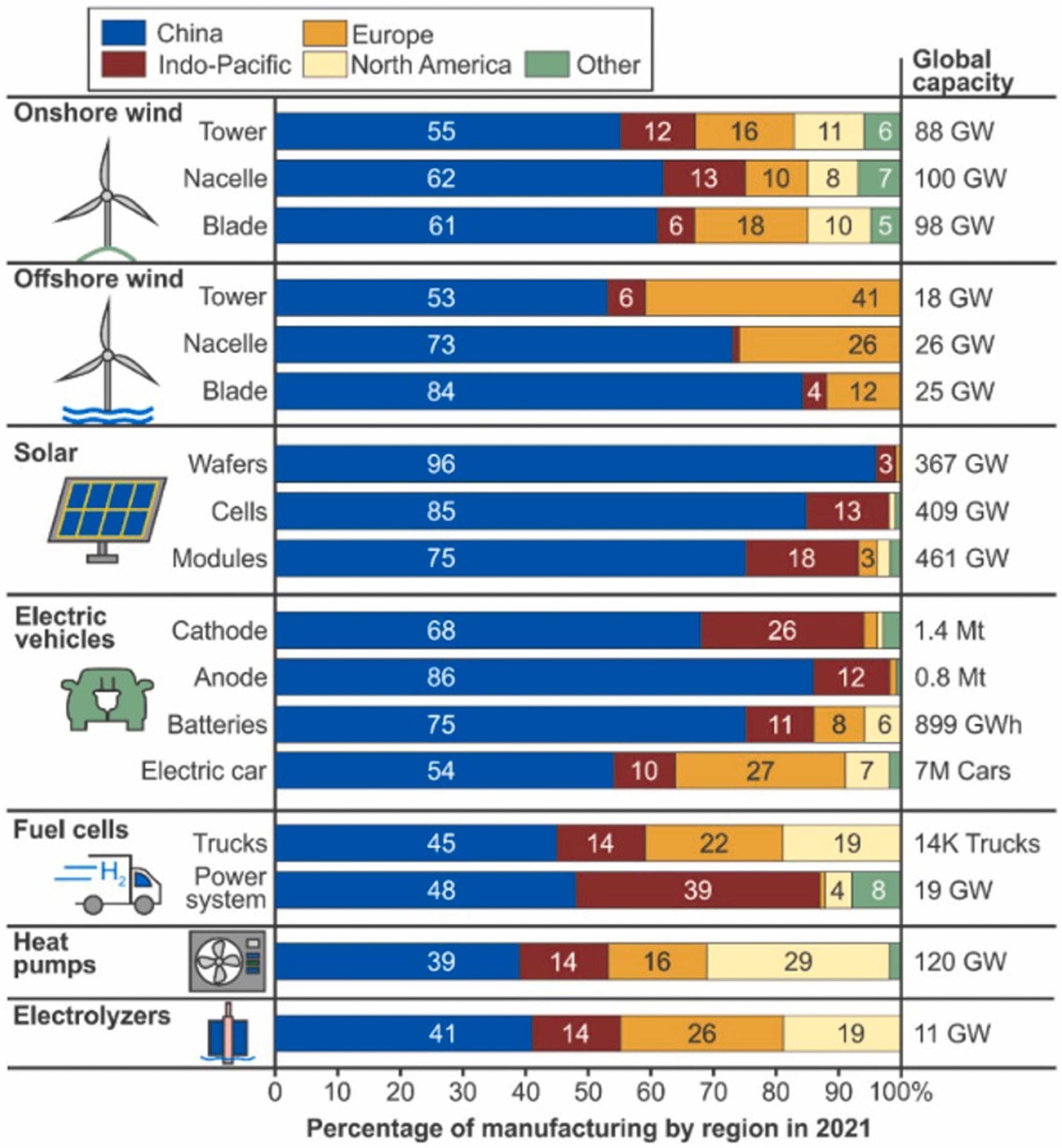
Share of green energy technologies in different countries, illustrating the relative contributions of renewable energy sources to national energy structures
Enhancing Performance Through Structural Design
The reviewed evidence suggested that 3D electrode architectures can significantly improve electrochemical performance. Designs such as gyroid copper collectors and honeycomb solid electrolytes increased the electrochemically active surface area and reduced charge transfer resistance. Reviewed studies reported lithium iron phosphate (LiFePO4) cathodes with thicknesses up to 1500 micrometers while maintaining 80% to 90% active material use.
Computational optimization proved effective for balancing high material loading with printing stability. AI-based predictive approaches have been used to guide the formulation of stable pastes with ceramic solid loadings exceeding 70 weight percent. Optimized microstructures reduced stress concentration and balanced local current density across interfaces, thereby supporting more uniform lithium metal deposition and suppressing dendrite formation. Some reviewed 3D architectures achieved stable dendrite-free cycling over hundreds of hours. Furthermore, 3D X-ray computed tomography confirmed strong pore connectivity within the printed structures.
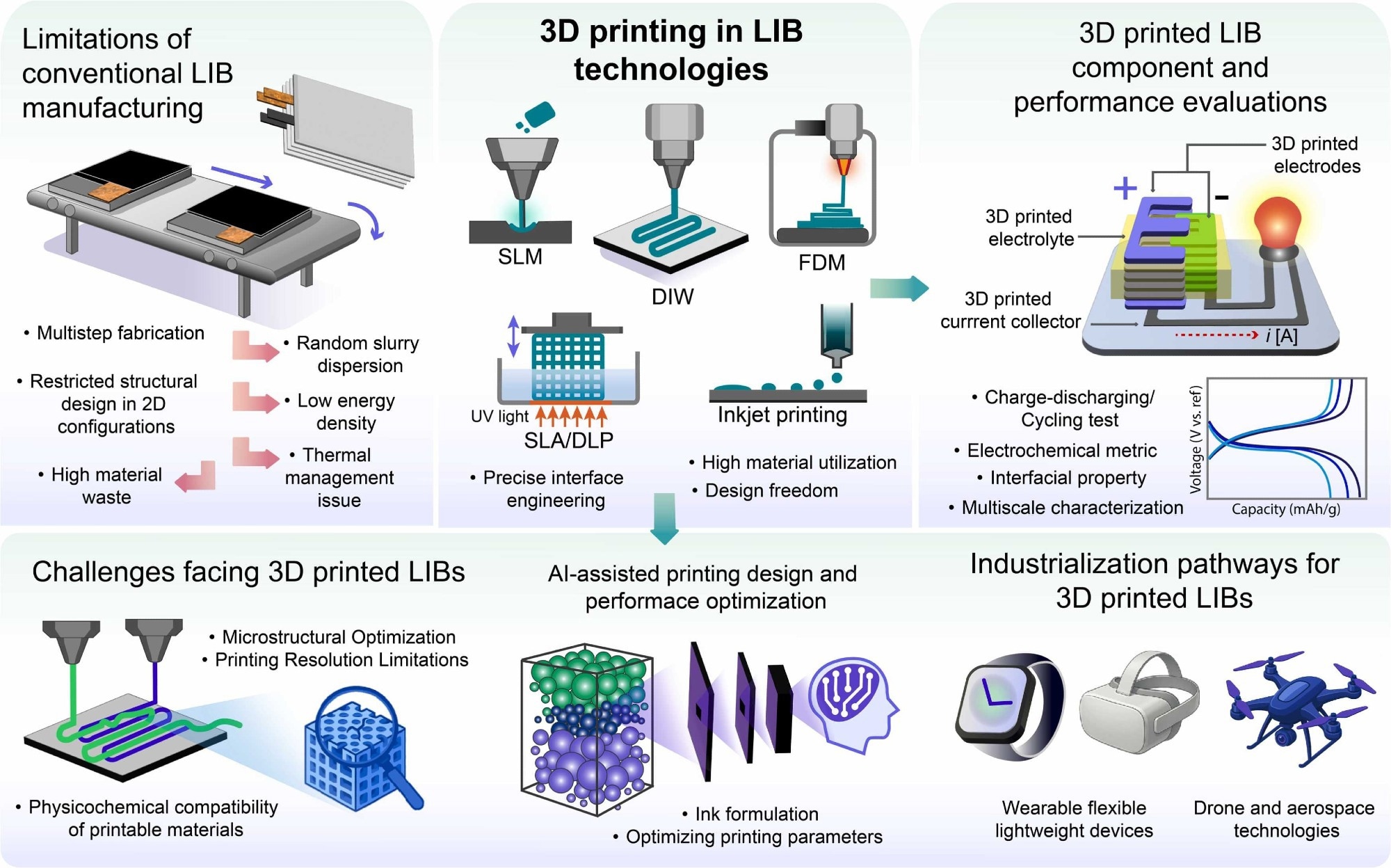
Overview of the design, technologies, challenges, and industrialization pathways of 3D-printed lithium-ion batteries (LIBs).
Implications of 3D-Printed Energy Storage
The design flexibility provided by advanced additive manufacturing allows energy storage systems to be integrated into specialized applications. In wearable electronics, biomedical devices, and virtual reality hardware, 3D printing enables the fabrication of shape-conformal microbatteries that fit complex geometries. These batteries often use flexible materials that can tolerate bending and twisting without losing electrical connectivity.
The aerospace, drone, and defense industries are also applying these technologies to produce structural battery housings that serve as both energy storage units and mechanical supports, thereby reducing overall weight. Printed thermal-management components may help improve heat control and safety, although further multi-physics testing is needed before practical deployment.
Toward Intelligent Manufacturing for Energy Storage
In summary, the transition from conventional fabrication to additive manufacturing marks a significant shift from process-limited production to design-driven engineering. By converting transport limitations into controllable design parameters, additive manufacturing enables simultaneous optimization of ionic transport, electronic conductivity, and mechanical stability.
Future progress will depend on scaling multi-material printing techniques and developing open-access materials informatics databases. The integration of AI with automated manufacturing systems could support real-time error correction during production. The authors suggest this digital transformation may allow 3D printing to evolve into a sustainable manufacturing platform for next-generation solid-state energy storage systems.
Download your PDF copy by clicking here.
Disclaimer: The views expressed here are those of the author expressed in their private capacity and do not necessarily represent the views of AZoM.com Limited T/A AZoNetwork the owner and operator of this website. This disclaimer forms part of the Terms and conditions of use of this website.