In this interview, AZoM speaks with Richard Gedney, Founder and CEO of ADMET, about materials testing, diagnostic sales processes, and the delivery of tailored testing solutions for modern applications.
Can you please introduce yourself and your role at ADMET?
I’m Richard Gedney, Founder and CEO of ADMET. Our company manufactures materials testing systems that help companies qualify and certify their materials and products. It also helps researchers with tools to develop new materials and therapies.
I founded the company in 1989 after completing my master’s in Engineering. At the time, I was working on a project to retrofit an older testing machine with a PC-based servo controller that I had developed. That experience highlighted a clear market gap for more advanced, software-driven testing systems, and ultimately led me to establish ADMET. Since then, the company has grown steadily and expanded into a wide range of testing solutions.
What are your main responsibilities as CEO of ADMET?
Day to day, I work across multiple areas of the business. I collaborate closely with the operations team on production scheduling to ensure we are meeting delivery commitments, and I support the sales team in defining appropriate testing solutions and generating detailed quotes.
I also oversee our engineering and software development teams, which are key to maintaining our technical edge. At the moment, a significant portion of my focus is on completing our next-generation PC-based software and controller, which we expect to release later this year.
Why are software and controllers so critical in modern materials testing systems?
The software and controller are the core of any modern materials testing system because they define how the user interacts with the equipment and how accurately the system performs.
With our next-generation controller, we are aiming to expand our fatigue testing capabilities, our post test reporting capabilities, improve the precision of measurement and control loops, and deliver a more intuitive, modern Windows-based interface. These improvements enhance usability and ensure more reliable and repeatable test results, which are critical for both industrial and research applications.
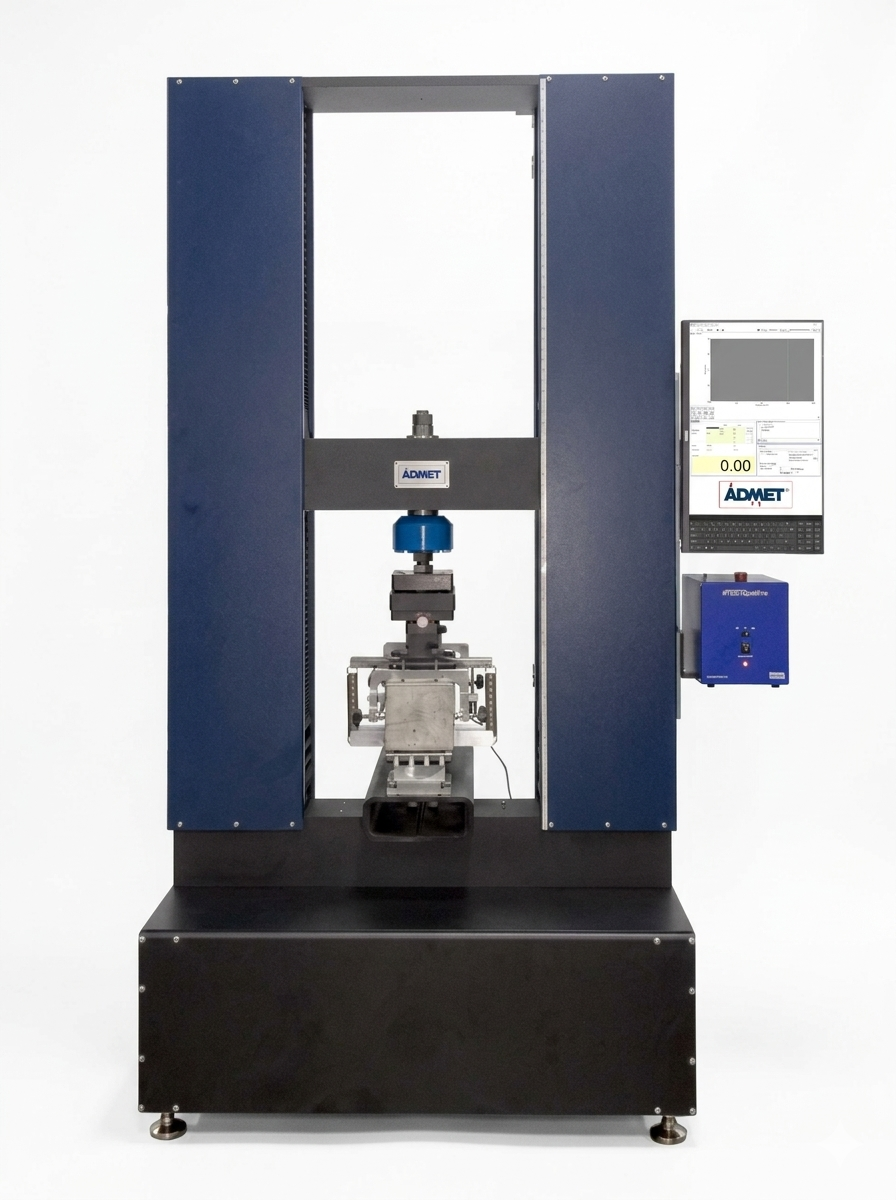
ADMET eXpert 2657 300kN Universal Testing Machine equipped with the specified bend fixture for performing ASTM C1609 Standard Test Method for Flexural Performance of Fiber-Reinforced Concrete. Image Credit: ADMET
ADMET emphasizes a diagnostic sales process. What does this approach involve?
We formalized our diagnostic sales process around 15 years ago to bring more structure and consistency to how we engage with customers. It consists of four key stages: discovery, diagnosis, design, and delivery.
The discovery stage focuses on gathering initial information about the customer’s needs, often through website inquiries or direct communication. From there, we move into the diagnosis stage, the most important part of the process, where we work to fully understand the customer’s application.
What kind of information do you gather during the diagnosis stage?
During the diagnosis stage, we aim to build a complete picture of the customer’s requirements. This includes identifying decision-makers, understanding their expectations for return on investment, and reviewing any current testing processes they may already have in place.
We also go into significant technical depth, discussing sample sizes, material types, relevant ASTM or ISO standards, required force capacities, fixturing needs, and any safety considerations. In addition, we assess timelines, budget constraints, and even whether they are evaluating other vendors.
How does this diagnostic approach influence the design of your testing systems?
Once we have gathered all the necessary information, we move into the design stage, where our sales and engineering teams collaborate to develop the most appropriate solution.
At this point, we also define the validation procedures to confirm that the system meets the customer’s requirements once it is built. We then provide the customer with a detailed recap document outlining the proposed solution, pricing, and delivery timeline before proceeding to a formal quote.
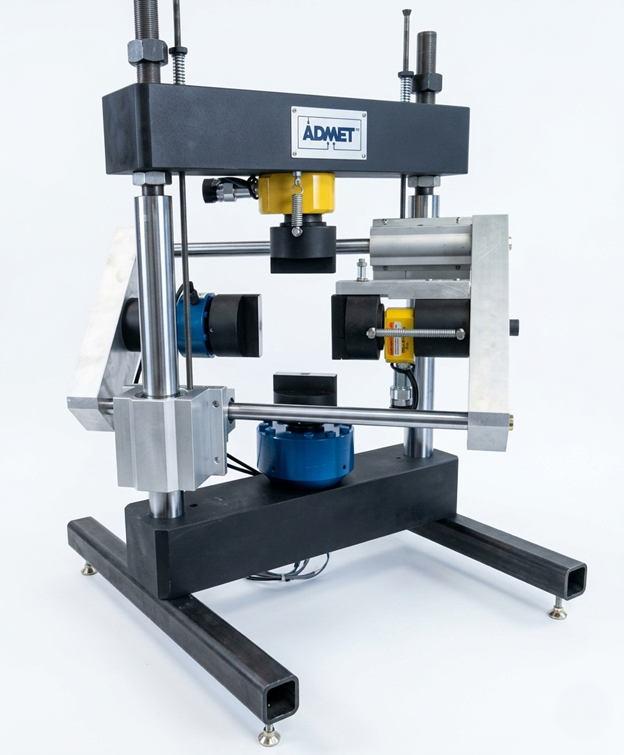
ADMET custom engineered Hydraulic Fracture Testing System - designed and fabricated for a variety of experiments on rock specimens, and specifically, hydraulic fracture experiments. It is unique in that it allows the user to load a specimen biaxially (locally triaxially), and pressureize an artifical crack in the rock to induce a hydraulic fracture. Image Credit: ADMET
How does ADMET ensure that each system meets customer expectations before delivery?
After receiving a purchase order, we move into the delivery phase. If required, our engineering team will create approval drawings that must be signed off by the customer before production begins.
Once the system is built, we conduct validation testing in accordance with the procedures defined earlier in the process. We document the results to demonstrate that the system meets the agreed performance criteria. Finally, we coordinate delivery, installation, training, and calibration to ensure the customer can successfully implement the system.
Why is this level of detail important in materials testing solutions?
We deliberately avoid treating our systems as standard off-the-shelf products. Material testing requirements can vary significantly across applications, and even minor oversights can lead to performance issues or customer dissatisfaction.
By taking a thorough and methodical approach upfront, we reduce the risk of missing critical details. This improves the quality of the final solution, strengthens customer relationships, and increases the likelihood of repeat business.
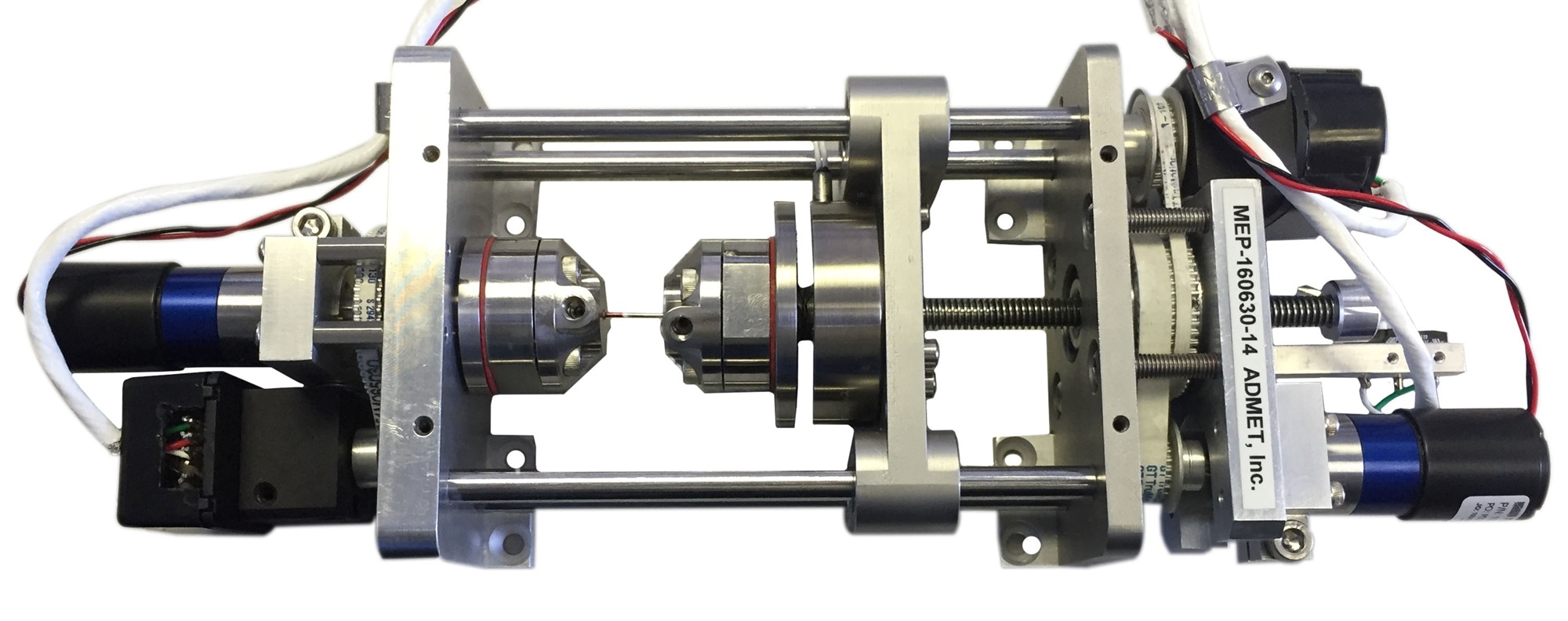
ADMET 1.5kN - 0.5Nm Axial-Torsion Microtester designed to fit in the vacuum chamber of a scanning electron microscope (SEM) for high magnification studies on metals. Image Credit: ADMET
How does your customer-focused approach impact production and delivery timelines?
Because we do not build systems to stock, we rely on efficient planning and coordination to meet delivery expectations. However, we maintain an inventory of key long-lead components, which allows us to offer competitive delivery times.
Our engineering and operations teams meet daily to review production schedules, track component availability, and address any potential issues. This disciplined approach ensures that we remain responsive while managing highly customized projects.
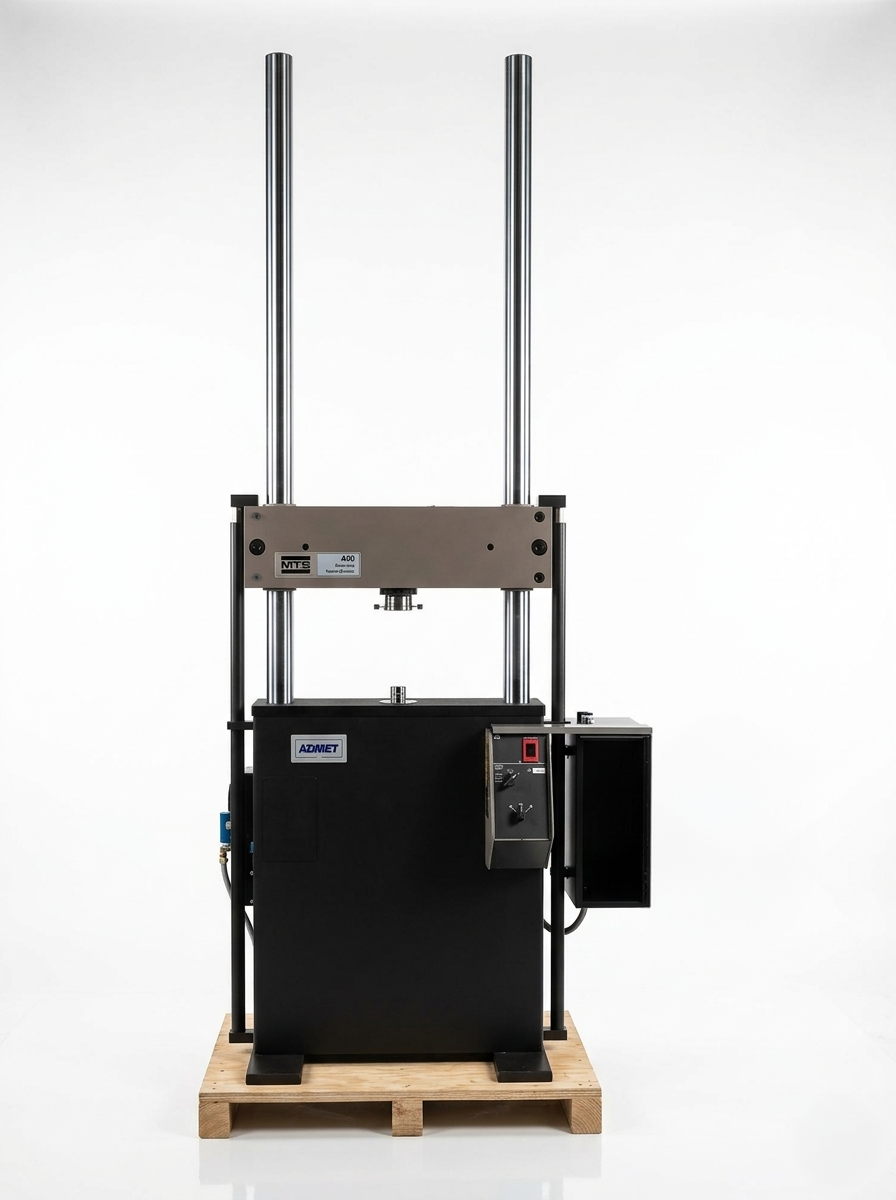
Retrofit of MTS Servo-Hydraulic Fatigue Testing System with ADMET’s pc-based MTESTQuattro Materials Testing software and controller. Image Credit: ADMET
How has ADMET’s experience shaped the performance and reliability of your systems?
With more than three decades of experience, we have developed systems that are technically capable, robust, and easy to use, all while offering strong value to our customers.
Our continued investment in software development and system design has allowed us to steadily improve accuracy, reliability, and usability. This experience also enables us to anticipate customer needs and deliver solutions that perform consistently in demanding testing environments.
Looking ahead, how do you see material testing technologies evolving, and how is ADMET positioning itself to meet the future needs of manufacturers and researchers?
I believe materials testing technology is largely driven by new materials and product development. We see that reflected in many of the systems customers ask us to build, whether that is a testing system to help researchers develop a new therapy or a system designed for a completely new industrial application.
As materials, products, and applications become more specialized, testing systems need to be more accurate, more flexible, and easier to integrate into a wide range of environments. In my view, the key is having a materials testing software and control platform that offers both the accuracy and the versatility to support many different applications.
Equally important is the engineering knowledge required to design systems capable of making the necessary measurements reliably and precisely. At ADMET, we are positioning ourselves for that future through the release of our new testing software and controller, as well as through the experience we gain with each new custom system design. I believe those are key components of our future success.
About Richard Gedney
Richard Gedney is the Founder and CEO of ADMET, a leading manufacturer of materials testing systems. He established the company in 1989 after earning a Master’s degree in Engineering, driven by a vision to modernize materials testing through advanced software and control technologies.
Early in his career, Gedney developed PC-based servo controllers to retrofit traditional testing machines, when many systems were still manually operated. This work highlighted the potential of digital control systems and led to the creation of ADMET. Initially focused on retrofits and OEM partnerships, the company later transitioned into designing and manufacturing complete testing systems for a global customer base.
Under his leadership, ADMET has experienced consistent growth and now serves a wide range of industries, including aerospace, manufacturing, biomedical research, and academia.

This information has been sourced, reviewed and adapted from materials provided by ADMET, Inc. - Materials Testing Equipment.
For more information on this source, please visit ADMET, Inc. - Materials Testing Equipment.
Disclaimer: The views expressed here are those of the interviewee and do not necessarily represent the views of AZoM.com Limited (T/A) AZoNetwork, the owner and operator of this website. This disclaimer forms part of the Terms and Conditions of use of this website.