In this interview, AZoMaterials speaks with Alina Latshaw, Product Manager at Waters Corporation, about innovations in rheometer technology and the launch of the ARES-G3™ Rheometer, designed to accelerate material characterization and improve data accuracy for advanced research applications.
Can you please introduce yourself and your role at Waters Corporation?
I am a member of the product management team within the Materials Sciences Division at Waters Corporation. I have been with the company for around 12 years and have a chemical engineering background. Over time, I have developed a strong passion for rheology and product development, leading me to focus on advancing innovative measurement technologies in this field.
What is the ARES-G3™ Rheometer, and what makes it a significant addition to your portfolio?
The ARES-G3™ Rheometer is the newest flagship instrument within our rheology portfolio. It is designed to deliver high-performance measurements with significantly faster testing capabilities. With innovations such as fast frequency chirps and improved data acquisition, the system enables users to obtain high-quality, high-resolution data much more efficiently, supporting advanced material characterization and accelerating development workflows.
What scientific or analytical challenges led to the development of this rheometer?
One of the key challenges we identified was the bottleneck in material characterization labs, particularly for polymer development and advanced materials. Researchers often face long testing times, which slow down product development cycles. These delays limit how quickly teams can generate the data they need to make decisions, ultimately impacting time-to-market for new materials.
How does the ARES-G3™ Rheometer address these challenges?
The ARES-G3™ addresses these challenges through innovations such as fast-frequency chirps and high-speed data acquisition. These capabilities allow users to capture transient behaviors and transitions that were previously difficult or impossible to observe. With data acquisition rates of up to 25,000 points per second, users can gain deeper insights into material behavior in a fraction of the time required by traditional methods.
Can you explain what fast frequency chirps are and why they are important?
Fast-frequency chirps are a relatively new innovation in rheology. They allow users to gather long-term material behavior data much more quickly than conventional methods. Instead of running extended tests over several hours, users can now obtain equivalent insights in significantly less time, enabling up to 80 % faster testing while still maintaining high data quality.
Where do the biggest workflow bottlenecks typically occur in rheological testing?
The primary bottlenecks are in the measurement and analysis stages. Traditionally, a single test could take anywhere from six to eight hours, which limits throughput to just one or two tests per day. With the ARES-G3™, users can run multiple tests in a single day, increasing productivity and enabling faster decision-making across development teams.
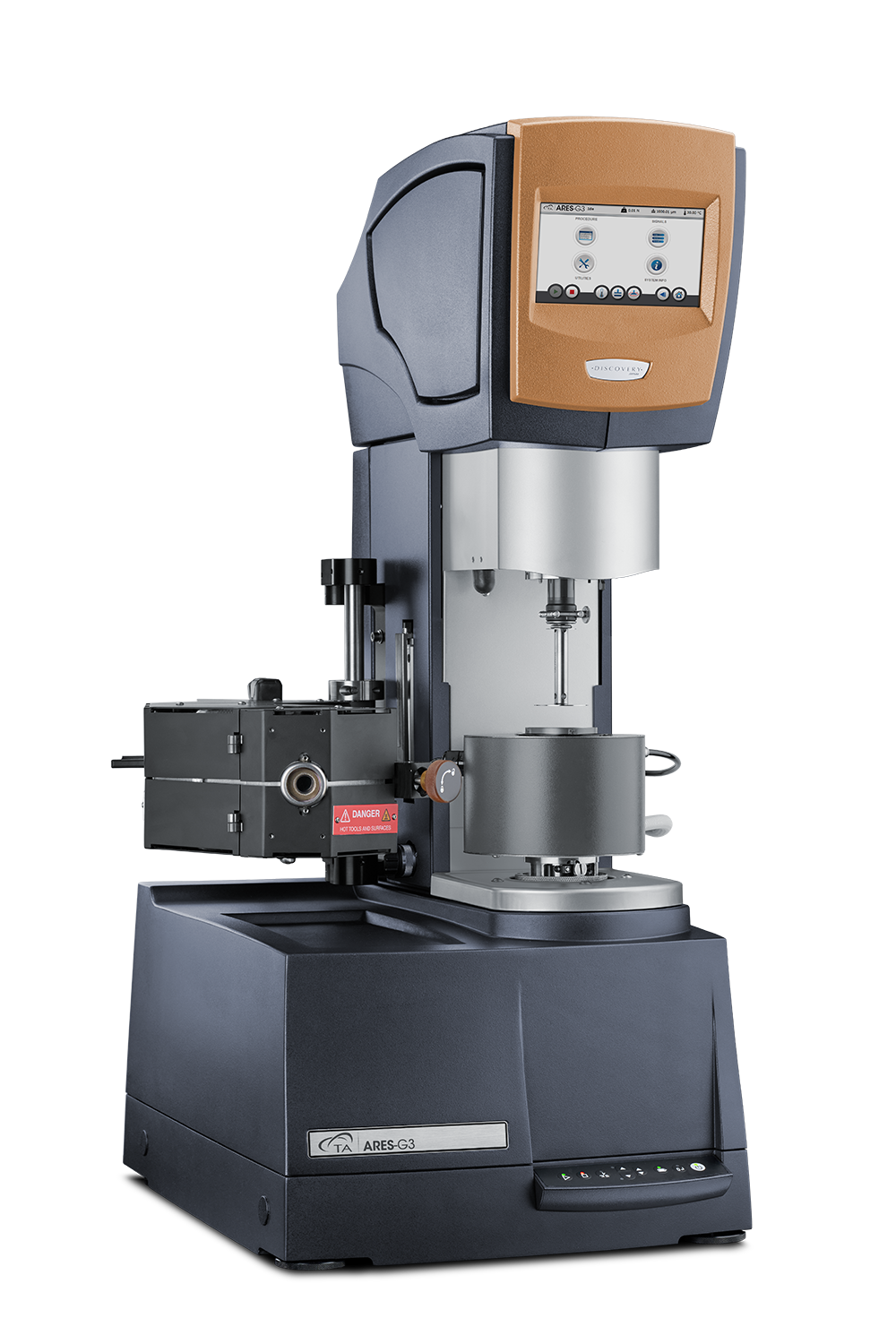
Image Credits: TA Instruments
What is the core technology behind the ARES-G3™, and how does it improve performance?
The system builds on our established, separate-motor transducer technology, which is fundamental to delivering high data accuracy with fewer corrections. This is combined with improved electronics, superior temperature and atmospheric control, and fast frequency chirps. Together, these elements provide precision and speed, ensuring reliable and reproducible results.
How does the user workflow look from sample loading to data analysis?
The workflow has been designed to be highly intuitive. With the integrated touchscreen interface, users can load their sample, start the test, and run the entire process seamlessly. The system guides them from measurement through to data analysis, presenting results directly within the software. This streamlined approach reduces complexity and makes advanced rheological testing more accessible.
What are the most significant performance gains users can expect from this rheometer?
The most notable gains come from a combination of improved data accuracy and speed. The separate motor transducer technology ensures precise measurements, while faster electronics and high-speed data acquisition enable rapid testing. Additionally, integrating user-friendly software simplifies operations, allowing users to quickly obtain the insights they need without extensive setup or correction steps.
TA Instruments at Pittcon 2026
About Alina Latshaw
Alina Latshaw is a Product Manager within the Materials Science Division at Waters Corporation, where she focuses on advancing rheological instrumentation and supporting innovation in material characterization. With over a decade of experience at the company, she has developed deep expertise in rheology, product development, and analytical instrumentation.
Latshaw holds a background in chemical engineering, which has provided a strong foundation for her work in complex material systems, particularly polymers and advanced composites. Throughout her career, she has been involved in bringing cutting-edge technologies to market, helping researchers and industrial scientists improve their understanding of material behavior.
Her work centers on bridging the gap between technical innovation and real-world application, ensuring that new instruments deliver high-performance data and integrate seamlessly into laboratory workflows. She is particularly passionate about improving testing efficiency and enabling faster decision-making in research and development environments.
Latshaw continues to advance rheological techniques, supporting industries ranging from polymers and coatings to pharmaceuticals and advanced materials.

This information has been sourced, reviewed and adapted from materials provided by TA Instruments.
For more information on this source, please visit TA Instruments.
Disclaimer: The views expressed here are those of the interviewee and do not necessarily represent the views of AZoM.com Limited (T/A) AZoNetwork, the owner and operator of this website. This disclaimer forms part of the Terms and Conditions of use of this website.