From cabbage cores to carbon nanotubes, researchers are rethinking microbial fuel cell anodes to improve biofilm growth, boost electron transfer, and move wastewater-to-energy systems closer to practical use.
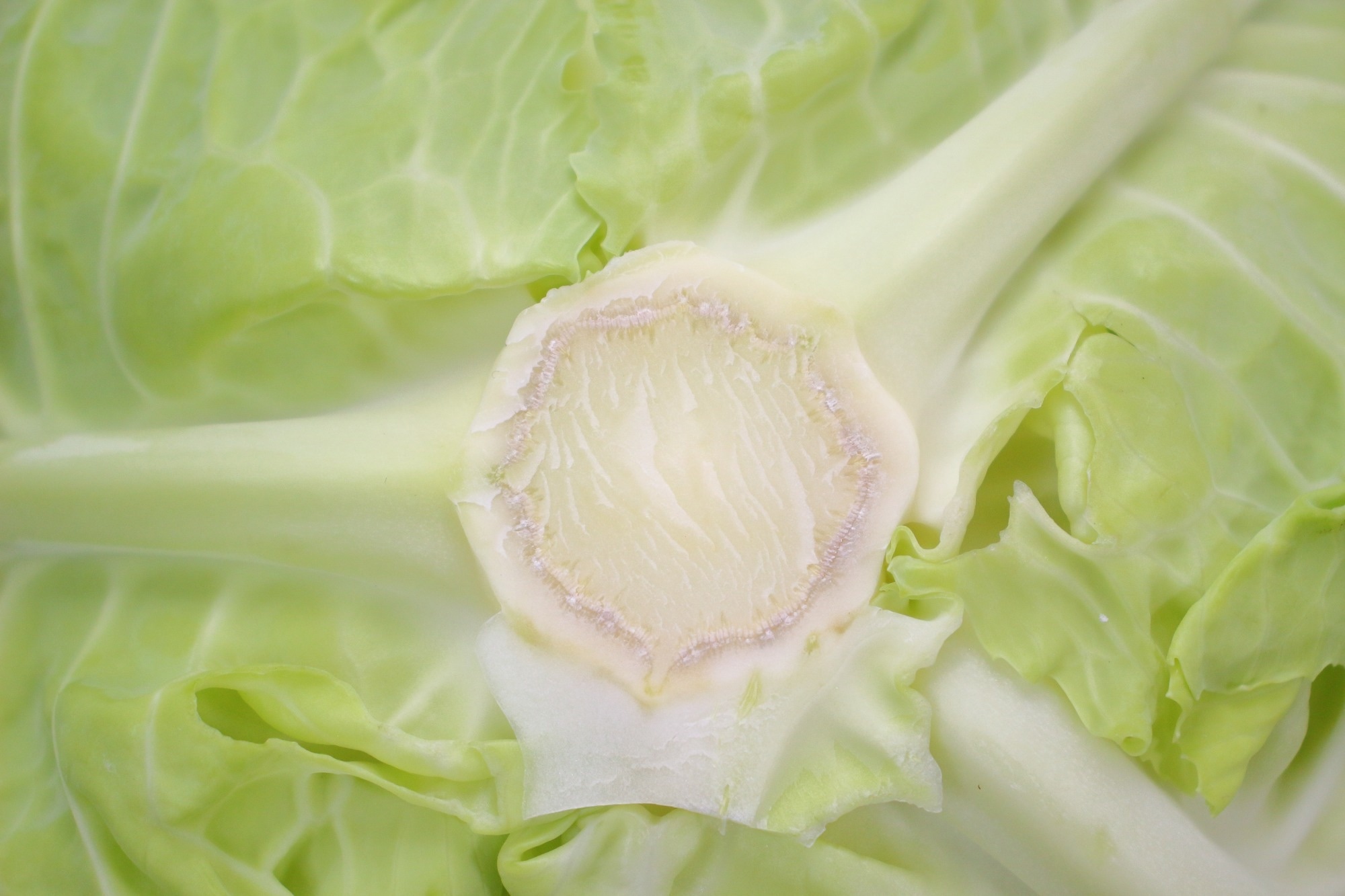
Paper: A Review on Carbon-Based and Metal-Based Anode Materials of Microbial Fuel Cells - Image Credit: Ningin / Shutterstock
The field of bioelectrochemical energy conversion is rapidly evolving due to the growing demand for sustainable alternatives to fossil fuels. A recent review published in the journal Energy Science & Engineering examined advancements in anode materials for microbial fuel cells (MFCs). The authors compared carbon-based, biomass-derived, and metal-based anodes, examining how their conductivity, biocompatibility, surface area, porosity, and stability influence biofilm formation and extracellular electron transfer efficiency.
Evidence summarized in the review suggests that nanotechnology combined with biomass-derived materials can help address the challenge of balancing power output and cost in large-scale bioenergy systems. Biomass-derived carbons and emerging entropy-engineered materials can improve power density and facilitate efficient electron transfer while supporting bioenergy generation and wastewater treatment, though scalability, durability, and real-world wastewater performance remain key barriers.
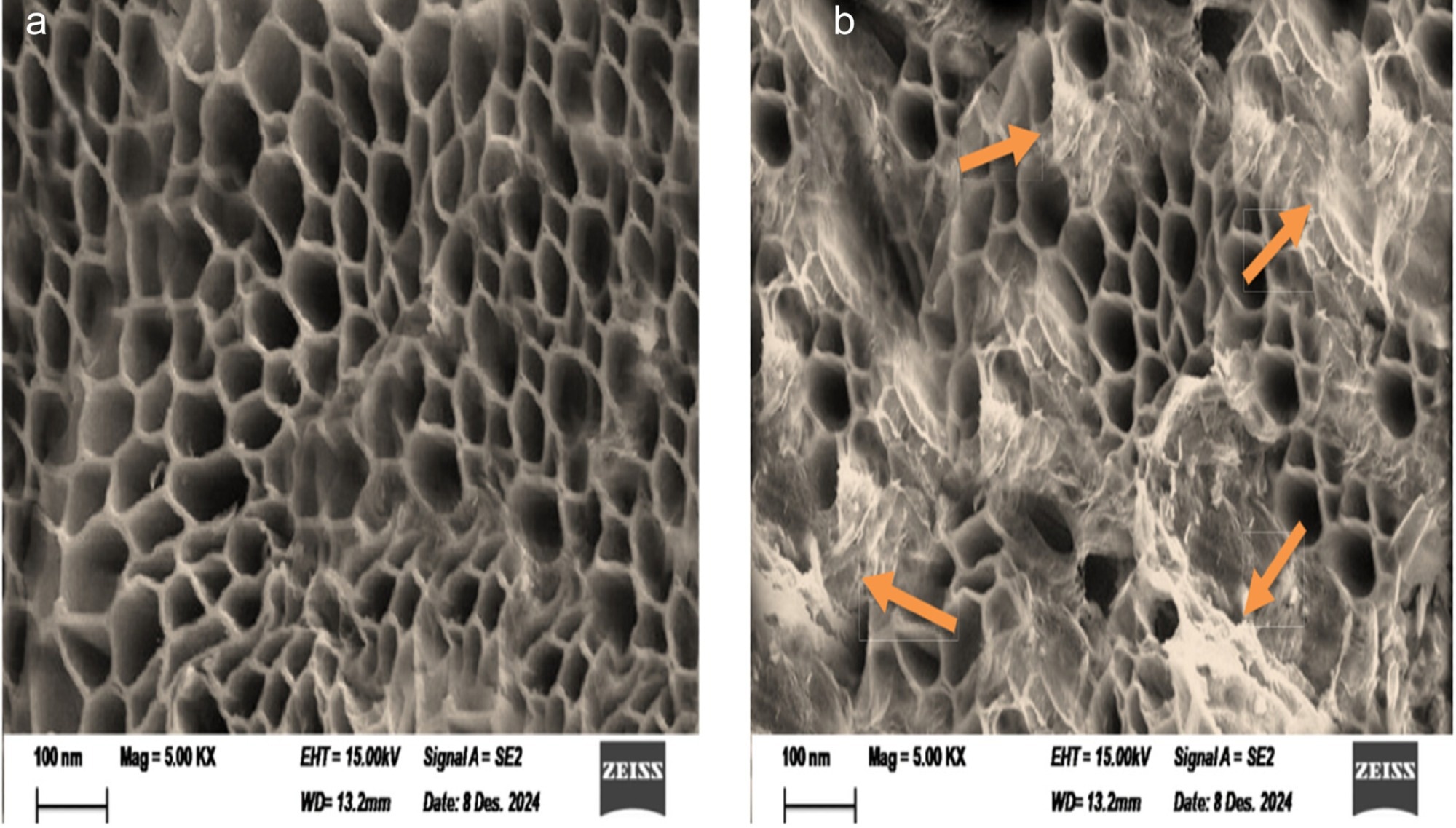
SEM micrographs showing the morphology of the carbonized cabbage core anode (a) prior to cell assembly and (b) following electrochemical testing.
MFCs in Sustainable Energy Solutions
As global industrialization expands, worldwide energy consumption is increasing by about 2.2% each year. Fossil fuels alone fulfill nearly 80% of this demand, raising concerns about resource depletion and environmental damage. MFCs have emerged as a promising solution because they can simultaneously treat wastewater and generate bioenergy.
MFCs use electroactive bacteria (EAB) to oxidize organic matter under anaerobic conditions, releasing electrons and protons. The electrons flow through an external circuit to generate electricity. At the same time, the protons migrate through a proton exchange membrane (PEM) toward the cathode, converting the chemical energy stored in pollutants into electrical energy.
The performance of MFCs depends on the interaction between microorganisms and the anode surface. Researchers identified three electron-transfer pathways: direct transfer via conductive pili or nanowires, mediated transfer via redox compounds, and electron shuttling via metabolic byproducts. Efficient operation requires an anode material with high electrical conductivity and strong biocompatibility to support stable microbial biofilm growth.
Analyzing Anode Substrates and Modification Techniques
The authors reviewed three classes of anode materials: traditional carbon-based supports, metallic substrates, and sustainable biomass-derived electrodes. They focused on how surface morphology, porosity, and chemical stability affect biofilm formation.
Traditional materials such as carbon cloth (CC), carbon paper (CP), and carbon brushes serve as baseline substrates due to their stability. However, these materials often require surface modification to address hydrophobicity and low surface area. Treatments with strong acids such as nitric, hydrochloric, or sulfuric acid introduce oxygen-containing functional groups, including hydroxyl (-OH) and carboxyl (-COOH), which improve adhesion.
Thermal treatments at temperatures up to 500 °C increase graphitization and electrical conductivity, although poorly controlled heating can damage pore structures or reduce performance. The study highlighted the use of nanomaterials, such as carbon nanotubes (CNTs), graphene, and metal oxide nanoparticles, including magnetite (Fe3O4) and manganese dioxide (MnO2), to create three-dimensional (3D) structures that reduce internal resistance and enhance electron transfer. It also explored single, dual, and multi-atom doping, incorporating elements such as nitrogen, phosphorus, and sulfur into carbon structures to modify their properties and improve electron-transfer efficiency.
Metal-based anodes offer high electrical conductivity, but the review notes important trade-offs, including corrosion, limited biocompatibility, and possible ion toxicity that can inhibit electroactive biofilms. As a result, metallic substrates often require corrosion-resistant alloys, conductive coatings, or surface nanostructuring to improve long-term MFC performance.
Performance Gains from Anode Modifications
Biomass-derived anodes produced significant improvements in studies summarized by the review, with carbonized cabbage core anodes generating a 21.5-fold increase in power density and an 8.51-fold increase in current density compared to commercial carbon felt. Similarly, Kudzu root-derived biochar increased current output by 12.1 times and enriched the population of electroactive bacteria.
Nano-engineered materials exhibited major performance gains. Carbon cloth modified with Fe3O4 nanoparticles achieved a peak power density of 4305 mW/m2, while TiO2 nanorods on carbon paper improved output by 2.6 times. Platinum nanolayers on carbon paper reached a power density of 2500 mW/m2, although the high cost of noble metals remains a limitation.
The study further identified 3D architectures and bio-capacitive anodes as technologies for future MFC development. Emerging high-entropy and pseudocapacitive anodes may improve interfacial electron transfer and allow temporary electron storage, helping better match continuous microbial electron production with fluctuating electrical demand.
Applications for Industrial Wastewater Treatment
MFCs have significant implications for treating high-strength wastewater. The review summarized evidence that these systems have been applied to municipal, textile, and dairy wastewater treatment. For example, the Kudzu root-derived anode achieved 97.14% Chemical Oxygen Demand removal, while the silk-derived carbon reached 91.43% removal efficiency. This combination of wastewater treatment and energy generation can help reduce the carbon footprint.
The study also highlighted a waste-to-wealth approach in which agricultural residues such as corn stems, onion peels, and pomelo peels are converted into high-performance electrodes. This strategy can reduce MFC fabrication costs, in some cases by up to 20 times compared to synthetic materials, while supporting a circular economy in waste management.
Future Directions: Advancing MFC Technology
In summary, researchers emphasized that while significant progress has been made in anode development, transitioning from laboratory prototypes to commercial-scale systems still requires improvements in scalability and long-term durability. Maintaining high power density in large reactors remains a challenge, highlighting the need for better-designed hybrid and composite materials.
Future work should include 3D printing for customized electrode structures and machine learning (ML) to predict optimal material compositions. By combining biomass-derived carbons with advanced surface modification techniques, future MFCs could become more sustainable, cost-effective, and commercially viable.
Improving the interaction between microorganisms and anode materials is essential to fully leverage the potential of microbial fuel cells as a clean energy technology, but practical deployment will depend on whether these materials can maintain performance under long-term, real-world wastewater conditions.
Download your PDF copy by clicking here.
Disclaimer: The views expressed here are those of the author expressed in their private capacity and do not necessarily represent the views of AZoM.com Limited T/A AZoNetwork the owner and operator of this website. This disclaimer forms part of the Terms and conditions of use of this website.