Sponsored by InterpowerReviewed by Olivia FrostApr 20 2026
The cable markets in North America, Europe, Asia, and South America determine the types of cable used and the necessary approvals for them.
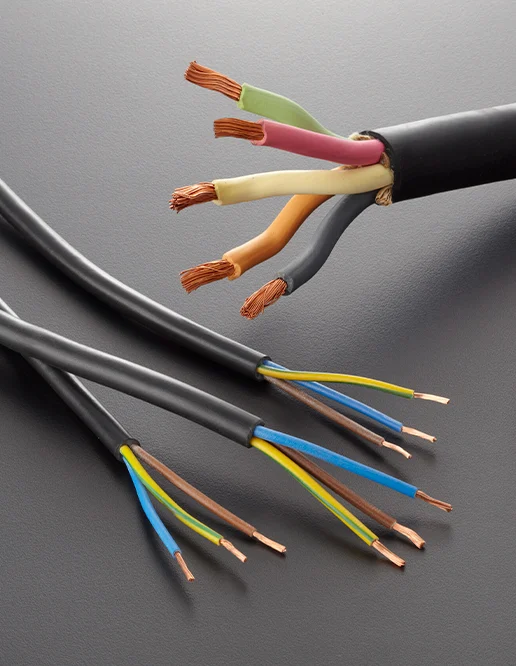
Image Credit: Interpower
For instance, a North American-approved cable is required if the product is to be sold and distributed in the United States. Similarly, products sold in Germany require an internationally approved cable, and if the country of sale is China, the cable will need to meet Chinese standards. Therefore, it is crucial to check each country’s safety standards agency.
There are two key parameters when it comes to choosing the right cable: the cable’s purpose and the environment it will be used in. The application determines which outer jacket material is recommended: a household appliance intended for indoor use may require a different jacket material than that of a power tool intended for outdoor use.
Possible Cable Materials:
- Thermoplastic: Thermoplastic can be easily softened through heating and hardened through cooling. Therefore, it can be manipulated when hot and can preserve its structure after cooling. Thermoplastic is the opposite of thermoset.
- Thermoset: Thermoset employs a heating process known as curing. Once the plastic is cured, its shape remains fixed and rigid.
- PVC: PVC is a common thermoplastic material, used for cable and conductor jackets and some molded plugs.
- Rubber: Rubber, a thermoset-type material, is also commonly used for cables. It is often more expensive than thermoplastic cable, but it demonstrates higher durability and better levels of water and abrasion resistance. Rubber is an excellent choice for most outdoor applications.
Thermoplastic Elastomer (TPE) is a material with similar characteristics to rubber and thermoplastic. For indoor use, PVC is the most common material for jackets, while rubber, TPE, and PVC are typically used for outdoor use or industrial applications. For outdoor use, it’s vital to understand the specific conditions the cable will be exposed to – including abrasion, water, oil, and sunlight – to ensure adequate protection.
What are the Mains Power Requirements?
Amperage and voltage requirements vary across different regions and countries. These factors will have a direct effect on the size and type of cable required to supply safe electrical power.
In North America, the typical circuit voltage is either 120 V or 240 V, using 15 A for non-industrial needs. For industrial applications, the conventional requirements would be 120 V, 120/208 V, or 120/240 V, using 20 A or less. Across the European market, non-industrial needs are typically 230 V using 16 A or less, whereas the industrial applications can range between 230 and 400 V using 32 A or less.
North American and international cable standards determine the ratings for individual designated sizes. Because of the differing rating guidelines between the various standards, North American cable ratings do not always match up with international cable rating standards.
Cable Temperatures
Typically, indoor room temperatures tend to range from 68 °F to 86 °F (20 °C to 30 °C ). Functional equipment may produce an additional 86 °F (30 °C) while operating, so cables intended for indoor usage are usually rated for a minimum of 140 °F (60 °C). If the appliance is a heating unit, a rubber or a special heater-type cable should be considered.
For outdoor or industrial equipment, ambient temperatures tend to have much more extreme ranges, meaning the cable may need to be rated anywhere from -58 °F up to 221 °F (-50 °C up to 105 °C).
UL Classification of Cable Types
- SVT – Thermoplastic insulated vacuum cleaner cord, with or without third conductor for grounding purposes; 300 V (PVC).
- SJT – Junior hard service, thermoplastic insulated conductors and jacket; 300 V. (Typically PVC)
- SJTW – Same as SJT, but weather-resistant for outdoor use.
- SJTO – Same as SJT, but with an oil-resistant thermoplastic outer jacket.
- SJTOW – Same as SJTO, but weather-resistant rated.
- ST – Hard service cord with all thermoplastic construction; 600 V. (PVC)
- STW – Same as ST, but weather-resistant rated. (PVC)
- STO – Same as ST, but with an oil-resistant thermoplastic outer jacket, 600 V.
- STOW – Same as STO, but with weather resistance.
- SPT-1 – Parallel jacketed thermoplastic cable, 300 V. With or without a third conductor for grounding. (PVC)
- SPT-2 – Same as SPT-1, but heavier construction. (PVC)
- SPT-3 – Same as SPT-2, but heavier construction. (PVC)
- SJE – Hard service cord, thermoplastic elastomer insulated and jacketed; 300 V. (TPE)
- SJEW – Same as SJE, except weather-resistant rated. (TPE)
- SJEO – Same as SJE, but with an oil-resistant jacket. (TPE)
- SJEOW – Same as SJE, except weather-resistant rated. (TPE)
- SJEOO – Same as SJE, but the conductor insulation and jacket are both oil-resistant. (TPE)
- SJEOOW – Same as SJEOO, but weather-resistant rated. (TPE)
- SE – Extra-hard service cord, thermoplastic elastomer conductor insulation and jacket; 600 V. (TPE)
- SEW – Same as SE, except weather-resistant rated. (TPE)
- SEO – Same as SE, but with an oil-resistant jacket. (TPE)
- SEOW – Same as SEO, except weather-resistant rated. (TPE)
- SEOO – Same as SE, but with an oil-resistant conductor insulation and jacket. (TPE)
- SEOOW – Same as SEOO, except weather-resistant rated. (TPE)
- S – Extra-hard service cord, with thermoset-insulated conductors and thermoset jacket; 600 V. (Thermoset)
- SO – Same as S, but with an oil-resistant jacket. (Thermoset)
- SOW – Same as SO, except weather-resistant rated. (Thermoset)
- SOO – Same as SO, but both the conductor insulation and jacket are oil-resistant. (Thermoset)
- SOOW – Same as SOO, except weather-resistant rated. (Thermoset)
- SJ – Hard service cord, thermoset-insulated conductors and thermoset jacket; 300 V. (Thermoset)
- SJO – Same as SJ, but with an oil-resistant jacket. (Thermoset)
- SJOW – Same as SJO, except weather-resistant rated. (Thermoset)
- SJOO – Same as SJO, but both the conductor insulation and jacket are oil-resistant. (Thermoset)
- SJOOW – Same as SJOO, except weather-resistant rated. (Thermoset)
Where a single ‘O’ appears in a classification (e.g., SJEOW), this indicates that only the outer jacket materials are considered oil resistant. A second ‘O’ in the classification (e.g., SEOOW) signifies that the outer jacket insulation and the insulation covering the conductors are all oil-resistant.
Definitions of cable designations are based on UL’s designation scheme as determined in the National Electrical Code (NEC) – NFPA-70.

This information has been sourced, reviewed, and adapted from materials provided by Interpower.
For more information on this source, please visit Interpower.