Sponsored by InterpowerReviewed by Olivia FrostApr 20 2026
The Interpower power cord and cable manufacturing facility lies on the periphery of Lamoni, Iowa. Nodding to manufacturing itself, the building rises east of the I-35 overpass like a steel colossus. Out of the state's 99 counties, Decatur County’s population ranks 86th, making it an unlikely place for a renaissance in the manufacturing industry anytime soon.
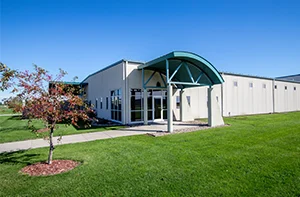
Image Credit: Interpower
Despite the county’s relatively small population and limited manufacturing resources, this particular Interpower facility has produced world-leading North American and international cable and country-specific power cords, including an expansive line of hospital-grade cords and components, for 25 years.
American Values and the Not-So-Silk Road
During the 1990s, the U.S. and countries across Europe were increasingly expanding or relocating manufacturing operations to China in favor of cheap labor and building material costs; this trend grew exponentially. However, to achieve this, companies sometimes had to give a percentage of ownership to the Chinese government.
Prior to 1993, Interpower (then named the Panel Components Corporation) only had locations in California. In 1993, the company relocated its headquarters to Oskaloosa, Iowa, as it offered a less restrictive manufacturing environment. The new location included a manufacturing facility and state-of-the-art equipment to manufacture North American cable and country-specific power cords.
In 2000, Interpower started cord and cabling operations at its newly established Lamoni facility. This facility is now responsible for manufacturing all of the company’s North American and international cable, as well as a number of other power cord lines, including hospital-grade units. Interpower also opened a center in the UK dedicated solely to distribution.
In Iowa, we cross-train our manufacturing employees so that they can be proficient on various machines and processes in multiple departments. This lets us maintain our 1-week U.S. lead times. They embrace our mission which requires teamwork to provide customers with high-quality products and services. They’re trained to run a variety of machines and equipment that helps them advance their careers.
Mike Boyle, Vice-president of Manufacturing & Logistics, Interpower
Lamoni Cable-Making
Interpower’s Lamoni facility manufactures conductor cabling and thermoplastic molding for country-specific cords and cord sets, including hospital-grade cords and components.
Conductor wire runs down the line at speeds upwards of 1000 feet per minute. The wire’s diameter is consistently measured by multiple readers that employ lasers networked to computer hardware and software, which measure to 1/10,000 of an inch. The readers are optimally spread out at intervals along the line to deliver key real-time measurements.
First, the bare copper wire is cleaned along the line before it is encased in resin by extruders one to three. Extruder one holds the natural, light-colored material, while extruders two and three extrude distinct colors, such as blue and brown, to coat the natural resin material. To alternate between colors in extruders two and three, a switch on the crosshead of the extruder is turned on. The insulated wire is measured before and after extrusion while ‘hot’ and later measured after being cooled by immersing it in a water trough via a filtrated chiller.
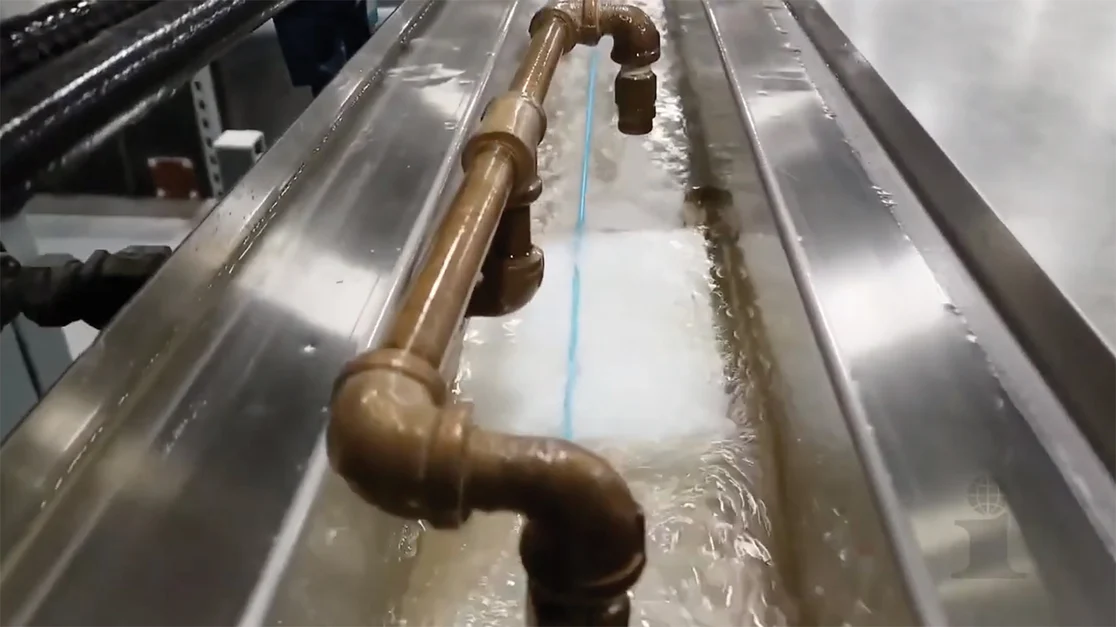
Image Credit: Interpower
According to North American, international, and Japanese agency standards, each of the colors signifies ground, line, or neutral conductors. However, if one or two additional lines are required, four- and five-conductors may be necessary.
Spark-testing of the insulated wire is carried out to ensure that the copper has 100 % coverage. Once complete, the extruded conductor wire can be reeled for power cord processing at the cabler, where it is ready for the three-conductor length of lay run.
Jacketing Conductors
The cabler simultaneously unspools the reels of color-coded insulated wire (the same line, neutral, and ground wires) and winds them into a weave of conductors. Three-wire conductors are categorized as a Class I configuration, while Class II configurations consist of two lines, with additional insulation, but not the ground wire.
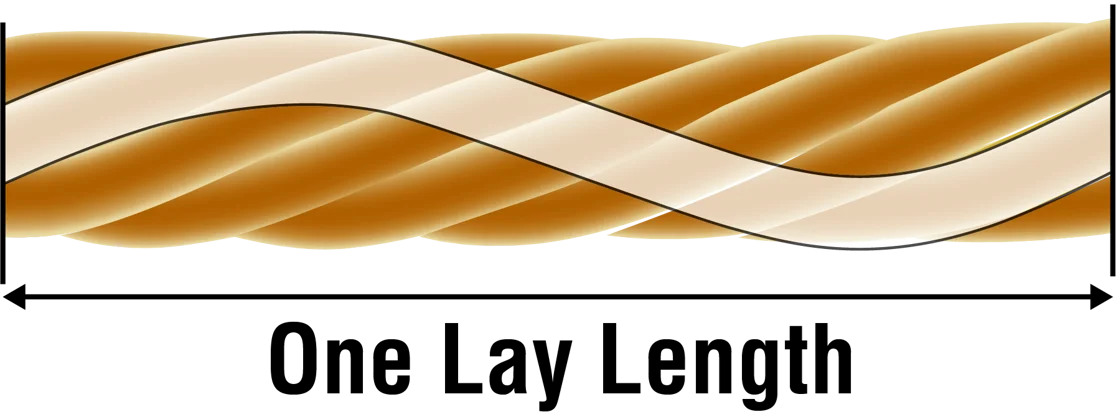
Image Credit: Interpower
The length of lay refers to the length of one colored wire woven to complete a revolution under another colored wire. This adds flexibility to the bunched and soon-to-be jacketed wires. Prior to being jacketed, a talc coating is applied to the bunched length-of-lay conductors for easier wire-stripping. They are then jacketed in natural resin and a single layer of colorant.
Extruder one is the powerhouse of the jacketing process, as cable requires greater amounts of natural resin than the individual conductors to keep the three conductors fixed in place and preserve flexibility. Once this process is complete, the wall of the cable receives a single layer of colorant.
The jacket is run down the line to a printer where it receives agency-approved markings (UL/CSA/VDE, etc.), approval marks, file numbers, voltage and flammability ratings, jacket material including ‘SJT’, and sizes in AWG and mm, along with the manufacturer’s name (Interpower). Once complete, the cable is loaded onto a wooden spool, wrapped in plastic, and properly labeled, ready for shipping.
The Immediate Future of Manufacturing
Despite Interpower’s contributions, U.S. manufacturing suffered from 2021 to 2024. Toward the end of 2022, a number of companies came out to openly discuss reshoring part of their manufacturing operations, most notably from China.
The online publication Manufacturing Today, among others, anticipated a heavy rebound in the manufacturing sector in 2025, while others, such as Deloitte, took a more conservative approach by speculating more broadly, suggesting two or more outcomes or offering multiple scenarios. In spite of forecasting the unforecastable, one consequence remains consistent: Made in America.
Often customers ask, ‘Where are your cords made?’. When we tell them we make them right here in Iowa, they love that. They love U.S.A.-made cords and components because they know our cords will ship the same day if we have them in stock.
Raina Baker, Customer Service Supervisor, Interpower
Known for its high quality, Interpower tests its power cords after each individual phase of the manufacturing process to ensure that all crimps are consistent and guarantee electrical continuity.

This information has been sourced, reviewed, and adapted from materials provided by Interpower.
For more information on this source, please visit Interpower.