Aluminum is the second most widely produced metal in the world and is essential in a wide variety of sectors, including aerospace, automotive, packaging, and battery manufacturing. Its unique combination of low density, high strength, exceptional corrosion resistance, and high electrical conductivity makes it a critical material driving development in today’s engineering and manufacturing technologies.
X-ray diffraction (XRD) is used in aluminum smelting to characterize crystalline phases in the electrolytic bath. By applying Rietveld quantification, it supports the determination of key parameters such as bath ratio, excess AIF3, and calcium content for process monitoring.
Why Bath Chemistry Control Matters in Aluminum Smelting
In aluminum production, the metal is extracted by electrolytic reduction of alumina, using carbon anodes immersed in a molten electrolyte. This bath primarily contains cryolite-dissolved alumina and is subjected to a strong electric current, reducing aluminum oxide to metallic aluminum.
The overall efficiency of this process is highly dependent on the precise chemical composition of the bath, as is the quality of the final metal. Accordingly, precise monitoring and control of bath chemistry are essential. This depends on comprehensive compositional analysis and the optimization of key smelting parameters.
Composition of the Electrolytic Bath
The electrolytic bath typically comprises cryolite, chiolite, calcium cryolite, fluorite, and various minor constituents generated during the process. Traditionally, the bath has been evaluated by phase analysis using calcium-specific XRF channels and isolated XRD diffraction peaks.
Role of Calcium Cryolite in Bath Chemistry Control
However, recent findings emphasize the frequent formation of calcium cryolite in substantial concentrations during smelting. This phase has proven to be an important indicator for improved bath chemistry control.
As a result, modern analytical approaches now include accurate quantification of calcium cryolite alongside conventional bath components. These measurements are incorporated into sophisticated data models that provide enhanced real-time estimation of bath parameters, operational control, and production consistency.
Using XRD for Aluminum Bath Phase Analysis
By using XRD to understand the mineralogical complexity of the aluminum bath matrix, industry professionals can improve process efficiency, minimize production losses, and optimize resource use, ultimately leading to more sustainable and economical aluminum production.
XRD Instrumentation for Aluminum Smelting Analysis
The Thermo Scientific ARL X’TRA Companion X-Ray Diffractometer (Figure 1) is a straightforward, user-friendly benchtop tool designed for routine phase evaluation and more advanced applications. The system employs a θ/θ goniometer, with a 160 mm radius, in Bragg-Brentano geometry paired with a 600 W X-ray source (Cu or Co).
Divergence and Soller slits control the radial and axial collimation of the beam, while air scattering is minimized using a variable beam knife. An optional integrated water chiller is also available.
Equipped with a state-of-the-art solid-state pixel detector (55 x 55 μm pitch), the ARL X’TRA Companion XRD provides rapid data acquisition capability. It also features single-click Rietveld quantification capabilities and automated result transmission to a LIMS (Laboratory Information Management System), fully integrated into Thermo Scientific™ SolstiX™ Pronto Instrument Control Software.
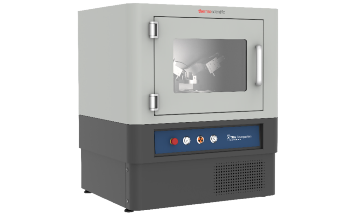
Figure 1. ARL X’TRA Companion X-ray diffraction system. Image Credit: Thermo Fisher Scientific
Experimental Setup and Analytical Method
Conventional Alcan standards are often considered the most suitable choice study due to their portrayal of bath chemistry scenarios and their real-time coverage of the full analytical range. In this work, a series of Alcan standards (BA 01-BA 10) was measured in reflection mode using Cu Kα (1.541874 Å) radiation for 2 minutes (Figures 2 and 3).
The Rietveld method was used for quantitative analysis, with Profex software (BGMN) used to configure it as a single-click technique for an improved user experience. Following this, the bath parameters were determined.
Determination of Bath Parameters Using XRD
The electrolytic bath consists of several crystalline phases that exhibit strongly correlated relationships when deriving bath parameters. Traditionally, bath parameters are calculated using XRD and XRF (X-ray fluorescence), which require floor-standing equipment.
In this study, the utility of the ARL X’TRA Companion XRD in the determination of crucial parameters - such as the bath ratio (Table 1), Excess AlF3 (Table 1), and total Calcium content (Table 3) - is demonstrated.
Key Bath Parameters Measured by XRD
Table 1. Certified bath ratio comparison, bath ratio determined from Rietveld analyses. Source: Thermo Fisher Scientific – Handheld Elemental & Radiation Detection
| Bath ratio |
| Alcan STD |
Cert. |
Dev |
New |
| BA-01 |
1.06 |
0.1 |
1.06 |
| BA-05 |
1.02 |
0.1 |
1.01 |
| BA-10 |
1.30 |
0.1 |
1.28 |
The bath ratio represents the relative proportion of sodium fluoride to aluminum fluoride species in the electrolyte and is a key parameter in aluminum smelting. The values obtained for XDR-based Rietveld analysis show close agreement with the certified Alcan standards, indicating that the method supports reliable estimation of bath ratio across the measured range.
Table 2. Certified Excess AlF3 comparison, Excess AlF3 determined from Rietveld analyses. Source: Thermo Fisher Scientific – Handheld Elemental & Radiation Detection
| ExAlF3 |
| Alcan STD |
Cert. |
Dev |
New |
| BA-01 |
12.40 |
0.2 |
12.6 |
| BA-05 |
11.30 |
0.3 |
11.3 |
| BA-10 |
5.20 |
0.2 |
5.5 |
Excess AIF3 is an important parameter used to control electrolyte chemistry and influence process stability. The comparison between certified values and those derived from XRD analysis demonstrates that Rietveld-based phase quantification can be used to estimate excess AIF3 with results that are consistent with reference standards, supporting its application in bath chemistry monitoring.
Table 3. Certified Calcium content comparison, Calcium content determined from Rietveld analyses. Source: Thermo Fisher Scientific – Handheld Elemental & Radiation Detection
| Ca (Calculated from XRD) |
| Alcan STD |
Cert. |
Dev |
New |
| BA-01 |
6.2 |
0.1 |
6.3 |
| BA-05 |
4.5 |
0.1 |
4.6 |
| BA-10 |
6.7 |
0.1 |
6.6 |
Calcium content in the bath is associated with the formation of calcium-containing phases such as calcium cryolite, which can impact bath properties. The results show that calcium content calculated from XRD phase analysis aligns closely with certified values, supporting the use of XRD phase analysis for monitoring calcium-related phase behavior in the electrolyte.
Repeatability and Precision of XRD Measurements
Table 4. Bath ratio and ExAlF3 repeatability of sample BA07 calculated from 20 runs compared with the certified value and its ESD. Source: Thermo Fisher Scientific – Handheld Elemental & Radiation Detection
| Precision results |
| Sample ID |
Bath Ratio |
ExAlF3 |
| Certified |
Observed |
Certified |
Observed |
| BA07 |
1.23 (0.1) |
1.22 |
6.9 (0.2) |
7.1 |
| 1.22 |
7.1 |
| 1.22 |
7.1 |
| 1.22 |
7.1 |
| 1.22 |
7.0 |
| 1.22 |
7.2 |
| 1.22 |
7.1 |
| 1.22 |
7.0 |
| 1.23 |
6.9 |
| 1.22 |
7.1 |
| 1.22 |
7.2 |
| 1.22 |
7.2 |
| 1.22 |
7.1 |
| 1.23 |
6.9 |
| 1.22 |
7.2 |
| 1.22 |
7.0 |
| 1.22 |
7.0 |
| 1.22 |
7.2 |
| 1.22 |
7.1 |
| 1.22 |
7.1 |
| ESD |
|
0.003 |
|
0.078 |
| 3σ |
|
0.01 |
|
0.23 |
Repeatability was evaluated by measuring the BA-07 standard 20 times and calculating the bath ratio and excess AIF3 for each run. The low estimated standard deviation (ESD) and narrow 3σ range demonstrate good measurement precision under the described conditions, supporting the consistency of the XRD-based method for routine analysis in aluminum smelting process monitoring.
Conclusion: XRD for Efficient Aluminum Bath Monitoring
The single-click analytical technique employs two-minute XRD scan data collected with the ARL X’TRA Companion XRD to derive bath parameters using correlation functions by applying an advanced phase-correlation function.
The optimized tube power and the advanced detector of the ARL X’TRA Companion XRD, featuring energy-filtering capabilities, support high-quality data acquisition even with short acquisition times.
The SolstiX Pronto Software decreases the burden on operators by enabling one-click analysis for all users, improving efficiency while still maintaining high-quality results.
Acknowledgments
Produced from materials originally authored by Dr. Abhijit Sen and Dr. Simon Welzmiller, Application Specialists in XRD.

This information has been sourced, reviewed, and adapted from materials provided by Thermo Fisher Scientific – Analytical Instruments & Solutions
For more information on this source, please visit Thermo Fisher Scientific – Analytical Instruments & Solutions.